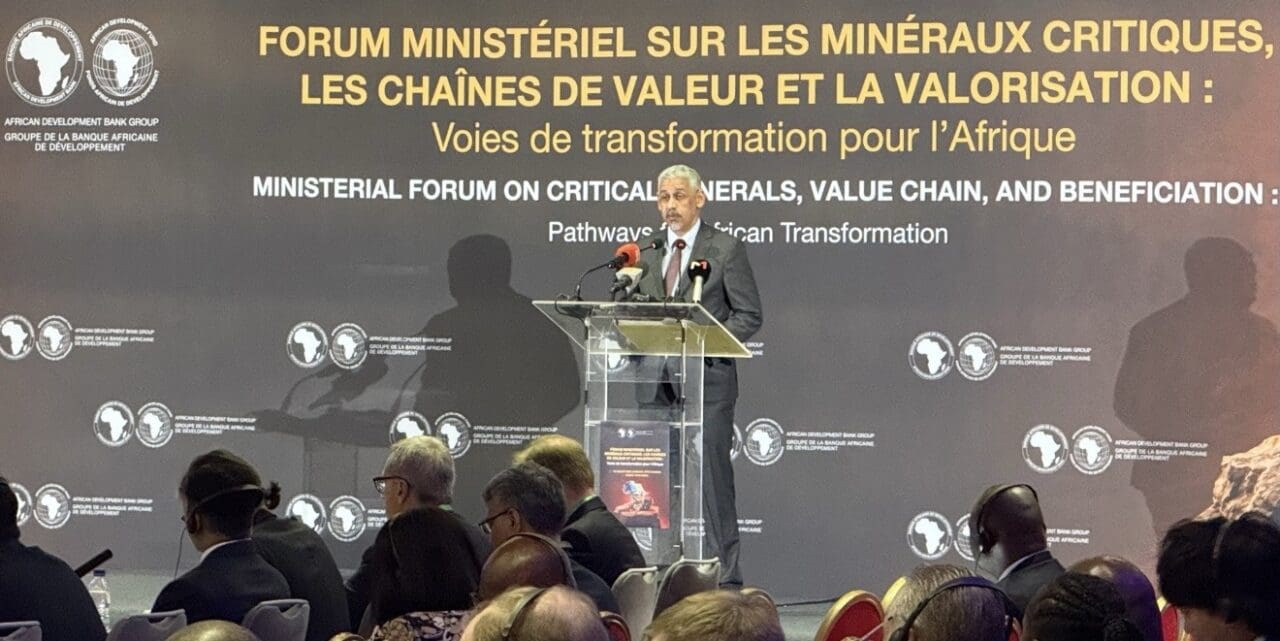
A groundbreaking gathering in Abidjan has set the stage for Africa to reclaim control over its vast critical mineral wealth, estimated at a staggering $29.5 trillion—a resource pool that could reshape the continent’s economic future. Ministers, industry leaders, and financial partners convened to chart a new course: transforming raw mineral exports into sustainable industrial growth through local value addition and regional value chains.
This ministerial conference, held in the Ivorian capital, brought together key stakeholders including African ministers of Mines, Energy, Industry, and Green Economy, alongside representatives from the African Union Commission, the African Continental Free Trade Area secretariat, the United Nations Economic Commission for Africa, regional development banks, financial institutions, and international investors.
Abidjan’s bold vision: redefining Africa’s role in the global mineral economy
The central ambition? To ensure Africa no longer just supplies raw materials but becomes a global hub for processing, manufacturing, and innovation. The focus is on leveraging the continent’s immense mineral reserves—including cobalt, lithium, graphite, rare earths, platinum-group metals, copper, manganese, and nickel—to drive industrialization, job creation, and inclusive development.
A paradigm shift in resource governance
In his opening address, the President of the African Development Bank (AfDB), Sidi Ould Tah, framed the conference as a turning point in Africa’s resource narrative. “This isn’t just another meeting—it’s a call to action to overhaul how Africa manages and benefits from its natural wealth,” he stated. He emphasized two priorities: accelerating local processing of minerals to capture more value within the continent and reforming the development finance landscape.
“Africa hosts over 100 development finance institutions, yet their combined assets represent just 1% of global DFIs. We must consolidate these institutions, recapitalize them, and align them with our industrialization goals,” he urged. He also highlighted the need for resilient infrastructure and homegrown industries to maximize the continent’s mineral potential.
Côte d’Ivoire leads with bold mineral strategy
Côte d’Ivoire’s Minister of Mines, Petroleum, and Energy, Mamadou Sangafowa-Coulibaly, underlined the necessity of continental solidarity. “No single country can unlock this potential alone. We must build regional value chains that ensure shared prosperity and industrial transformation.”
He revealed that nearly three-quarters of Côte d’Ivoire’s territory holds untapped critical minerals—positioning the country as a future leader in the sector. This strategic focus aligns with President Alassane Ouattara’s goal to elevate Côte d’Ivoire to upper-middle-income status by 2030. To achieve this, Abidjan is rolling out a comprehensive mineral and energy policy framework for 2026–2040, backed by a $38 trillion FCFA investment plan, with 88% expected from private sector participation.
The global demand surge: a once-in-a-generation opportunity
Africa is home to about 30% of the world’s critical mineral reserves for the energy transition. Yet, the untapped potential remains vast—8,600 billion dollars in reserves lie dormant. Meanwhile, global demand is exploding: platinum-group metals (+1,000%), lithium (+842%), and copper (+88%) are expected to skyrocket by 2040.
The electric vehicle and battery value chain alone could grow from $7 trillion in 2030 to $59 trillion by 2050—offering Africa a historic chance to pivot from exporter to processor and innovator.
From raw export to industrial powerhouse: Africa’s historic moment
The ministers in Abidjan made it clear: the time for Africa to be a passive supplier of raw materials is over. By integrating mining with local industries, fostering public-private partnerships, and building regional supply chains, the continent can turn its mineral wealth into engines of sustainable growth, job creation, and technological advancement—positioning itself as a key player in the global green economy.