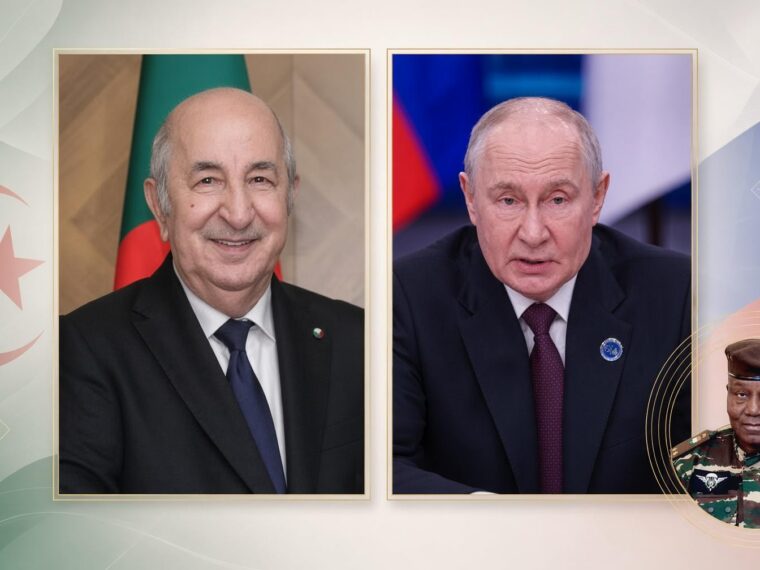
In a historic move that upends the Sahel’s security landscape, Algeria’s Parliament has approved the unprecedented deployment of its regular troops to Niger, marking the first such foreign military operation in half a century. This strategic decision dismantles Moscow’s exclusive influence over the Alliance of Sahel States (AES) and introduces a new battleground in the ongoing geopolitical tug-of-war between Algiers and Moscow.
Russia’s military-economic model crumbles under Algerian pressure
Since the recent regime change in Niamey, Russia has aggressively expanded its defense contracts with Niger, supplying advanced air defense systems, tactical drones, attack helicopters, and paid instructors from the Africa Corps. These agreements, valued in the hundreds of millions, were designed to lock Niger into a long-term military and economic dependency, complete with lucrative mining and oil concessions for Russian state-linked companies.
The arrival of Algerian troops on the ground now directly challenges this economic ecosystem:
- Collapse of Russia’s arms monopoly: Algeria’s offer of high-level military training and support reduces Niger’s reliance on expensive Russian equipment, particularly for maintenance and parts, where Algiers has superior technical expertise inherited from Soviet-era systems.
- Undermining extractive business models: The presence of Algeria’s well-trained national army diminishes the perceived need for mercenary security, eroding Moscow’s ability to secure mining and oil permits as payment for its military services.
- Shift in technical and logistical control: With Algeria capable of maintaining Soviet-designed military assets (such as Su-30 fighters and armored vehicles), Russian state enterprises lose access to highly profitable maintenance and upgrade contracts.
Algeria secures its energy lifelines amid rising mercenary threats
For Algeria, the troop deployment is a preemptive strike to protect billions in investments across southern Niger. The country views the proliferation of Russian-armed and trained paramilitary groups near its border as a direct threat to its economic stability.
The most critical assets under threat include:
- Kafra Oil Field: Operated by Algeria’s Sonatrach through its subsidiary SIPEX, this major oil block holds reserves estimated in the tens of millions of barrels and is central to the economic partnership between Algiers and Niamey.
- Trans-Saharan Gas Pipeline (TSGP): This strategic 4,128 km project aims to deliver over 30 billion cubic meters of Nigerian gas annually to Europe, passing through Niger and Algeria. Protecting this infrastructure requires full control of the Saharan transit corridor—an impossible goal in the presence of armed non-state actors supported by external powers.
By asserting military control, Algeria ensures the uninterrupted flow of energy resources while sending a clear message to Moscow: its infrastructure and economic partners will not be held hostage to Russian security mercenarism.
Moscow’s Sahel fortress falters as Algiers asserts regional primacy
Once Russia’s top arms buyer in Africa, Algeria is now using its own military strength to counter Russian ambitions in Niger. The deployment forces Niamey’s junta to reconsider its total alignment with the Kremlin and explore diversification of its security partnerships—especially when a far more capable and stable alternative stands at its doorstep.
From Moscow’s perspective, the illusion of a secure Russian sphere in the Sahel has collapsed. The Sahara is no longer a unipolar zone of influence. Instead, it has become a contested theater where yesterday’s weapons deals do not guarantee today’s geopolitical or economic dominance. Algeria’s decisive action exposes a fundamental flaw in Russia’s Sahel strategy: while Moscow secures arms sales, Algiers secures outcomes on the ground.
Shifting alliances in real time
For the Nigerien junta, Algerian troops offer more than just physical protection—they provide a strategic alternative to financial and military dependency on Moscow. For Algeria, this move is not just about containing Russian influence; it’s about safeguarding a decade-long investment in Niger’s stability and economic integration. For Russia, the loss of exclusive control over the AES marks the end of an era. The Sahel is now a multipolar battlefield, where old alliances no longer guarantee new outcomes.