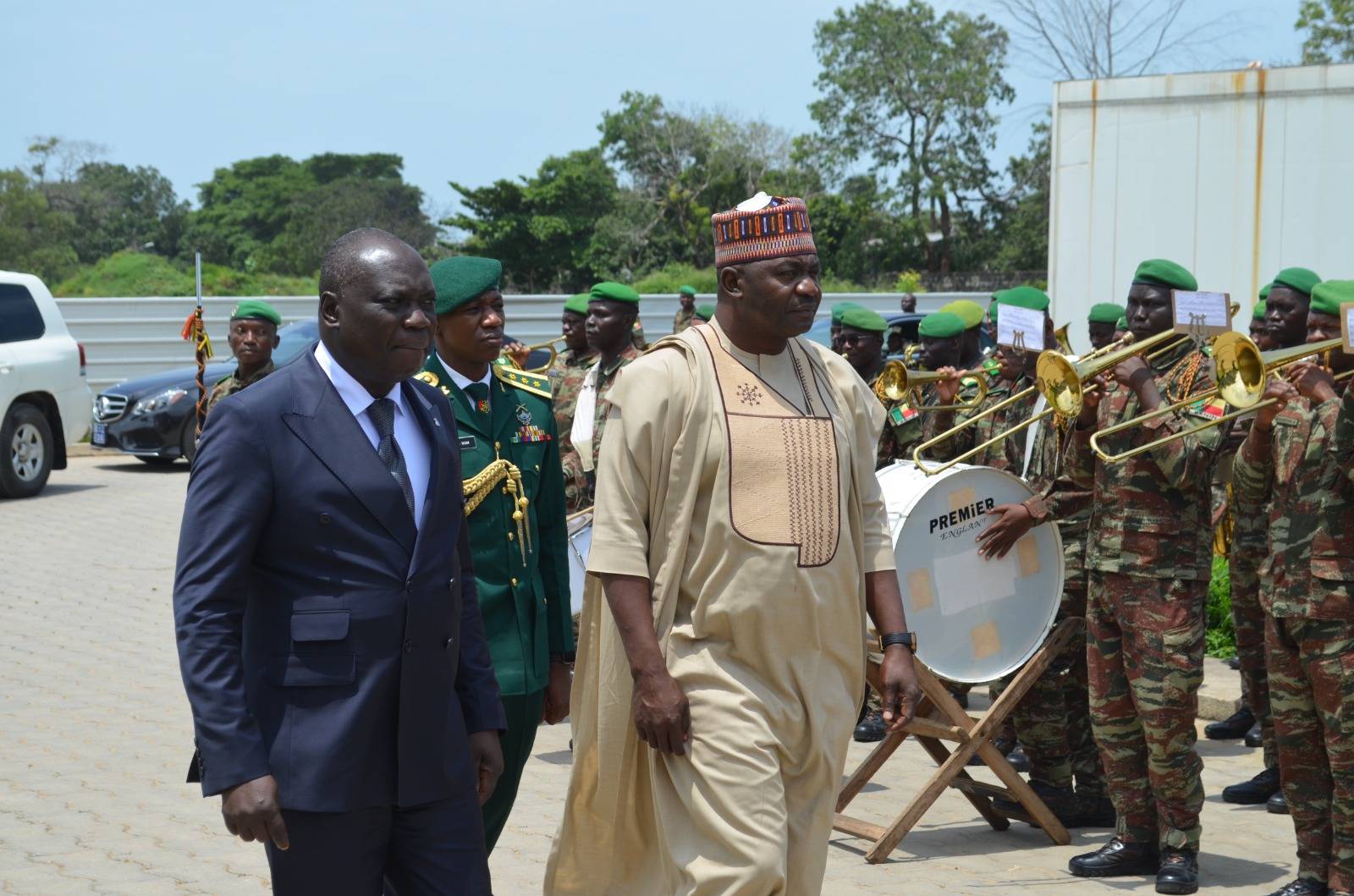
In a bold move to counter the escalating threat of armed groups in West Africa, Bénin and Nigeria have deepened their military collaboration, signaling a new era of regional solidarity. A high-level Nigerian delegation, led by Defense Minister General Christopher Gwabin Musa, paid a strategic visit to Cotonou this month, reinforcing the urgency of a unified response against terrorism.
Strategic Partnership Takes Shape in Cotonou
Underlining the gravity of the situation, General Musa’s visit was not merely diplomatic—it reflected a shared determination to tackle a common enemy. Before formal talks at the Ministry of Defense, the delegation visited Togbin military barracks, where Nigerian troops deployed for Bénin’s 66th independence anniversary celebrations were stationed. This gesture highlighted the deep historical and cultural ties binding the two nations.
The working session that followed focused on transforming long-standing diplomatic goodwill into a robust operational shield. The ministers discussed concrete steps to strengthen border security, intelligence sharing, and joint counterterrorism operations—key pillars of a cohesive regional defense strategy.
Cross-Border Terrorism: A Shared Menace
The Sahel and Gulf of Guinea regions face unprecedented instability as armed factions linked to Al-Qaïda and the Islamic State push southward. Northern Bénin, bordering Burkina Faso and Niger, faces relentless pressure, while Nigeria grapples with Boko Haram, ISWAP, and armed banditry across multiple fronts.
Both ministers acknowledged that isolated national efforts are no longer viable. General Musa emphasized that porous borders remain the terrorists’ greatest advantage. To dismantle their networks, a coordinated regional response—encompassing Bénin, Nigeria, Niger, Burkina Faso, and Mali—is essential. Despite political complexities, the urgency of the threat demands seamless military communication across the Sahel and Gulf of Guinea.
South-South Cooperation: The Power of Unity
Bénin’s Defense Minister, Gildas Agonkan, hailed the partnership as a testament to both nations’ political will to forge an unbreakable alliance. “Our strategies must converge so that together, with our subregional partners, we can defeat this scourge that stifles our nations’ progress,” he declared.
The collaboration will prioritize:
- Intelligence exchange to dismantle terrorist financing networks;
- Joint border patrols in vulnerable zones;
- Enhanced troop interoperability for seamless cross-border operations.
The goal is clear: maintain relentless pressure on militants, denying them safe havens on either side of the border. This model proves that African-led solutions—leveraging local expertise—are the most effective way to address crises on the continent.
Community Engagement: The Human Element
Beyond military strategy, the Cotonou meeting underscored a critical truth: counterterrorism success hinges on civilian cooperation. General Musa urged Bénin and Nigeria’s populations to remain vigilant, reporting suspicious activities to security forces. Without public trust and collaboration, vital intelligence often goes unreported.
Community awareness campaigns are now a frontline defense against radicalization and infiltration. By fostering a strong Army-Nation alliance, the two countries aim to starve terrorist cells of local support and ideological footholds.
A Regional Bulwark Against Extremism
The enhanced security cooperation between Bénin and Nigeria transcends bilateral ties—it serves as a cornerstone for West African stability. By securing their shared border and streamlining military coordination, Cotonou and Abuja send a powerful message to regional extremist networks.
Economic growth, trade, and public welfare are inseparable from territorial security. By reaffirming their commitment this month, Bénin and Nigeria have set the stage for decisive action. The blueprint is clear: turn words into deeds to safeguard a peaceful future for generations to come.