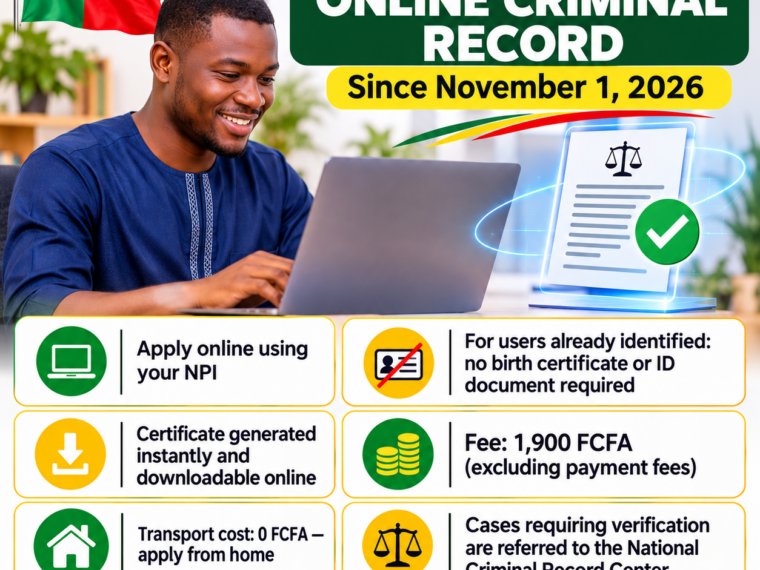
Benin has launched a fully digitalized system for obtaining criminal records, allowing citizens to retrieve their documents instantly online without physical visits or additional paperwork.
How Benin’s new online system cuts bureaucracy for citizens
For years, obtaining official documents in Benin meant lengthy waits, costly trips, and bureaucratic hurdles. But since November 2026, citizens already registered in government databases can now access their criminal records immediately through the National Personal Identification Number (NPI) system, eliminating the need for extra paperwork like birth certificates or IDs.
From days of waiting to instant downloads
Before this digital shift, securing an administrative document required multiple steps:
- Traveling to government offices, sometimes over long distances
- Paying for transportation, printing, and other incidentals
- Waiting for hours or even days, often needing to return multiple times
- Organizing work or personal schedules around these trips
Students, workers, rural residents, and even members of the diaspora faced these challenges daily. The new system changes that by allowing users to:
- Submit requests through the national public services portal
- Retrieve documents instantly after approval
- Pay the standard 1,900 FCFA fee directly online
Who benefits from this digital breakthrough?
This innovation particularly helps:
- Workers who no longer lose productivity to administrative trips
- Students applying for scholarships or job opportunities
- Rural residents who previously had to travel long distances
- Diaspora members who can now handle requests from abroad
By removing the need for physical visits, the system eliminates transport costs, saves time, and simplifies a once cumbersome process.
Digitization meets real needs, not just technology
This isn’t Benin’s first digital initiative. Since July 2020, the government has been modernizing public services, starting with criminal records and passports. The latest update extends this digital push by:
- Automating document generation for pre-verified users
- Redirecting complex cases to the National Criminal Record Center for manual review
- Ensuring faster service without compromising document authenticity
For cases requiring manual checks, the system flags them for review while still reducing wait times compared to traditional methods. The goal remains clear: make public services more accessible and efficient.
Why this matters for public trust and efficiency
The digital transformation in Benin reflects a broader trend where governments use technology to bridge gaps between citizens and administration. By prioritizing convenience and reducing hidden costs like transport and lost wages, the system:
- Lowers financial barriers for low-income families
- Makes bureaucracy more transparent and predictable
- Supports diaspora communities who once relied on intermediaries
Critics may argue that digital solutions exclude those unfamiliar with technology or lacking internet access. However, the government has implemented gradual rollouts and support systems to ensure no citizen is left behind. The focus remains on balancing innovation with inclusivity.
A model for Africa’s bureaucratic reform
Benin’s experience offers valuable lessons for other African governments still struggling with:
- Lengthy administrative backlogs
- High travel costs for rural citizens
- Outdated paperwork-heavy processes
Instead of forcing citizens to adapt to rigid systems, Benin has flipped the script by adapting systems to citizens’ needs. Other nations could follow suit by:
- Investing in secure digital identity frameworks
- Expanding online portals for essential services
- Training staff to handle hybrid digital-physical workflows
The message is clear: modern administration should prioritize people over procedures. When a citizen can download a document from home at 2 a.m., that’s true progress.
Looking ahead: What’s next for Benin’s digital journey?
With criminal records now fully digitized, Benin is poised to expand this model to other vital documents like land titles and business permits. The country’s digital roadmap includes:
- Expanding the NPI system for seamless ID verification
- Improving cybersecurity to protect sensitive data
- Phasing out paper-based requests entirely in favor of online systems
As Benin continues to reshape its bureaucracy, the rest of Africa watches closely. The ultimate test of digital governance lies not in technology itself, but in its ability to deliver tangible improvements in people’s daily lives.