Cattle export ban disrupts Tabaski preparations in Côte d’Ivoire
With Tabaski 2026 approaching, Burkina Faso’s sudden suspension of all cattle exports has left Côte d’Ivoire scrambling to secure 172,000 head of livestock. The decision, announced just two weeks before the festival, has created a supply crisis for Abidjan, which traditionally relies on Sahelian cattle suppliers.
On May 8, 2026, Burkina Faso’s Ministries of Commerce, Agriculture, and Economy issued an interministerial decree halting the issuance of Special Export Authorizations (ASE) for livestock. The measure took effect three days later, giving traders with valid ASEs just one week to complete pending transactions. After that deadline, no cattle will legally cross Burkina Faso’s borders.
Ouagadougou frames the decision as a domestic necessity: « ensuring livestock availability » ahead of Tabaski while stabilizing prices and protecting consumer purchasing power. Yet in Abidjan, the move feels like a geopolitical shockwave, forcing Côte d’Ivoire to confront its deep dependence on foreign cattle.
Côte d’Ivoire’s cattle supply crisis deepens
Industry estimates suggest Côte d’Ivoire will need between 172,000 and 350,000 sheep and cattle for Tabaski 2026. Local production covers just 25% of demand—around 87,500 head—leaving a massive shortfall. Historically, Burkina Faso, Mali, Niger, and Benin supplied the remainder.
In Yamoussoukro’s livestock markets, traders report a 10% price surge compared to last year. Mohamed Touré, spokesperson for Interprix in Yamoussoukro, highlights the regional security crisis: « Mali and Burkina Faso no longer export due to conflict, while Niger’s supplies are unreliable. Without them, Côte d’Ivoire’s Tabaski would collapse. »
Facing the shortage, Ivorian authorities met with Muslim leaders on May 11 to encourage alternatives—specifically, using smaller local rams. However, cultural preferences favor Sahelian breeds, complicating the adjustment.
Burkina Faso’s economic pivot drives the ban
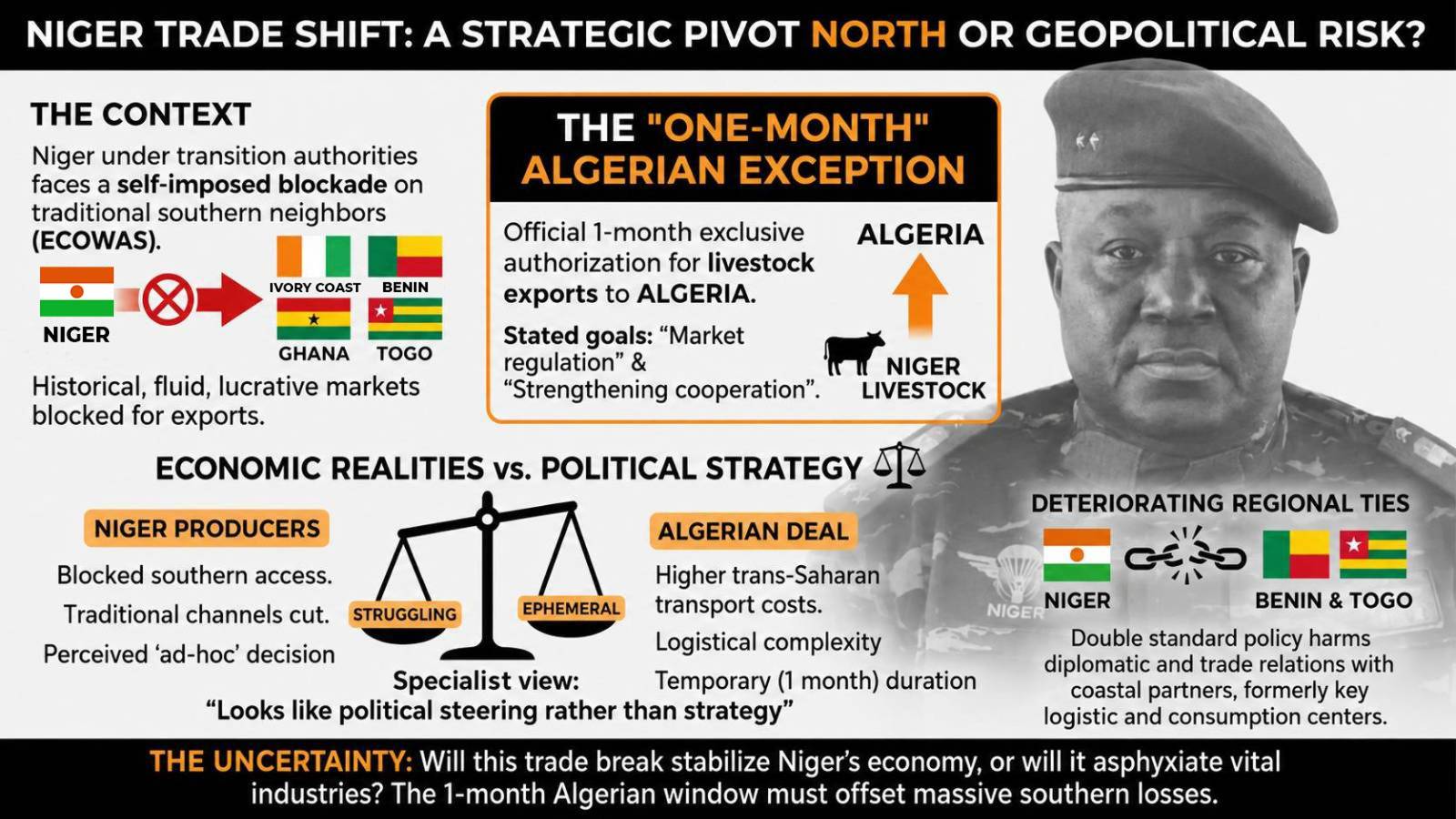
Ouagadougou’s livestock export halt aligns with the Alliance of Sahel States (AES) doctrine. Niger imposed a similar ban before Tabaski 2025, while Burkina Faso has restricted tomato and poultry imports in recent years.
The goal? Transition from raw livestock supplier to processed meat exporter. Faso Abattoir, launched in April 2025, symbolizes this shift. Export earnings from cattle, sheep, and goats jumped from 400 million FCFA in 2020 to 11.8 billion FCFA in 2024, making livestock the country’s third-top export. The ban thus targets a vital economic pillar—and sends a political message.
Diplomatic tensions lurk behind the economic move
Since Burkina Faso’s 2022 coup, relations with Côte d’Ivoire have frayed. In April 2024, Burkina Faso accused Abidjan of harboring « destabilizers », while its Security Minister singled out exiled Burkinabè figures like former Foreign Minister Alpha Barry. By December 2024, Burkina Faso recalled its chargé d’affaires from Abidjan, leaving both countries without ambassadors.
A tentative thaw began in December 2025 when Ivorian and Burkinabè officials pledged to « consolidate trust ». Yet the May 2026 livestock ban raises questions: Did Ouagadougou time the move to coincide with recent bilateral tensions, including the April 2026 death of Burkinabè activist Alino Faso in detention?
Officially, Burkina Faso cites food sovereignty as the driver. With 35 million cattle but rising meat prices, authorities argue the ban protects local consumers. Yet the timing and target of the measure fuel speculation about its political undercurrents.
What’s next for Tabaski 2026?
The answer hinges on how long Burkina Faso extends the suspension. If lifted post-Tabaski, the food security rationale holds. If prolonged, the move could signal a deliberate economic lever against Côte d’Ivoire. Meanwhile, markets in Yamoussoukro, Abidjan, and Bouaké brace for disruption—while Ivorian Muslims may need to adapt their traditions this year.