Burkina Faso: is the fight against terror morphing into an all-out war on Muslim clerics?
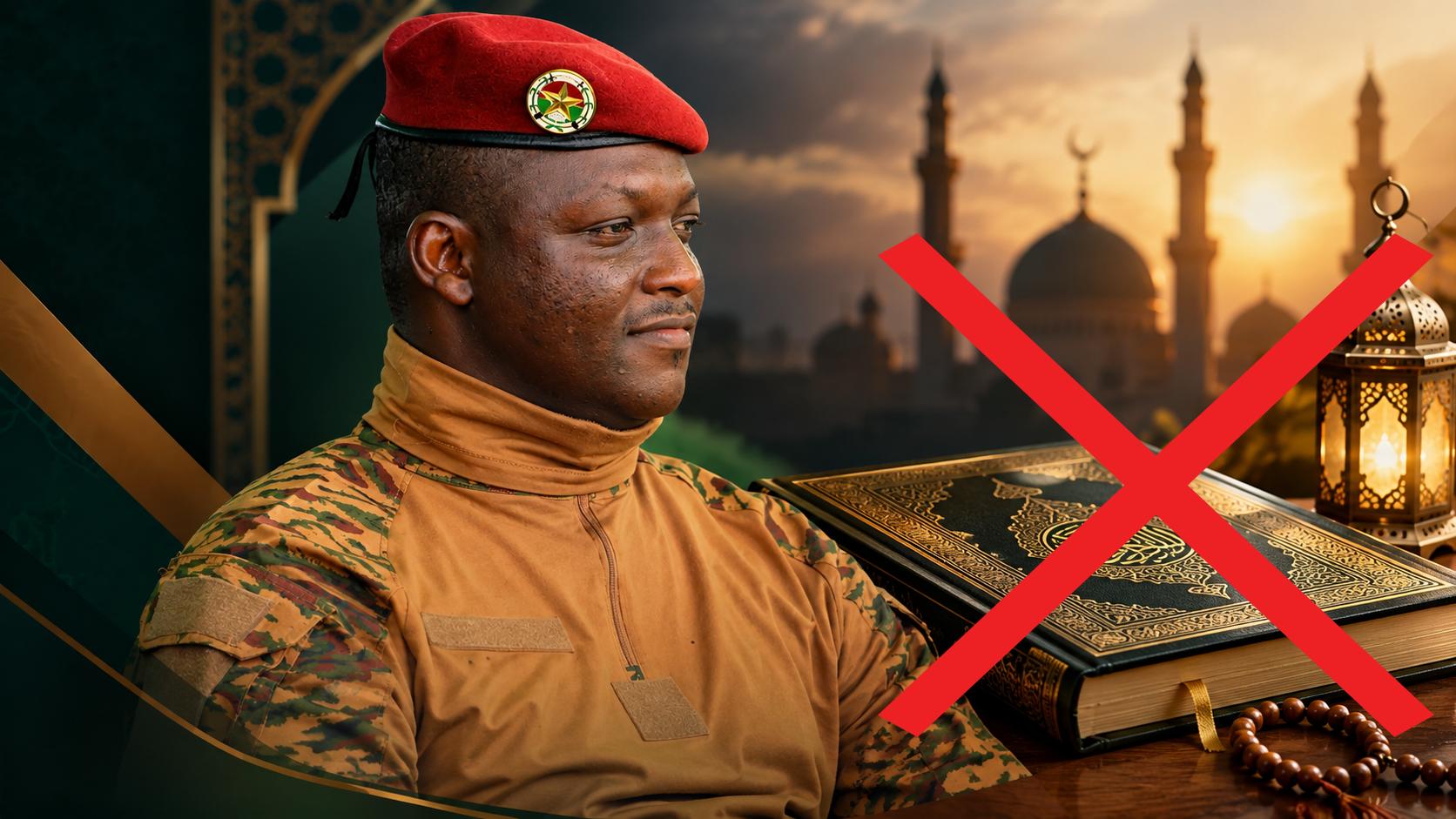
In Burkina Faso, the line between countering armed extremism and cracking down on religious freedoms has never been so blurred. Under the guise of rooting out the terrorist threat that has long plagued the country, the transitional government led by Captain Ibrahim Traoré has launched a strategy of control and repression of unprecedented violence against the Muslim community, which remains the majority in the country. Behind official rhetoric about “national security,” what is unfolding from Ouagadougou is a veritable takeover of Burkina Faso’s Islamic figures and institutions.
Arrests, closures and the taming of imams
For several months, security rhetoric has served as a convenient justification for hunting down independent religious voices. Moderate imams, influential preachers and leaders of Muslim associations have faced arbitrary arrests, incommunicado detention or forced conscription into the Volunteers for the Defense of the Homeland (VDP). Their only crime: criticizing the junta’s methods, questioning the handling of the security crisis or simply calling for the preservation of civil rights.
At the same time, mosques and Quranic schools located in high-risk areas are subjected to drastic controls, arbitrary administrative closures or systematic accusations of collusion with armed groups. By indiscriminately labeling any religious discourse that is not aligned as “subversive” or “complicit with the enemy,” the authorities are instilling a climate of terror within a religious community historically recognized for its role in mediation and social cohesion.
Political instrumentalization and the fracture of national cohesion
This iron-fisted policy pursues a clear objective: neutralizing any social force capable of articulating structured opposition to military rule. By targeting the networks and figures of local Islam as a priority, the transitional regime seeks to impose a single line of thought and lock down public space.
Far from weakening the jihadist groups that are ravaging the region, this brutal offensive against religious practice risks producing the opposite effect. By stigmatizing the Muslim community, breaking customary and spiritual relays, and depriving the faithful of moderate reference figures, the authorities are fueling a sense of injustice and alienation. By turning religion into an internal enemy under the cover of sovereignty and security, Ibrahim Traoré runs the major risk of atomizing the social fabric of a country already on its knees.