The military leadership in Burkina Faso is heightening its systematic crackdown on independent voices through restrictive new laws, administrative hurdles, and aggressive measures against both local and global organizations. According to a joint statement from Human Rights Watch, the International Federation for Human Rights (FIDH), the World Organisation Against Torture (OMCT), and the Kisal Observatory, the authorities must cease this campaign against humanitarian and rights groups and uphold basic civil liberties.
On April 15, 2026, the Ministry of Territorial Administration and Mobility declared the dissolution of 118 civil society organizations, many of which focused on human rights advocacy. Officials cited a July 2025 law concerning freedom of association as the basis for the move, yet failed to provide specific evidence of violations beyond vague claims of non-compliance.
“The mass shutdown of these organizations is the latest effort by the junta in Burkina Faso to stifle opposition and avoid scrutiny of its human rights record,” noted Binta Sidibé Gascon, President of the Kisal Observatory. She added that the move has fostered a climate of intimidation that is stalling independent civic work.
A pattern of escalating control
This government action is part of a broader trend of repression that intensified after the military seized power in September 2022. Since the coup, the administration has targeted non-governmental organizations, independent news outlets, and rights defenders. Dozens of local and international media houses and NGOs have been suspended or expelled under questionable administrative pretexts.
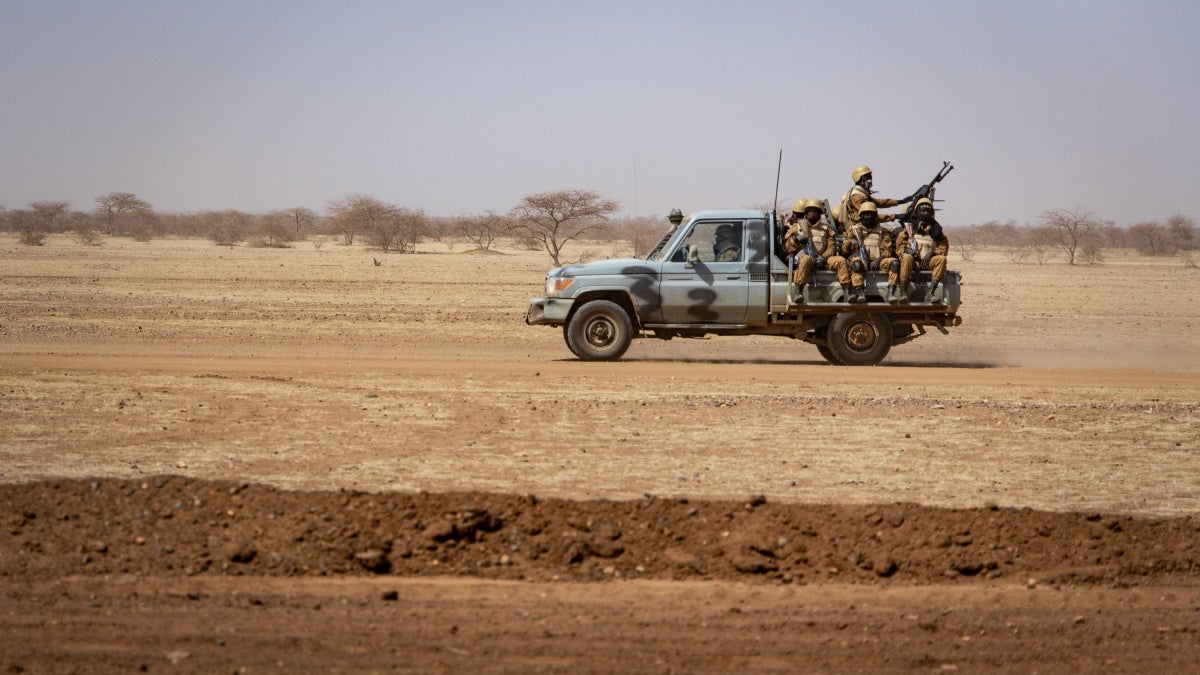
Beyond administrative bans, authorities have detained aid workers and orchestrated the arbitrary arrest, forced disappearance, or illegal military conscription of journalists and political opponents. This crackdown is occurring alongside a worsening security environment, as Burkina Faso continues its decade-long battle against armed groups linked to Al-Qaeda and the Islamic State.
While some of the dissolved groups were inactive, others—such as Action by Christians for the Abolition of Torture (ACAT) and the Burkinabè Coalition for Women’s Rights (CBDF)—were fully operational and appeared to be meeting the legal requirements of the July 2025 law. Crucially, that law provided a one-year window for organizations to comply, a period that had not yet concluded.
“The junta’s decision, if based on the 2025 law, is legally suspect because the allowed timeframe for compliance was still open,” stated Ilaria Allegrozzi, a senior researcher at Human Rights Watch. She described the scale of the dissolution as a massive blow to civil society intended to intimidate remaining groups.
Restrictive legislation and administrative barriers
Passed in July 2025, the association law was presented as a tool to fight terrorism financing and money laundering, but it has primarily served to expand state control. It forces foreign organizations to appoint Burkina Faso nationals to senior leadership roles, creating personal risks for those individuals. Furthermore, a September 2025 update to the Family Code allows the state to strip individuals of their nationality if they are deemed to act against national interests, raising the threat of statelessness.
In early April, the military government reacted to a Human Rights Watch report on war crimes by threatening “firm measures” against what it labeled “imperialist agencies” masquerading as NGOs. Additionally, new administrative requirements like the “statistical visa” have made independent research and data collection nearly impossible due to high costs and delays.
The repression has also hit international aid groups hard. Between June and July 2025, the licenses of approximately 20 foreign organizations, including Diakonia, Geneva Call, the Tony Blair Institute, and Comunità di Sant’Egidio, were revoked or suspended for alleged procedural failures.
Targeting individuals and humanitarian staff
The crackdown has not spared individuals. Reports indicate that over 70 aid workers, mostly Burkina Faso nationals, have been detained since 2022. In a high-profile case in August 2025, the junta expelled Carol Flore-Smereczniak, the top United Nations representative in the country, following a report on child rights violations.
Another instance involved the detention of eight staff members from the International Group Safety Organization (INSO) in mid-2025. They were accused of espionage and treason before being released in December 2025.
Furthermore, an April 2023 “general mobilization” decree has been used to forcibly conscript critics into the military. While some, like several journalists and activists, were released in late 2025, others remain missing. This includes investigative reporter Serge Oulon, whose whereabouts remain unknown.
International law protects the rights to free expression and association, requiring that any restrictions be necessary and proportionate. The four human rights organizations argue that the current mass dissolutions and the 2025 law fail these standards.
“A vibrant, independent civil society is essential for checking power and protecting marginalized communities,” said Drissa Traoré, Secretary-General of FIDH. He urged the authorities in Burkina Faso to allow organizations to operate without interference and to protect the fundamental rights of all citizens.
