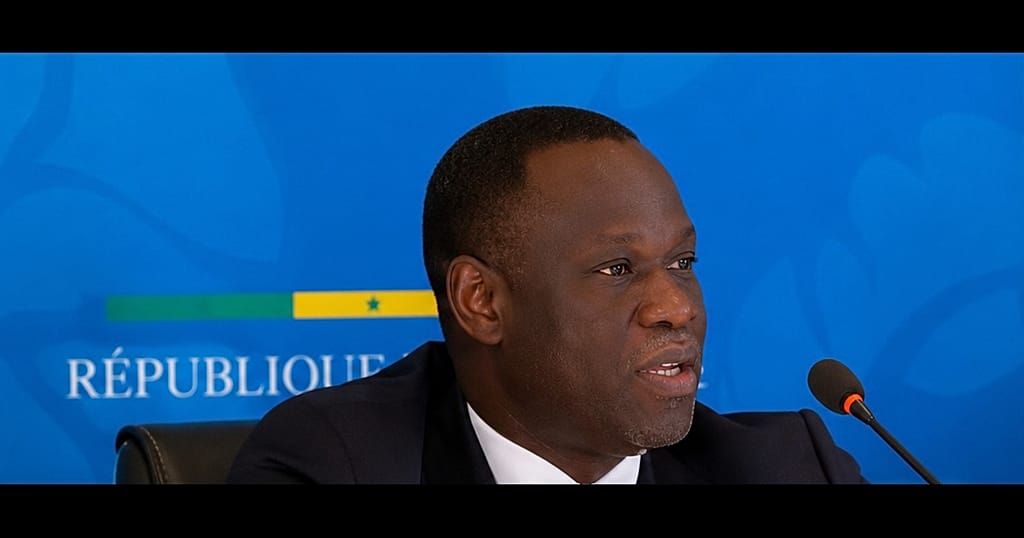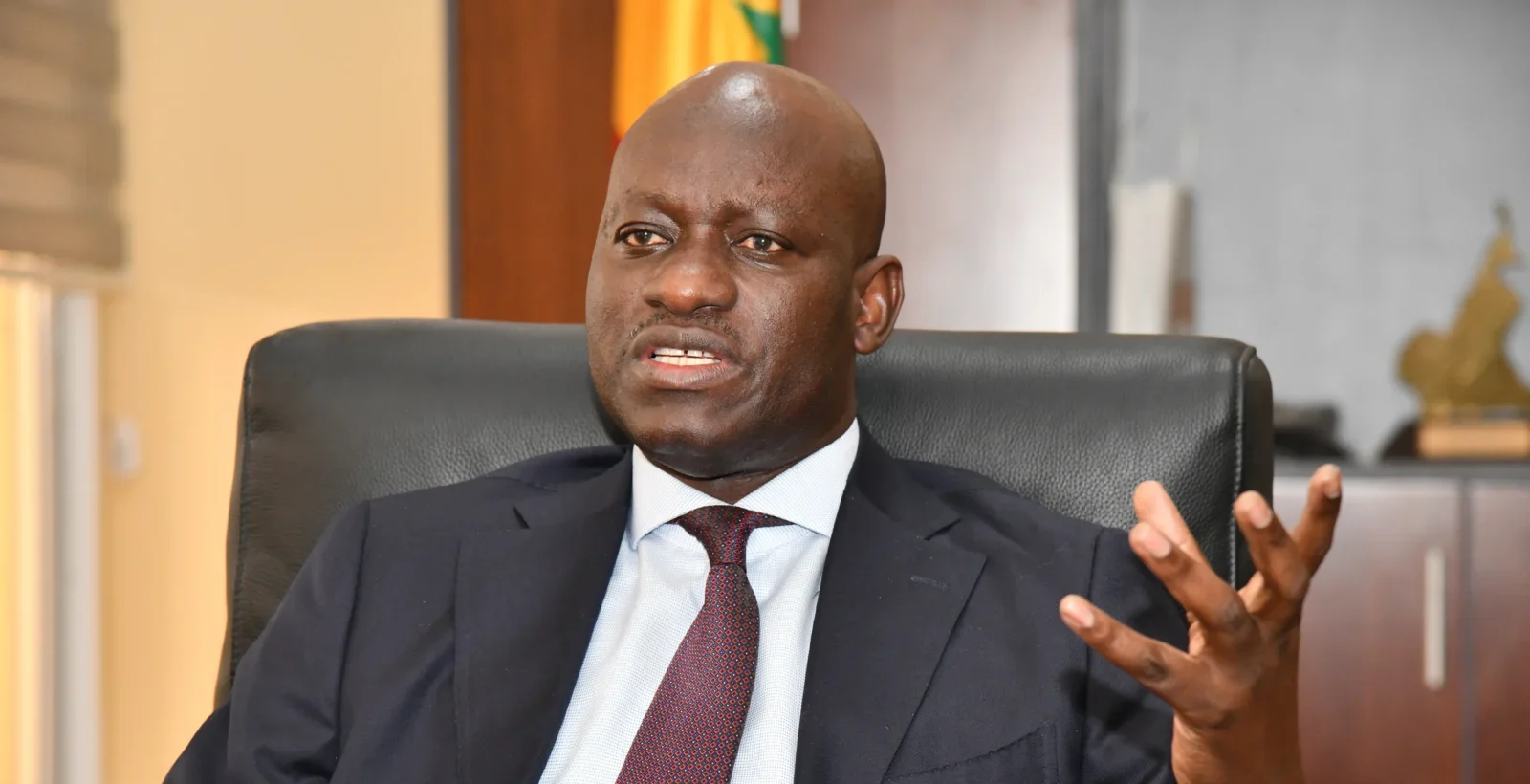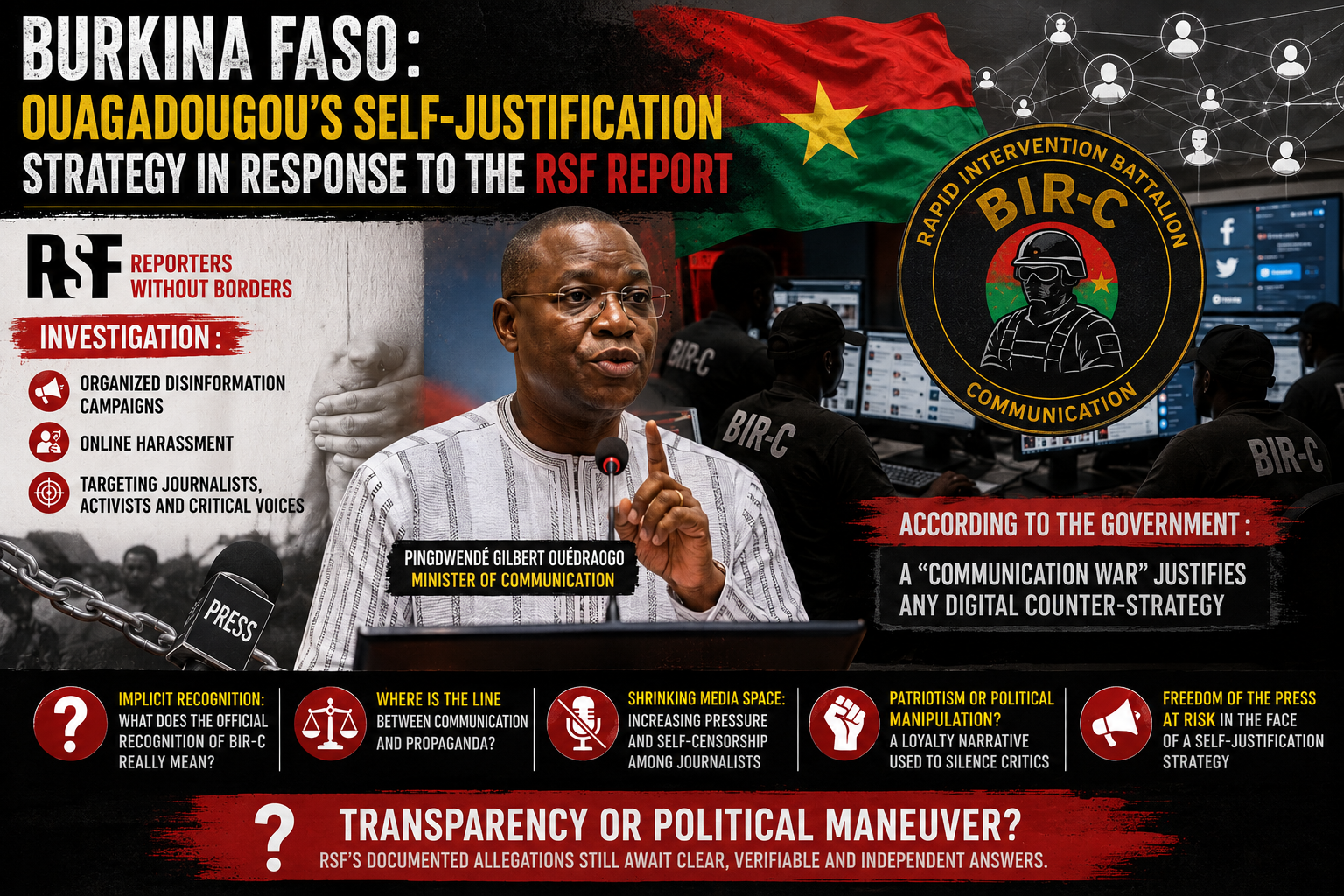
Rather than addressing criticisms of digital suppression, the Burkinabè authorities have intensified a defensive stance. On August 3, during a national assembly, Communication Minister Pingdwendé Gilbert Ouédraogo redirected attention from mounting allegations by publicly endorsing the Rapid Intervention Battalion-Communication (BIR-C), a unit linked to the country’s digital defense framework. This endorsement, far from easing concerns, has intensified scrutiny over the government’s transparency.
The minister’s vocal support for the BIR-C, while not an explicit acknowledgment, subtly confirms its involvement in Burkina Faso’s digital operations. This move aligns with a Reporters Without Borders (RSF) investigation that uncovers an alleged coordinated network engaged in disinformation campaigns, online harassment, and systematic targeting of journalists, activists, and critics of the military-led transition. Rather than launching inquiries or directly refuting the claims, authorities opted to champion the BIR-C, a decision that has only fueled skepticism regarding its actual functions.
The RSF findings detail a coordinated operation where numerous social media profiles work in unison to manipulate narratives, marginalize dissenting voices, and exert persistent pressure on media professionals. Despite these revelations, government officials continue to dismiss the allegations. Their decision to publicly defend the BIR-C—rather than confronting the documented evidence has sparked broader discussions about where legitimate state communication ends and state-sponsored propaganda begins.
According to the government’s narrative, Burkina Faso is engaged in a war of narratives, with external actors allegedly seeking to destabilize the nation. Within this context, any digital tactics used to counter these perceived threats are framed as acts of patriotism. However, this justification raises a pressing question: when does defensive communication transition into the suppression of dissenting opinions?
While combating the spread of false information is a legitimate objective, international standards on freedom of expression mandate that such efforts avoid harassment, smear campaigns, or intimidation against journalists. When dissent is repeatedly equated with betrayal, public discourse becomes increasingly constrained, threatening the very principles of democratic governance.
An environment of growing constraints
The unfolding controversy occurs against a backdrop of restricted international media presence, heightened pressure on journalists, and a shrinking local media landscape in Burkina Faso. Analysts warn that these conditions foster an environment where self-censorship becomes a de facto survival mechanism. The presence of an organized digital communication framework—if its role extends beyond official messaging raises pressing questions about the balance between national security and fundamental rights.
The minister’s statements appear less as clarifications and more as a tactical defense mechanism. By portraying BIR-C members as defenders of the nation, authorities effectively shift the focus from operational concerns to questions of loyalty. This approach redefines criticism not as an inquiry into methods but as an attack on the state’s legitimacy.
Yet, a democracy even one confronting severe security challenges must demonstrate its commitment to press freedom and human rights by welcoming scrutiny from journalists and nongovernmental organizations. Instead of rallying support for the implicated entity in response to an investigation, a more constructive path would involve directly addressing the allegations. Failure to do so risks being interpreted as an implicit endorsement of the BIR-C’s central role in the government’s digital communication strategy.
The implications of this issue extend far beyond the BIR-C itself. They highlight how Burkina Faso navigates the complexities of information control in the digital age. As social media evolves into a new arena for political conflict, its use by state-aligned structures must prioritize transparency, respect for human rights, and adherence to press freedom principles.
In summary, this episode reflects a deliberate political choice: addressing criticism through patriotic rhetoric rather than engaging in evidence-based, adversarial debate. Until the allegations documented by RSF receive thorough, verifiable, and independent responses, official denials risk being dismissed as attempts to justify a communication system that continues to raise serious concerns about press freedom in Burkina Faso.