Burkina Faso’s homemade armored vehicles under scrutiny after militant advances
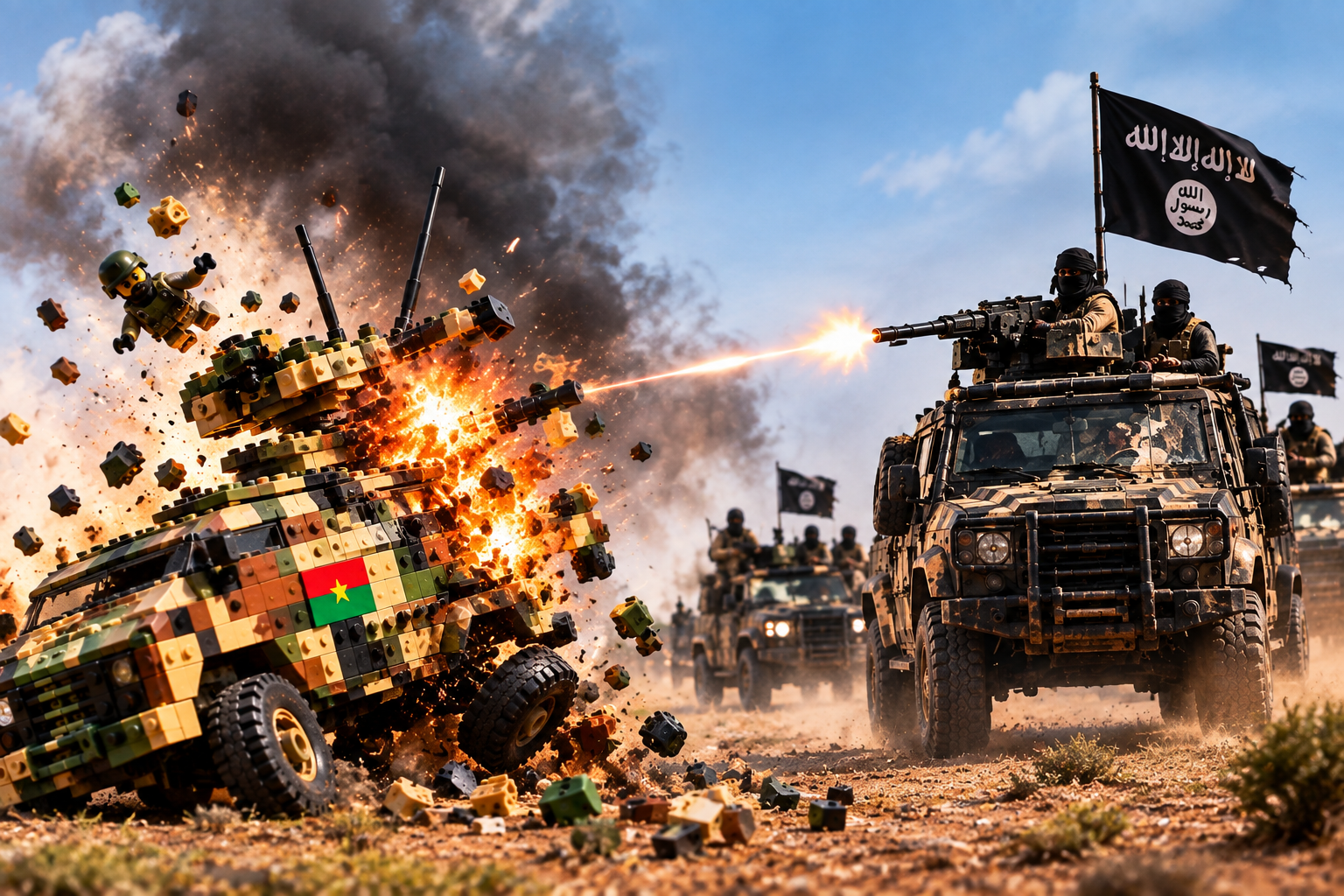
Fallout from militant gains tests Burkina Faso’s military claims
Mahlou and Winten have become the latest flashpoints where the rhetoric of an ascendant domestic defense industry collides with the brutal reality of the battlefield. On September 16, 2026, the Group for the Support of Islam and Muslims (JNIM) asserted control over two Volunteer Defense of the Homeland (VDP) outposts in Burkina Faso’s Bam Province. While further verification is pending, the claim alone has reignited debates over the performance and durability of the country’s locally produced armored vehicles equipment touted as a symbol of military sovereignty.
The myth vs. the machine: when propaganda meets frontline failure
The narrative of self-sufficiency has been central to Burkina Faso’s military strategy under the current administration. State officials frequently highlight the country’s expanding defense manufacturing capacity, framing domestically assembled or produced armored vehicles as a cornerstone of national resilience. The message is clear: Burkina Faso is no longer dependent on foreign arms to secure its borders. Yet, the narrative stumbles when confronted with combat conditions.
The JNIM’s advance into Mahlou and Winten is more than a tactical setback it is a litmus test for equipment that has been proudly showcased in parades and promotional videos. Are these vehicles, sometimes playfully dubbed “LEGO sets” for their modular assembly process, truly capable of withstanding sustained attacks, or are they little more than showpieces in a war of perceptions?
From showroom to battlefield: the perilous leap of faith
Industrial capability does not automatically translate to battlefield prowess. The February 2026 announcement of Burkina Faso’s first domestically produced armored vehicle was met with fanfare, symbolizing progress toward self-reliance. However, the true measure of a military’s strength lies not in the number of vehicles produced, but in their effectiveness under fire. Recent engagements paint a troubling picture: even as the government celebrates its industrial strides, militants continue to overrun fortified positions across the north.
Analysts point to August 2026 reports where the JNIM claimed multiple VDP outpost victories in Séguénéga and Bourzanga. These incidents underscore a disconnect between manufacturing achievement and operational endurance. While the army recaptures territory, sustaining control remains a persistent challenge raising questions about the long-term viability of locally built defenses.
What the losses at Mahlou and Winten reveal
If the JNIM’s claims are confirmed, the implications are stark. The incident would expose a critical gap between Burkina Faso’s industrial ambitions and its capacity to deploy them effectively. The loss of Mahlou and Winten would signal that the country’s armored icons, despite their media appeal, are not yet a match for the resilience and adaptability of militant forces.
The fallout extends beyond the loss of two positions. It challenges the very foundation of Burkina Faso’s military doctrine, which increasingly relies on domestically sourced equipment. If locally built vehicles fail to deliver under pressure, what does that say about the nation’s broader security strategy? The public debate has already begun, with citizens and analysts questioning whether the country’s defense industrialization is moving faster than its operational capabilities.
The government’s response will be closely watched. Will the recent setbacks lead to a tactical reassessment, or will they be dismissed as temporary aberrations?
What comes next: rebuilding trust on unstable ground
The road ahead is fraught with challenges. For Burkina Faso’s defense sector, the priority must be to prove that its armored vehicles are more than ceremonial assets. Their performance on the battlefield will determine whether the industrial narrative can survive the rough terrain of wartime realities.
The lessons from Mahlou and Winten may force a reckoning. Military planners may need to rethink deployment strategies, reinforce training protocols, or accelerate improvements in vehicle design and maintenance. The alternative continuing to rely on equipment that cannot meet the demands of modern asymmetric warfare risks eroding both public confidence and territorial integrity.
The battle for Burkina Faso’s future is not only being waged in the deserts of the Sahel. It is also unfolding in the halls of power, in the factory floors of Ouagadougou, and in the hearts of a nation waiting to see if its homemade shields can truly protect it.