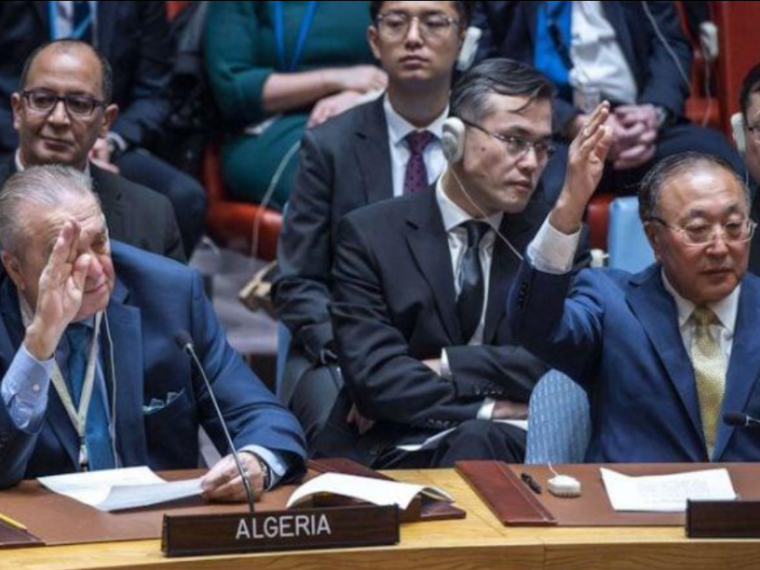
The United Nations Security Council faced a critical deadlock on October 30, 2026, after both a US-led resolution and a Russian counter-proposal on Western Sahara failed to secure approval. The standoff highlights deep divisions among permanent members and leaves the future of the UN’s peacekeeping mission in the territory hanging in the balance.
US resolution seeks to redefine Western Sahara peace process
The proposed US resolution aimed to renew the mandate of the UN Mission for the Referendum in Western Sahara (MINURSO) until October 2027, but with significant changes. It sought to center the Moroccan autonomy plan as the exclusive framework for negotiations, effectively sidelining the longstanding principle of self-determination through a referendum. The draft also proposed renaming MINURSO to the UN Mission in Western Sahara (MINUSO), signaling a shift toward a more political—and less peacekeeping—mandate.
Diplomatic sources noted that the American proposal aimed to accelerate a political settlement by prioritizing Morocco’s autonomy initiative, which Rabat considers the only viable solution to the decades-long dispute.
Russian veto blocks US-backed Western Sahara resolution
Despite securing eleven votes in favor—including from France and the United Kingdom—the resolution was vetoed by Russia, a permanent member of the Security Council. Three countries abstained: China, Pakistan, and Somalia. Moscow argued that the US draft undermined the principle of self-determination and predisposed the outcome of negotiations by favoring one political option over others.
The Russian veto underscored its opposition to what it viewed as an attempt to bypass the UN’s historical role in facilitating a referendum for the Sahrawi people. A diplomat close to negotiations stated that Moscow insisted any solution must adhere to the UN Charter and respect the right of peoples to self-determination—a principle central to the Western Sahara dispute.
Russia’s alternative fails to gain traction
Following the rejection of the US resolution, Russia presented a far more modest proposal: a one-year extension of MINURSO’s existing mandate without changes. The move was framed as an effort to prevent an abrupt withdrawal of the UN mission and maintain stability in the region.
However, the Russian counter-proposal received only three votes—Russia, China, and Somalia—falling far short of the nine needed for adoption. The United States voted against it, while eleven members abstained. The failure stemmed not from a US veto, but from an inability to secure sufficient support, revealing that Moscow could not bridge the divide either.
Self-determination remains at the heart of the impasse
The dispute over Western Sahara centers on the right of the Sahrawi people to determine their own political future. MINURSO was established in 1991 to organize a referendum on self-determination, but decades of disagreement over voter eligibility and the referendum’s structure have prevented its implementation.
The Moroccan government supports its 2007 autonomy plan under Moroccan sovereignty, while the Polisario Front insists on a referendum that includes independence as an option. For Sahrawi representatives, making Morocco’s plan the sole basis for talks would effectively eliminate the possibility of a UN-backed path to independence—a stance that remains non-negotiable.
MINURSO’s future hangs in uncertainty
With MINURSO’s mandate expiring on October 31, 2026, and no resolution adopted, the mission’s continuity is now uncertain. The Security Council’s inability to reach a consensus raises concerns about the erosion of international oversight in the territory and the potential for renewed instability.
Observers warn that the paralysis reflects deeper geopolitical fissures, particularly between Washington and Moscow, both of whom failed to impose their vision. The standoff leaves the Sahrawi people in a prolonged state of uncertainty regarding their right to self-determination—a right enshrined in UN resolutions but increasingly at risk of being sidelined by great power politics.
What’s next for Western Sahara?
With both US and Russian-backed initiatives rejected, the path forward remains unclear. The Sahrawi leadership has reiterated its commitment to a referendum as the only legitimate way to resolve the conflict. Meanwhile, the international community faces mounting pressure to find a balanced approach that respects the principles of justice and self-determination while navigating the competing interests of key stakeholders.
The October 30 Security Council session marked a historic diplomatic setback, leaving the future of Western Sahara—and the role of the UN—more uncertain than ever.