Burkina Faso’s sovereign claim over gold under scrutiny
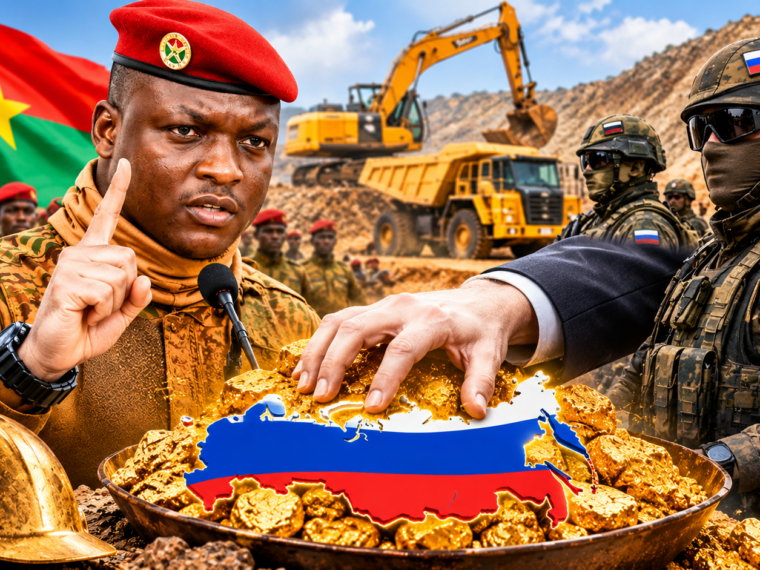
Since seizing power, Burkina Faso’s military leadership has repeatedly declared that the nation’s gold belongs 100% to the Burkinabè. Yet the growing presence of Russian security firms at major gold mining sites is raising critical questions about whether this sovereign vision aligns with ground-level realities.
From rhetoric to reality: the limits of national ownership
Claiming economic sovereignty and implementing it are not the same. While the junta has framed the nationalization of mining resources as a victory against historical dependence, the practical control of gold extraction including site security, mineral transport, and revenue management remains a point of concern. When foreign security contractors become central to protecting these high-value assets, the true extent of Burkina Faso’s authority comes under review.
Sovereignty is not declared through official statements or regulatory changes alone. It is measured by a nation’s ability to decide how its wealth is exploited, who safeguards it, and how the resulting financial benefits flow back to the people. When external actors are entrusted with such sensitive roles, clarity on their mandates, contracts, and accountability becomes non-negotiable.
Russian firms in Burkina Faso’s gold sector: security or strategic leverage?
The junta’s shift toward Russia has been justified as a move toward independence from traditional partners and a reassertion of territorial control. However, the involvement of Russian security firms in the gold sector introduces a new dimension of influence one that transcends mere commercial competition.
A gold mine is not just a site of extraction; it is a critical economic hub encompassing security, logistics, financial oversight, and operational governance. When foreign entities play a dominant role in these functions, Burkina Faso must ensure that such arrangements do not compromise its national interests or create new dependencies. The presence of Russian security contractors raises legitimate inquiries about their scope of authority, payment structures, and the oversight mechanisms in place to protect Burkinabè sovereignty.
Ownership vs. operational control: where does the power really lie?
It is essential to distinguish between two layers of authority: legal ownership of the resource and operational control over its exploitation. While the Burkinabè state may retain legal title to gold deposits, the security, management, and economic returns from mining operations are influenced by actors whose loyalties and priorities may not align entirely with national development goals.
This distinction highlights a paradox: how can Burkina Faso claim full sovereignty over its gold when key aspects of its protection and extraction rely on external security providers? The answer does not necessarily imply that Russia controls the mines, but it does underscore the need for transparent governance and robust national oversight.
Transparency and control: the true benchmarks of sovereignty
The real challenge facing Burkina Faso is not simply replacing one foreign partner with another, but ensuring that every security and mining agreement serves the national interest. A strategic partnership, regardless of origin, must not evolve into a source of economic or operational dependency.
The Burkinabè people deserve clarity on several fronts: who is protecting their mines, who profits from security contracts, who regulates the extraction process, and how the revenues are used. The promise of “100% Burkinabè” gold carries no weight unless it translates into measurable control, accountability, and tangible benefits for the population.
Sovereignty is not proclaimed in speeches; it is demonstrated through decisive action, transparent contracts, and uncompromising national authority. The junta’s vision for Burkina Faso’s gold must be backed by more than words it must be upheld by action.
By Agnès Mvogo — Journalist