Brigitte Tchede at Cairo 2026: fallout, debate and what comes next for Benin
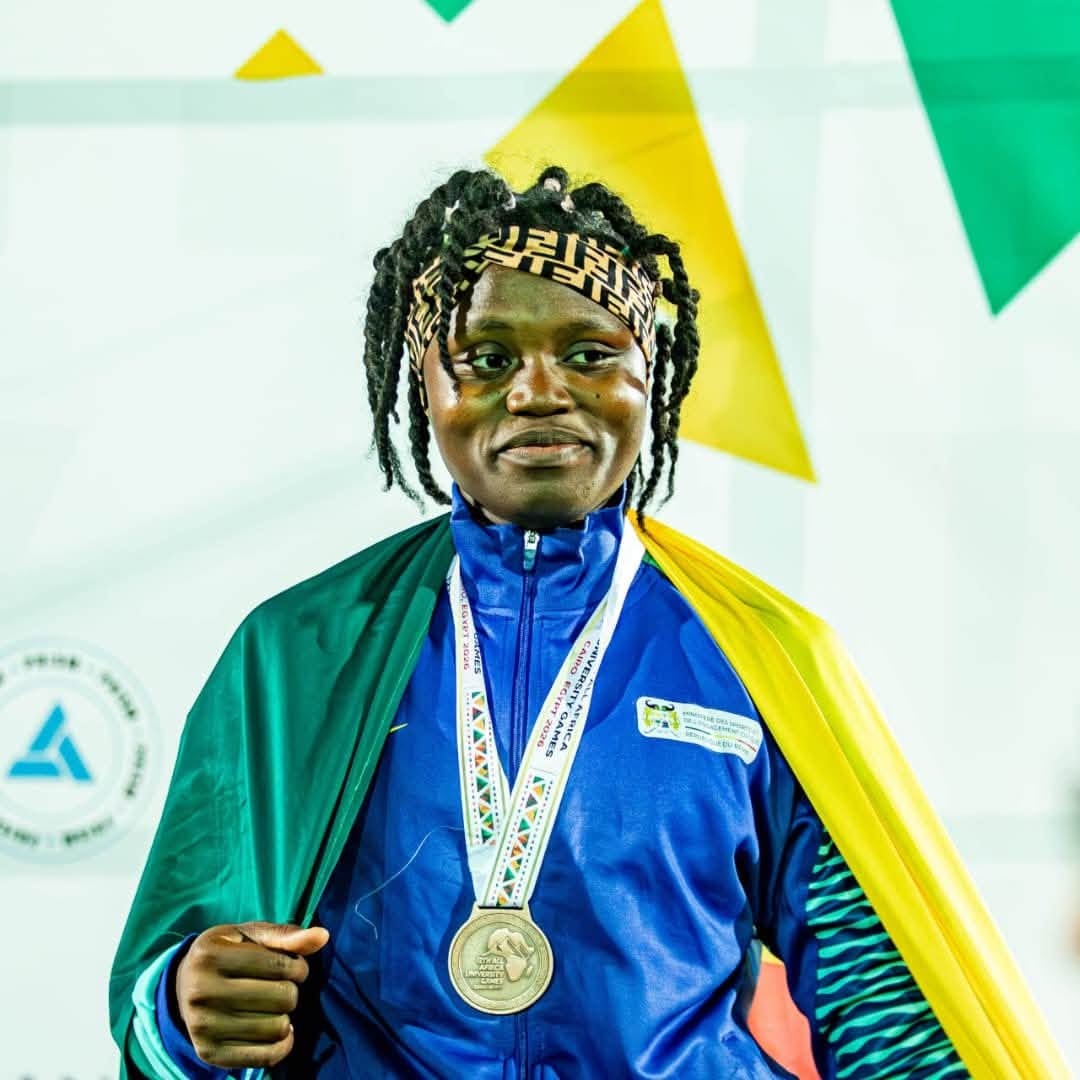
When Brigitte Tchede stepped onto the podium in Cairo, she did more than open Benin’s medal account at the 12th African University Games. She triggered a conversation that is still unfolding across Beninese sport: what do two medals in two different disciplines actually mean for a country trying to build a credible athletics pipeline? The immediate answer is pride. The longer answer, according to coaches, officials and university sports administrators, is a mix of opportunity, pressure and unfinished business.
Why Cairo 2026 matters beyond the medal table
The Egyptian capital hosted the 12th edition of the African University Games from 8 to 16 September 2026, bringing together student-athletes from across the continent in a multi-sport programme. For Benin, the event was never only about results. It was a test of whether the country’s young talents could hold their own against continental opposition while carrying academic commitments.
Brigitte Tchede answered that question emphatically. The Porto-Novo native secured Benin’s first two medals of the edition, taking silver in the women’s discus throw and adding a second podium finish in another discipline. Her double strike made her the standout figure of the Beninese delegation and shifted the post-Games debate from participation to performance.
The 47.08 m throw that changed the narrative
The first medal landed on Sunday 13 September. Competing in the women’s discus, Tchede finished second with a throw measured at 47.08 metres. That mark was not just a podium result: it was a new personal best, erasing the 44.37 m she had registered in May at the African Athletics Championships in Accra, Ghana.
The gap between the two throws is 2.71 metres. In discus, where centimetres often decide placings, that kind of jump over a few months is a serious statement. It reflects consistent training, better competition management and a growing ability to deliver when the stakes are highest.
From Accra to Cairo: a measurable step forward
Tracing Tchede’s recent trajectory makes the progress easier to read. Accra gave her a reference point of 44.37 m. Cairo pushed it to 47.08 m. The improvement did not happen in isolation; it followed a period of international exposure and regular competition, the kind of environment that allows athletes to fine-tune technique and gain tactical maturity.
A second medal and the versatility debate
Tchede’s contribution did not stop at the discus circle. She also reached the podium in a second discipline, giving Benin a second medal at the same Games. That versatility has become one of the talking points of the delegation’s campaign.
Winning medals in two different events is rare and valuable. It signals an athlete capable of managing different technical demands, recovery schedules and competitive pressures within a single tournament. For Benin, it also raises a question: how should a talent like this be supported so that versatility does not become a burden?
What the delegation takes home
For the Beninese delegation, leaving Cairo with medals earned by the same athlete carries symbolic weight. In a competition that gathers representatives from universities across Africa, opening the account through one athlete’s double podium is both a source of pride and a reminder of how narrow the base still is.
Tchede has become one of the central figures of Benin’s participation in this 12th edition. Her results also cast a brighter light on university sport, a key framework for identifying and supporting young talent on the continent.
The fallout: pressure, expectations and the road ahead
Medals change the conversation. After Cairo, expectations around Tchede will rise, and so will the scrutiny on how Benin manages her development. Her 47.08 m mark is now the new reference to beat, a target that will follow her into every future competition.
There is also a broader institutional question. Benin’s progress between the African Championships in Accra and the University Games in Cairo suggests that regular work and international exposure can gradually close the gap with the continent’s best. But sustaining that progress requires more than one standout athlete.
What comes next for Benin’s university sport
As the African University Games drew to a close on 16 September, Benin could already claim a notable haul. The discus silver will remain tied to Tchede’s personal best, while her second medal completed a double that few delegations can match.
The next steps are less about celebration and more about consolidation. Coaches and officials now face the task of turning a single athlete’s breakthrough into a system that produces more podium finishes. University competitions, in that sense, can serve as a springboard for talents destined for major international events.
Outlook: a new starting point rather than a finish line
For Brigitte Tchede, Cairo may be remembered as a new beginning. Her 47.08 m throw is now a benchmark, and her two medals have raised her profile within Beninese sport. For Benin, the double podium is a reminder that university sport can deliver results, but also that the work of building depth, funding and support structures is far from finished.
The debate triggered by her performance is likely to continue well beyond the closing ceremony. What matters now is whether the momentum is converted into lasting investment, or whether it fades until the next major Games.