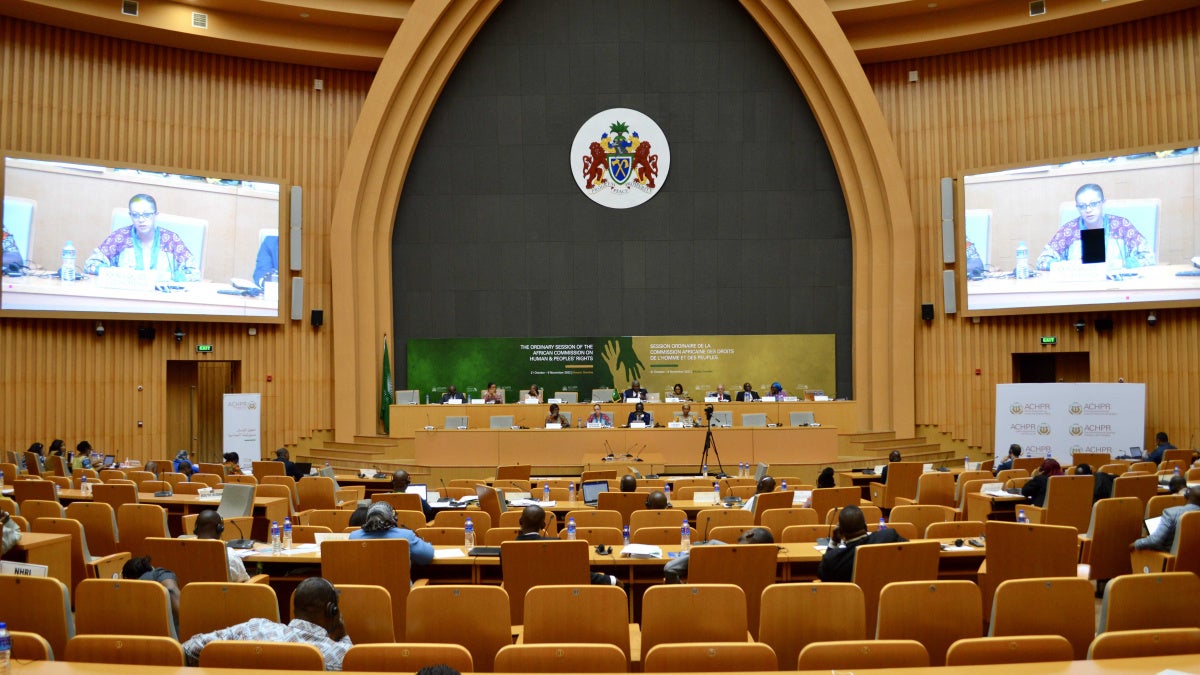
(Nairobi) – Human Rights Watch has called on the African Commission on Human and Peoples’ Rights (ACHPR) to address the most critical human rights challenges in Burkina Faso during its scheduled country review on October 23, 2024. The organization emphasizes the urgent need for the Burkinabè government to protect civilians caught in armed conflict, safeguard civic space for activists, journalists, and the political opposition, and ensure accountability for severe abuses.
The State reporting procedure is an African Union mechanism designed to assess member states’ adherence to the African Charter on Human and Peoples’ Rights. It requires nations to submit periodic reports on measures taken to uphold Charter rights. However, the May 2023 report from Burkina Faso, covering 2015-2021, inadequately addresses key human rights concerns. These include widespread abuses by state security forces and armed Islamist groups, escalating restrictions on fundamental freedoms, and pervasive impunity.
“The review of Burkina Faso by the African Commission on Human and Peoples’ Rights presents a vital opportunity for dialogue with the Burkinabè authorities on their human rights practices,” stated Allan Ngari, Africa Advocacy Director at Human Rights Watch. “The ACHPR should compel the authorities to prioritize civilian protection during military operations and to ensure compliance with international humanitarian law.”
Since 2016, Burkina Faso has been combating an insurgency led by armed groups that crossed over from Mali, including the al-Qaida-linked Group for the Support of Islam and Muslims (GSIM) and the Islamic State in the Greater Sahara (ISGS). The nation has also experienced two military coups since 2022.
In its report, Burkina Faso outlines measures against “violent extremism” and terrorism, such as establishing a special unit for investigating and prosecuting terrorism-related offenses and deploying military police to maintain discipline and protect detainees’ rights. The document also notes that security forces receive human rights training to prevent abuses, with those responsible for “inhumane or degrading acts” being held accountable.
Contrary to these claims, Human Rights Watch has documented serious violations by Burkinabè security forces during counterinsurgency operations throughout the reporting period and since, including acts amounting to crimes against humanity. Soldiers have unlawfully killed and forcibly disappeared hundreds of civilians accused of collaborating with Islamist armed groups.
Simultaneously, armed Islamist groups have perpetrated grave abuses against civilians, including summary executions, sexual violence, abductions, and looting, while continuing to lay siege to numerous towns and villages.
The ACHPR has previously expressed concern, issuing a communiqué in April 2023 after a massacre of civilians in Karma village, allegedly by security forces, urging an investigation and the “protection of civilians.” In November 2023, its Working Group on Death Penalty, Extra-Judicial, Summary or Arbitrary Killings and Enforced Disappearances in Africa co-signed an urgent appeal letter following an attack on civilians in Zaongo village, also demanding an inquiry.
While the Burkinabè government holds the primary responsibility for delivering justice, progress on investigating and prosecuting those responsible for grave crimes since 2016 has been minimal. The state’s report offers no information on inquiries into alleged abuses by government forces during the covered period or any subsequent legal proceedings.
The report also cites a June 2017 law to protect human rights defenders. However, Human Rights Watch notes that authorities have systematically curtailed civil and political rights both during the reporting period and in the years since.
Since taking power in 2022, the military junta has cracked down on activists, opposition party members, journalists, and critics. Human Rights Watch has extensively documented the use of unlawful conscription to silence dissent, alongside the abduction and enforced disappearance of dozens of government critics.
In December 2023, the ACHPR expressed concern over the abduction of prominent rights defender Daouda Diallo and the “acts of intimidation, judicial harassment and reprisals” against all defenders. In July, it denounced the presumed enforced disappearance of three Burkinabè journalists, calling on authorities to reveal their whereabouts and release them. The government has yet to provide any information, despite requests from families and lawyers.
The ACHPR has not visited Burkina Faso in several years. Human Rights Watch suggests the Commission should seek permission for an official visit to assess the human rights situation and publish a comprehensive report.
“The African Commission on Human and Peoples’ Rights must engage in a thorough discussion about the severe abuses by both Burkinabè security forces and armed Islamist groups, and the critical need for accountability,” Ngari concluded. “The ACHPR should also recommend tangible steps to ensure the protection of activists, journalists, and political opponents in Burkina Faso, enabling them to carry out their work without fear.”