Tchad’s economic outlook: CNEF projects robust 5.3% growth by 2026
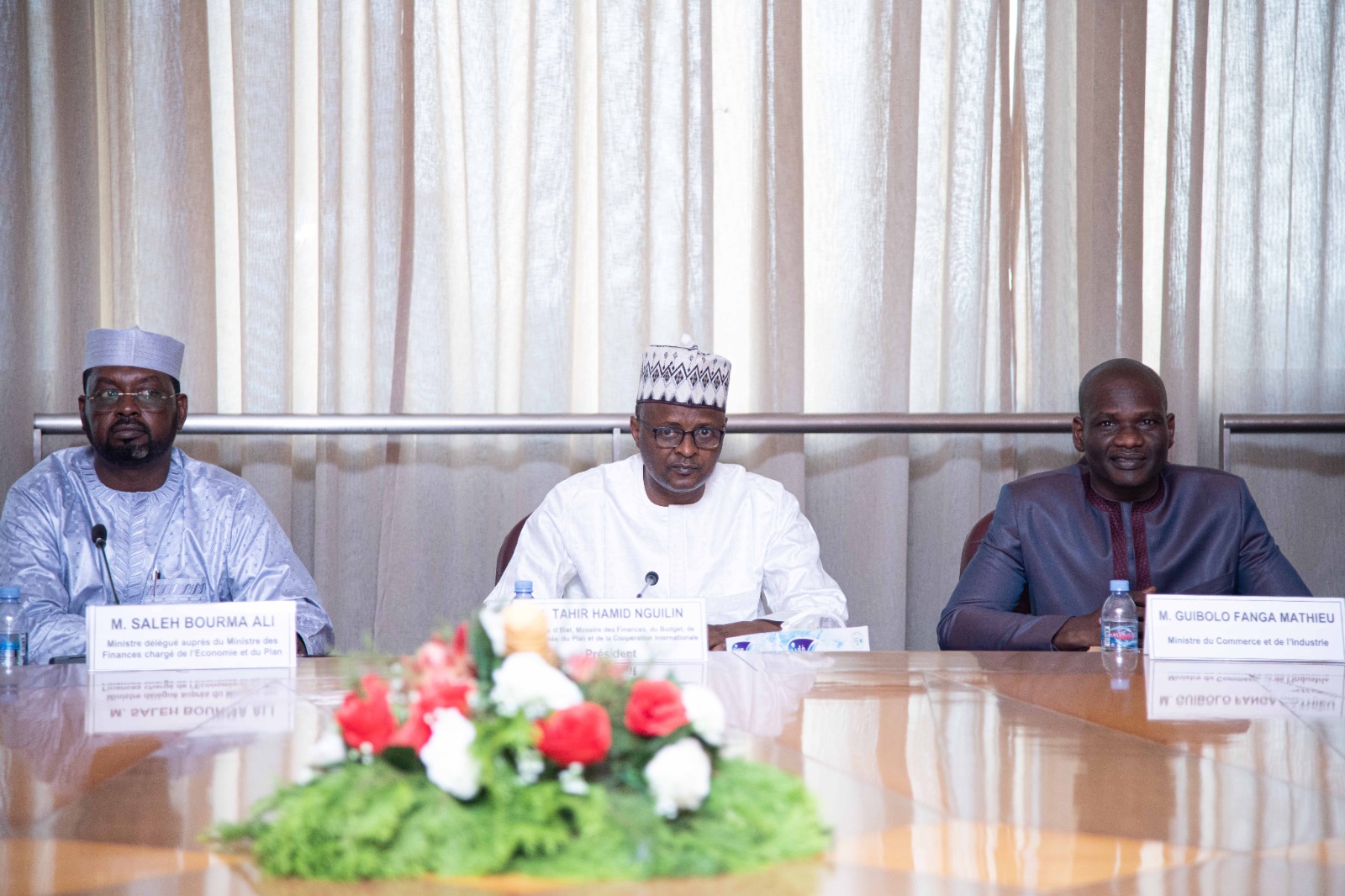
N’Djamena, Tchad — The Comité national économique et financier (CNEF) concluded its second ordinary session of 2026, chaired by Minister of State Tahir Hamid Nguilin, who also serves as the committee’s president. The high-level gathering convened at the Ministry of Finance headquarters, bringing together key economic stakeholders, including the Minister of Commerce and Industry, Guibolo Fanga Mathieu, and the BEAC Governor, Yvon Sana Bangui.
Macroeconomic analysis and global context
The session focused on a comprehensive review of the international, regional, and national economic landscape. The committee’s discussions were led by Idriss Ahmed Idriss, Secretary-General of the CNEF and National Director of the BEAC, who presented the latest macroeconomic projections for 2026 and beyond.
Global pressures and regional resilience
The global economy remains under strain from persistent geopolitical tensions in the Middle East, the prolonged conflict between Russia and Ukraine, and rising protectionist policies worldwide. Despite these challenges, economies within the Central African Economic and Monetary Community (CEMAC) continue to demonstrate remarkable resilience, supported by controlled inflation, improved fiscal and external balances, and strengthened foreign exchange reserves.
National growth projections and sectoral performance
The CNEF has set its sights on a 5.3% real GDP growth rate for 2026, up from the 5.1% forecast for 2025. This upward trajectory is primarily driven by the non-oil sector, even as the oil industry faces anticipated declines. The committee also highlighted a significant drop in inflationary pressures, with the inflation rate projected to fall to 0.5% in 2026, down from 2.6% in 2025—a clear sign of an improving macroeconomic environment.
Monetary stability and financial sector advances
Key financial indicators have shown positive momentum. Net foreign assets surged as of March 2026, while the money supply expanded and reserve coverage for imports remained comfortably high. The banking sector, including non-bank financial institutions, recorded a 4.9% year-on-year increase in total assets by the end of the first quarter of 2026, reflecting robust financial health.
Fiscal discipline and policy priorities
On the fiscal front, the committee reviewed the state budget execution as of June 2026. Discussions also covered critical issues such as the Effective Annual Rate (TEG) for the first quarter, findings from banking system audits, and progress on expanding central bank branch networks across the country. With these developments in mind, the CNEF reaffirmed its commitment to closely monitor economic and financial indicators to safeguard macroeconomic stability and foster sustainable growth.