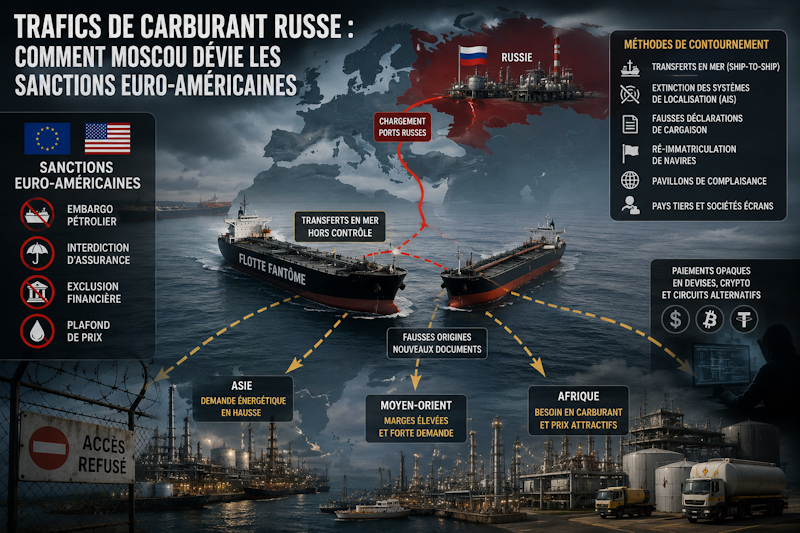
Recent journalistic investigations reveal a growing network funneling Russian oil products into markets closed off by Western sanctions, with Morocco emerging as a critical transit point. The operations rely on complex shipping routes, financial maneuvers, and diplomatic timing to obscure the true origins of these fossil fuels.
Geneva-based trader orchestrates oil transfers
Investigations confirm that in 2025, Morocco became North Africa‘s largest importer of Russian oil products. This shift was facilitated by a Geneva-based trading firm, Alvari SA, which brokered multi-million-dollar deals to supply Russian diesel and gasoline to Moroccan ports including Jorf Lasfar and Mohammedia. Three tankers—Tranquil Sea, Duke II, and Eldia—were central to these operations, transporting fuel from Baltic terminals to Moroccan shores.
The Tranquil Sea case highlights the elaborate tactics used to evade detection. British sanctions lists added the vessel in October 2025 as it approached Morocco, followed by European Union and Swiss sanctions. Ukrainian defense authorities allege the ship previously served as a surveillance platform for Russian military activities targeting NATO operations, while Finnish authorities detained it on suspicion of damaging an underwater cable. Alvari SA has denied any involvement in chartering or operating these vessels.
False origins: Turkmenistan paperwork
To disguise the Russian origin of the fuel, a Cypriot chamber of commerce issued falsified certificates labeling Turkmenistan as the source. The documents claimed the diesel originated from Turkmen ports before undergoing transshipment off Port Limits near Gibraltar—an area typically reserved for minor logistical operations, not high-risk fuel transfers. This practice exploits loopholes in maritime regulations to obscure the cargo’s true path.
Financial records show transactions processed in US dollars between Attijariwafa Bank—controlled by the royal holding Al Mada—and a Tangier-based offshore branch of the Banque Centrale Populaire acting as the supplier. Moroccan distributors reportedly secured discounts of seven dollars per metric ton compared to European benchmarks, while non-Russian products traded at a 15-dollar premium. These savings did not translate to lower pump prices for consumers.
The timing of these shipments coincided with a high-stakes diplomatic visit. As the Tranquil Sea approached Morocco‘s coast, Foreign Minister Nasser Bourita traveled to Moscow to meet with Sergey Lavrov. Days later, Russia abstained from a critical UN Security Council vote on Western Sahara, a decision widely seen as favorable to Rabat’s interests.
Spain detects suspicious imports from Morocco
Spanish media has documented a parallel phenomenon: a surge in diesel imports from Morocco into Spain. Industry analysts suspect these shipments represent Russian oil re-exported into the European Union, leveraging Morocco‘s lack of domestic refining capacity to mask the fuel’s true origin.
Official data shows Morocco imported 645,000 tons of Russian diesel in 2025, rising to 489,000 tons in early 2026—comprising 45% of the country’s total fuel imports. Spanish customs records indicate no diesel exports from Morocco to Spain occurred before the 2022 Ukraine war and subsequent European sanctions. However, after regional tensions escalated in early 2026—particularly the US-Israel strikes on Iran—shipments to Spain resumed, with 76,000 tons delivered to ports like Tarragona, Barcelona, and Bilbao between April and June.
Spanish refiners express growing concerns over unfair competition. Industry representatives warn that illicit fuel imports could distort market prices and undermine local production. The Spanish Association of Fuel Industries has called for stricter oversight to prevent fraud in hydrocarbon trade.
Converging investigations reveal a shadow network
Combining maritime tracking data, customs documents, and sector testimonies, two separate investigations expose a suspected pipeline: sanctioned Russian oil, relabeled in transit, routed through Morocco before potentially entering the European single market. While neither investigation claims definitive proof of every shipment’s exact journey, both present compelling circumstantial evidence. The complexity of global oil trade—where refined products mix in international circuits—makes tracing origins inherently challenging.