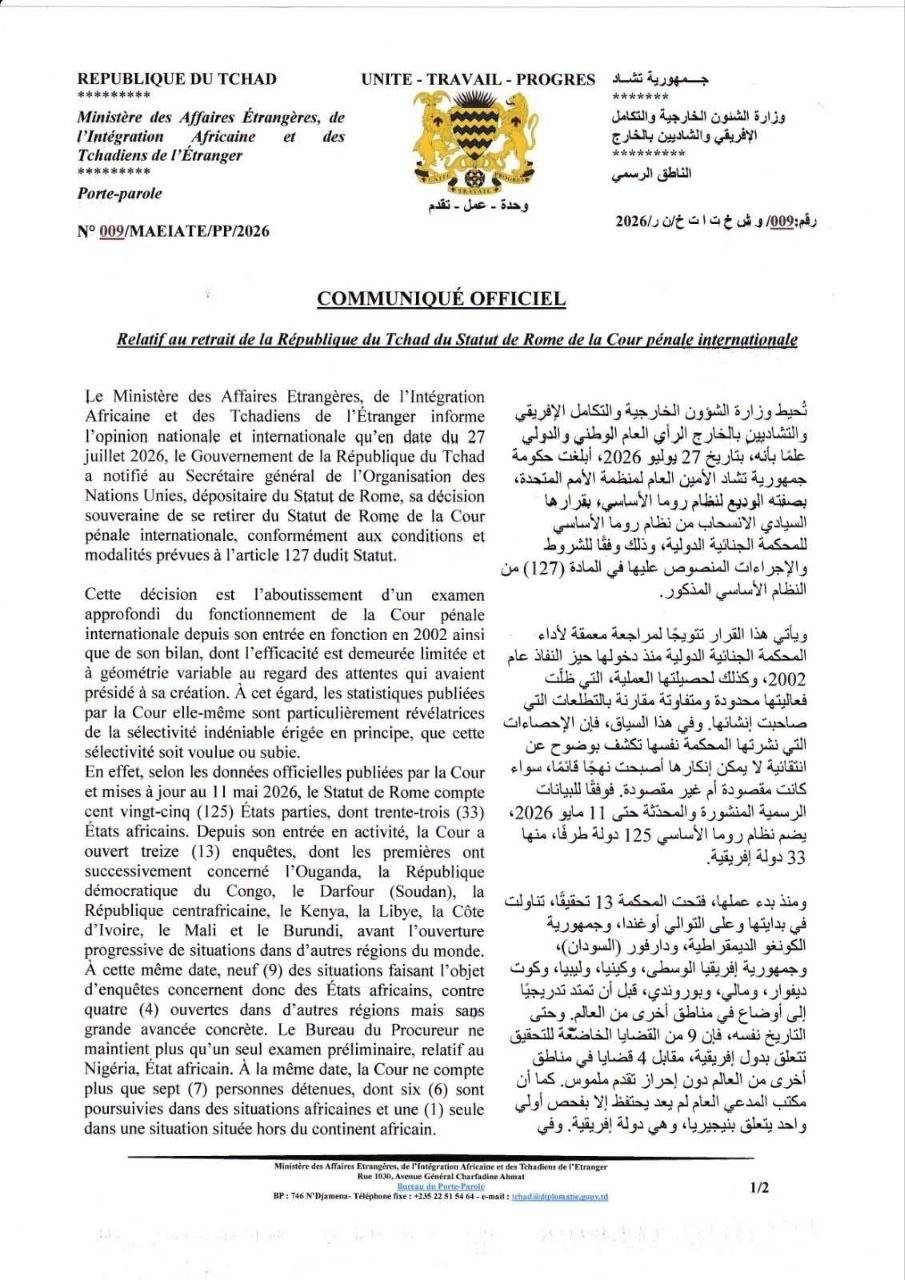
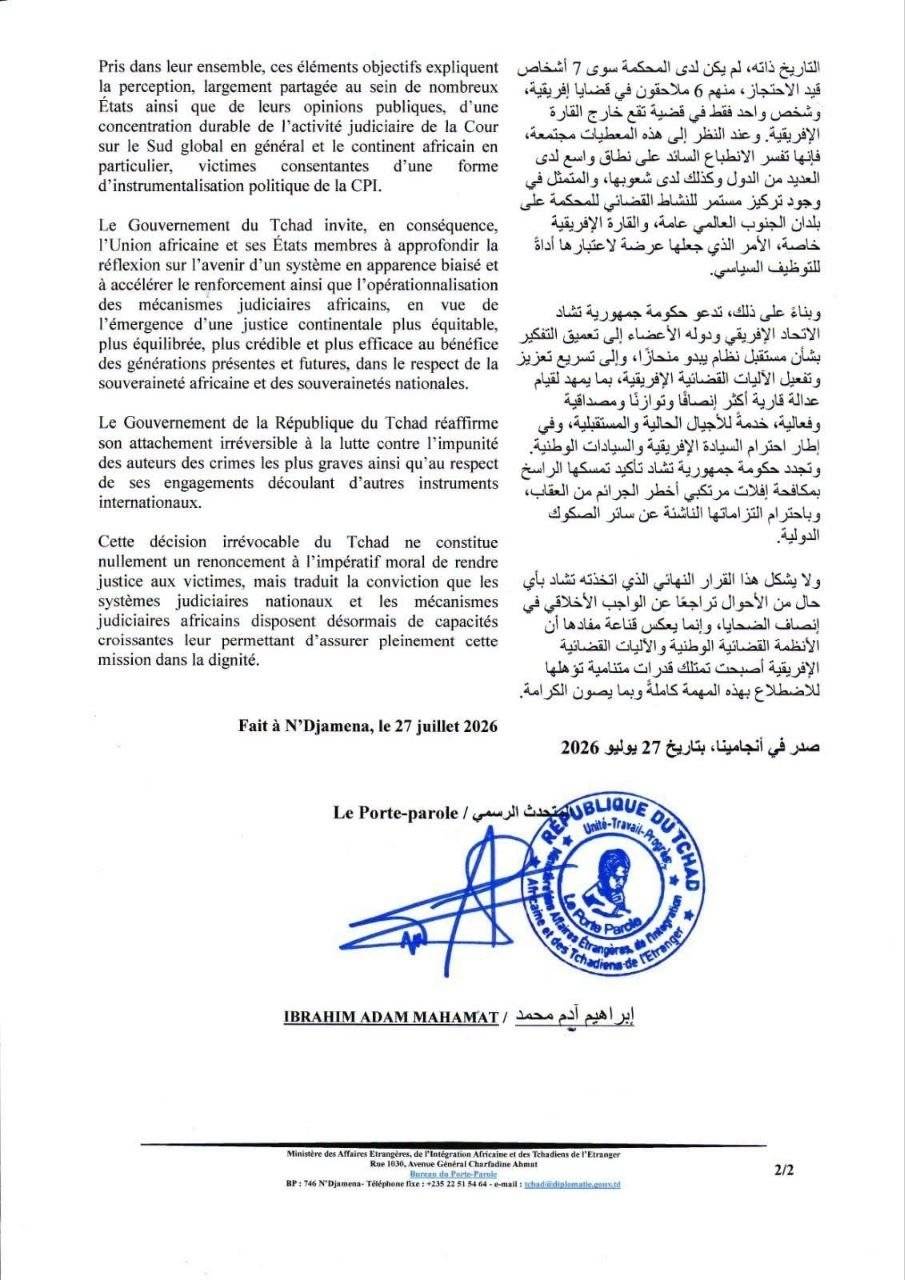
The government of Chad has formally initiated its exit from the International Criminal Court (ICC) by submitting a withdrawal notification to the United Nations Secretary-General. This landmark diplomatic move follows long-standing criticism from N’Djamena, which accuses the court of political manipulation and an unfair focus on African and Global South nations. The decision raises critical questions about human rights protection and the future of justice within the country.
Breaking ties with The Hague
The withdrawal process is now underway. Chad has sent a formal letter to UN headquarters in New York to begin the legal procedure of leaving the Rome Statute, the ICC’s founding treaty. In justifying this bold step, Chadian officials have been unequivocal. They argue that the international judicial body remains largely ineffective and suffers from a geographical imbalance in its prosecutions. According to the government, the court disproportionately targets leaders and figures from southern nations while overlooking similar crises elsewhere. This move aligns with a growing divide between several African states and the Hague-based jurisdiction, which was originally designed as a bulwark against impunity for war crimes, crimes against humanity, and genocide.
What this means for Chadian citizens
While the announcement carries significant geopolitical weight, its most immediate consequences will be felt within Chad itself. For ordinary citizens, the ICC withdrawal fundamentally alters the legal recourse available in cases of grave human rights violations.
The loss of a vital justice safeguard
The ICC operates on the principle of complementarity: it only intervenes when national courts fail to investigate or prosecute serious crimes. By leaving the Rome Statute, Chad removes the final layer of independent international judicial oversight for mass atrocities or large-scale abuses.
Can local justice systems fill the void?
With The Hague’s oversight removed, responsibility for ensuring justice now rests entirely on Chad’s judicial system. Victims of abuses—whether committed by state actors or armed groups—will depend solely on national courts to deliver fair and impartial rulings. Civil society organizations have already voiced concerns that this shift could lead to a dangerous rise in impunity.
A chilling effect on human rights documentation
For rights defenders, the withdrawal may complicate efforts to document abuses on the ground. Without the possibility of international intervention, evidence collection and witness protection could become even more challenging.
Diplomatic isolation or a push for sovereignty?
The decision carries significant implications beyond Chad’s borders, resonating across West Africa and the Sahel. It reflects a broader regional trend where national sovereignty and resistance to foreign oversight dominate political discourse.
By distancing itself from the ICC, N’Djamena aims to reassert full judicial sovereignty. However, this breakaway approach carries considerable diplomatic risks. Western partners and international donors have long tied financial assistance to compliance with human rights and rule-of-law commitments. Additionally, the presence of independent legal recourse is a key factor in fostering investor confidence. While the African Union has frequently criticized the ICC in the past, member states remain divided on strategy, and Chad’s move represents a radical departure.
What lies ahead for Chad’s rule of law?
Proponents of withdrawal argue that strengthening sovereign institutions is essential. The government asserts that Chadian courts are fully capable of prosecuting their own citizens and upholding the rule of law.
Yet, turning this promise into reality will require sweeping structural reforms: increased funding and resources for courts, stronger protections for judicial independence, and robust mechanisms for victim and witness safety. The one-year transition period outlined in Article 127 of the Rome Statute—before withdrawal becomes legally binding—will be pivotal. During this time, the ICC retains theoretical jurisdiction over crimes committed before the notification, though Chad’s cooperation may dwindle significantly.
A defining moment for African justice
The July 27 announcement marks a pivotal chapter in Africa’s complex relationship with global governance institutions. While the criticism of the ICC’s perceived double standards resonates with many observers, the practical consequences of this rupture raise legitimate concerns on the ground.
By closing the door to The Hague, Chad is betting on sovereignty. Whether this gamble succeeds or fails will not be determined in international courtrooms or diplomatic salons, but in the daily lives of its citizens. Will they find justice and protection within their own courts? The government’s performance will now be judged by this internal standard.