Chad’s deepening authoritarianism: a return to single-party rule?
N’Djamena’s leadership appears set on repeating a destructive cycle of coups and violent conflicts.
senior researcher, Central Africa and Lake Chad Basin, ISS
Just two weeks after their apprehension for orchestrating a protest against governance issues in Chad, eight prominent opposition figures received an eight-year prison sentence. Their coalition, the “Groupe de concertation des acteurs politiques” (GCAP), had planned a demonstration for May 2.
On May 7, the day prior to their sentencing, the Supreme Court declared the dissolution of GCAP, which had been the nation’s primary opposition alliance. These eight leaders now join Succès Masra, a leading opposition figure and head of Les Transformateurs party, who was sentenced in August 2025 to twenty years imprisonment for “incitement to hatred.”
This marks a significant stride for Chad towards an authoritarian system. With the silencing of GCAP officials, the Patriotic Salvation Movement, President Mahamat Idriss Déby’s party, faces virtually no credible challenge. Without a robust opposition, Chad’s democratic aspirations are crumbling.
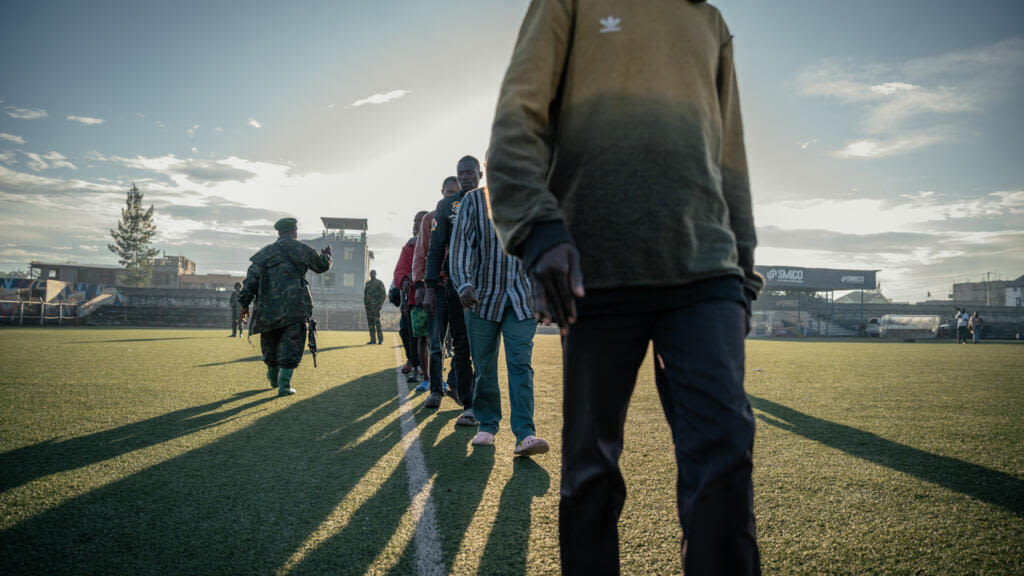
Public demonstrations have been systematically banned for over six years. Some of these gatherings have faced brutal suppression, notably in October 2022, when approximately 200 protestors were killed, and many others injured or arrested.
The detention of GCAP leaders and the coalition’s dissolution by the Supreme Court raise serious concerns about the increasing weaponization of the judicial system for repression. Lawyers representing the leaders have condemned their clients’ detention without formal charges. Following a swift trial, they were convicted of criminal conspiracy, insurrectional movement, rebellion, and illegal possession of war weapons — charges that their legal counsel vehemently denies.
Similar to Masra’s case, the trial of the GCAP leaders has sparked widespread condemnation from civil society and opposition groups. It undeniably appears to be a blatant attempt to constrict public discourse and further destabilize the political landscape. Expressing deep concern, the United Nations has reiterated the critical importance of upholding freedom of expression, association, and peaceful assembly, in line with human rights principles and Chad’s international obligations.
Beyond the consistent prohibition of protests and the deployment of the judiciary to quash dissenting voices, the use of lethal force is becoming alarmingly normalized, even in routine situations.
On April 29, activists celebrating the eighth anniversary of Les Transformateurs were subjected to an armed assault. This attack resulted in one fatality, two serious injuries, and the abduction and torture of the party’s treasurer. While the government has pledged to prosecute those responsible, such incidents have become disturbingly common in recent years.
The shrinking public space and the suppression of opposition in Chad have intensified since the political transition began in 2021, following the death of President Idriss Déby Itno. The nation risks reverting to a single-party system, reminiscent of the eras under Presidents François Tombalbaye (1960-1975) and Hissène Habré (1982-1990). During those periods, only parties aligned with the ruling power were permitted, functioning primarily as pro-regime propaganda tools and exerting complete control over public life.
Under Idriss Déby Itno (1990-2021), elections were perpetually contested, and the Constitution underwent multiple revisions to eliminate presidential term limits.
Both Tombalbaye and Habré ultimately fell victim to coups, and Déby himself was killed during clashes with rebels attempting to overthrow him. These reversals, coupled with numerous coup attempts and insurrections, underscore Chad’s enduring history of resorting to force for political change.
Since 1964, a mere four years after gaining independence, Chad has endured recurring cycles of deadly conflict and chronic instability, leaving a profound impact on its society.
Less than three years after the restoration of constitutional order, Parliament amended the Constitution, despite it having been crafted through an inclusive and sovereign national dialogue. In October 2025, the presidential term was extended to seven years, an unmistakable indicator of the ruling party’s desire to dominate the political arena.
Current leaders must reflect on and learn from the darker chapters of Chad’s history. Alongside re-engaging in dialogue between the government, opposition parties, and civil society, it is imperative to safeguard fundamental freedoms of association and expression. Respect for the separation of powers is essential for preserving judicial independence and the rule of law.
Law enforcement agencies must improve their management of demonstrations, employing appropriate and proportional measures. To achieve this, it is crucial to revise public order doctrines, enhance officer training, and ensure their operations are monitored by authorities and human rights organizations.
The persistent and excessive use of force, which can turn lethal, is highly detrimental. It risks provoking citizens, especially young people, into violence and radicalization, leading to a high potential for escalation during confrontations.
Given the government’s firm stance, the adoption of these recommended measures appears unlikely. In the absence of credible dissenting voices within Chad, regional and international organizations must once again advocate for dialogue. This includes, among others, the African Union, the Economic Community of Central African States, and the UN, all of whom supported the transition and the return to constitutional order.
The concern voiced by the UN is a positive step, but direct advocacy with Chad’s partners would undoubtedly yield more productive results.