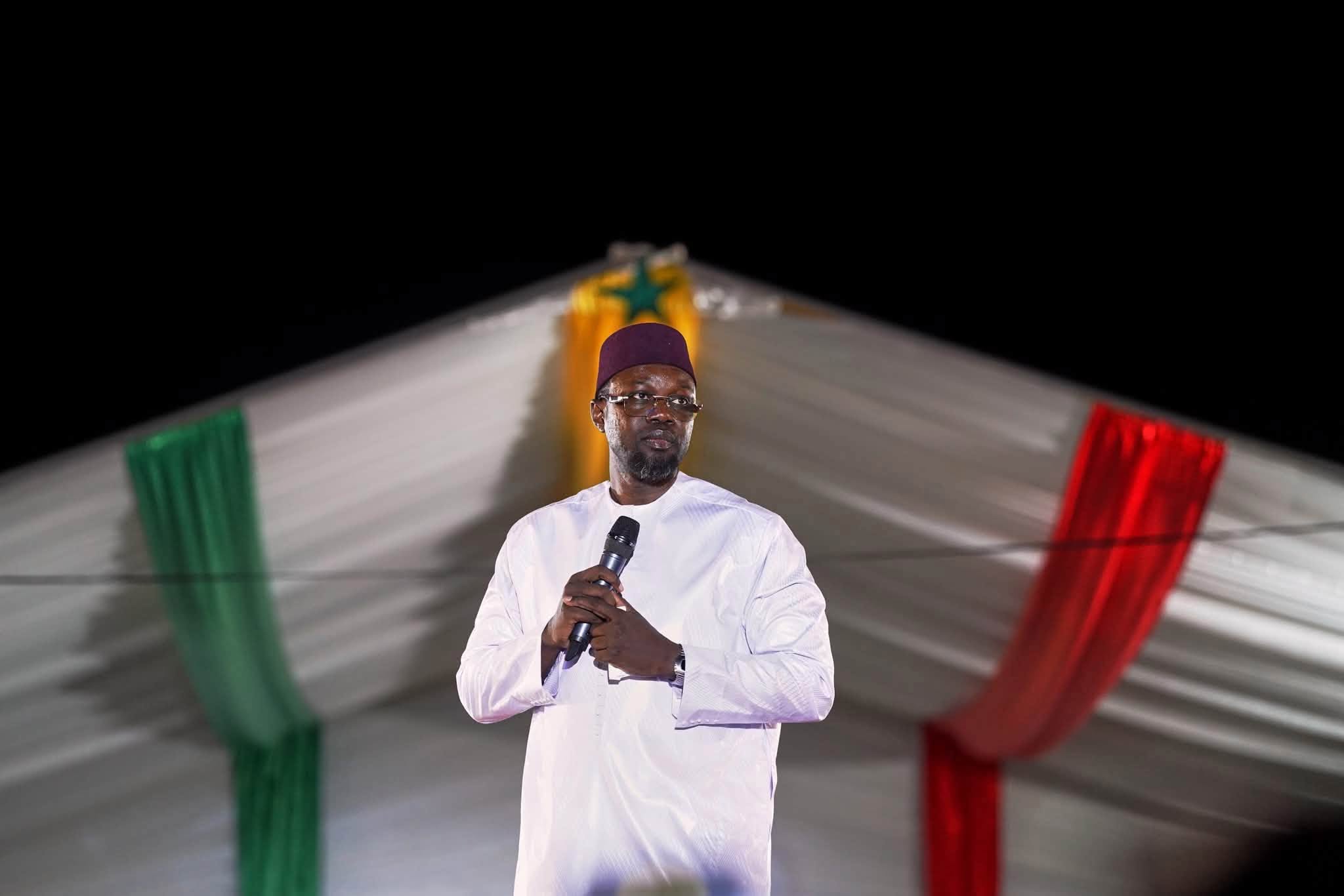
The collective of descendants of Serigne Touba has escalated its stance against Ousmane Sonko, leader of the PASTEF party, by declaring him persona non grata in Touba. This decision follows a defamation complaint filed in response to Sonko’s remarks alleging the circulation of « dirty money » in the holy city.

Unprecedented condemnation of political figures in Touba
The collective, representing the grandchildren of Serigne Touba Cheikh Ahmadou Bamba, the founder of the Mouride brotherhood, has taken a firm stance against Ousmane Sonko. Their spokesperson, Mokhtar Bousso, emphasized that Sonko’s statements constitute a blatant disrespect toward Touba and its spiritual legacy.
« Anyone who questions Serigne Touba should never set foot in Touba, » Bousso declared during an interview. « If he truly respected Serigne Touba and his teachings, he would never have made such remarks about the holy city. »
Touba’s role in Senegal’s development
The collective argues that Touba has played a pivotal role in Senegal’s progress, contributing significantly to the nation’s economic, social, and moral fabric. « Everyone knows that Touba has always been a driving force behind the country’s development, » Bousso stressed. « Ousmane Sonko must respect Touba—and above all, the founder of Mouridism. »
In a scathing critique of Sonko’s timing, the spokesperson highlighted the irony of his allegations just days before the Grand Magal, a major annual pilgrimage in Touba. « Accusing Touba of harboring ‘dirty money’ during this sacred period is not just disrespectful—it shows a blatant disregard for the spiritual significance of the Grand Magal, » he asserted.
Calls for self-reflection
The collective’s stance is clear: Ousmane Sonko must reconsider his presence in Touba. « It’s time for him to reflect on whether he deserves to step foot in Touba again, » Bousso insisted. « If he genuinely believes that ‘dirty money’ circulates in Touba, then he has no place there. »
The declaration comes amid heightened tensions between political figures and religious leaders in Senegal, underscoring the deep intertwining of faith and public discourse in the country.