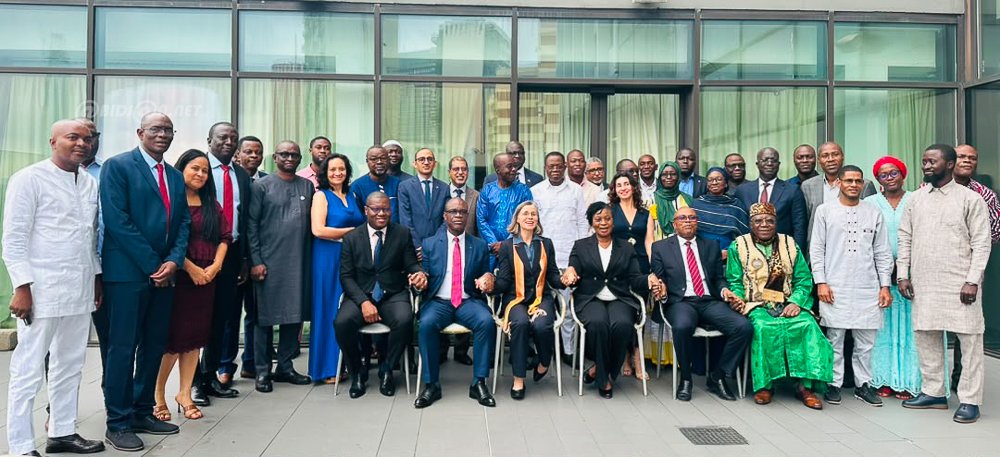
The inaugural 2026 meeting of the WACA ResIP Regional Steering Committee convened on Wednesday, July 8, in Plateau, Abidjan. This significant gathering brought together delegates from member states, regional institutions, and technical and financial partners dedicated to the sustainable management of the West African coastline.
Addressing the assembly, Bérangère Prince, a lead specialist in natural resource management at the World Bank, underscored the institution’s consistent support for the WACA program since its inception in 2018, collaborating with numerous technical and financial partners.
“We are very fortunate because this program truly unites many partners and cultivates a strong sense of regional solidarity,” she remarked. Prince acknowledged key contributors such as the French Development Agency, the Netherlands, Spain, Germany, and various regional organizations.
She highlighted the critical economic importance of coastal zones, which generate “over 50% of the region’s GDP,” emphasizing the necessity for integrated management strategies to effectively address the escalating impacts of climate change.
Presenting a review of the program’s initial phase, Bérangère Prince reported remarkable progress: “500,000 people are now more resilient to the effects of climate change,” between “300,000 to 400,000 jobs” have been either created or strengthened, and “over 32,000 hectares of coastal ecosystems” have been successfully restored.
She also announced the upcoming continuation of the initiative through WACA+, with future phases planned for strategic coastal nations including Côte d’Ivoire, Senegal, Cameroon, Togo, and Guinea-Bissau.
Officially inaugurating the proceedings on behalf of the Minister of Environment, Kouadio Parfait expressed his appreciation for the presence of beneficiary country delegations and the steadfast commitment of technical and financial partners in combating the adverse effects of climate change on coastal areas.
“West African nations share a common heritage: a coastline rich in biodiversity, economic resources, and development opportunities. Regrettably, this coastline also confronts increasing threats, particularly coastal erosion, flooding, marine inundation, and ecosystem degradation, all exacerbated by climate change,” he affirmed.
He described the WACA program as “an exemplary framework for cooperation,” enabling states to pool their experiences and devise collaborative solutions to shared environmental challenges.
The ministerial representative outlined the objectives for this Regional Steering Committee meeting, which include evaluating progress, preparing for the conclusion of WACA ResIP, accelerating the implementation of WACA ResIP 2, and strengthening regional coordination.
Reflecting on the project’s achievements within Côte d’Ivoire, he specifically noted that infrastructure projects in Grand-Lahou have successfully stabilized nearly seven kilometers of coastline, restored vital mangrove habitats, and significantly improved the livelihoods of over 150,000 beneficiaries. “We can confidently state that the issue of coastal erosion has been resolved in Lahou-Kpanda, the project’s intervention zone,” he declared.
This initial 2026 meeting of the WACA ResIP projects’ Regional Steering Committee united representatives from beneficiary countries, UEMOA, the World Bank, ECOWAS, ECCAS, and various regional implementing institutions. Their collective goal is to fortify cooperation for the sustainable and resilient management of the West African coastline.
Fn