A series of gunshots echoed through Cotonou, Benin’s bustling economic hub, Sunday morning as soldiers stormed the national television station, declaring they had removed President Patrice Talon from office. Yet within hours, the Interior Minister swiftly countered the announcement, declaring the «attempted coup has been foiled».

How did the crisis unfold?
Eight soldiers, adorned in berets of varying colors and wielding assault rifles, identified themselves as the «Military Committee for Refoundation» (CMR) and seized control of Benin’s state television on Sunday morning. They proclaimed a lieutenant colonel as their «CMR president» and cited deteriorating security conditions in northern Benin, neglect of fallen soldiers and their families, and unjust promotions as their justification for the takeover.
The mutineers also accused the government of covertly undermining fundamental freedoms and raised social demands. Gunfire rang out across Cotonou, with soldiers blocking access to the presidential palace and the national broadcaster. The entrances to key locations, including the Sofitel luxury hotel and areas housing international institutions, were also restricted. Despite the turmoil, life in most of the city continued as usual.
The Interior Minister, Alassane Seidou, later confirmed that the Beninese armed forces remained loyal to their oath, thwarting the coup attempt. «The situation is under control. The mutineers never reached the president’s residence or the presidency. We’re in the final stages of restoring order», he stated on national television. According to military sources, a dozen soldiers, including the ringleaders, have been detained.
Understanding President Patrice Talon’s leadership
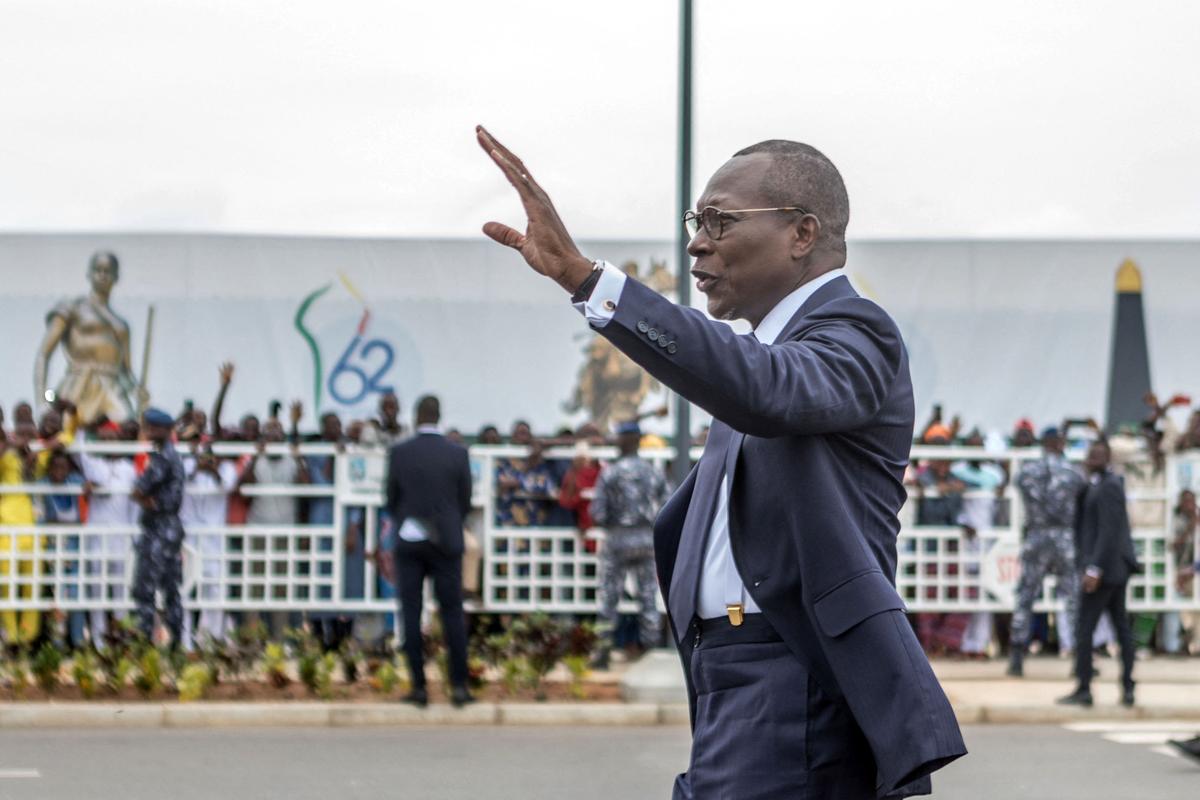
President Talon’s team confirmed to AFP that he was safe and that security forces were regaining control of the capital. With presidential elections scheduled for April 2026, Talon is completing his second term, as Benin’s constitution limits presidents to two terms. The opposition’s main party has been excluded from the race, which will now pit the ruling party against a self-described «moderate» opponent.
Despite economic progress under his leadership, Talon faces criticism for what opponents call an authoritarian shift in a country once praised for its democratic vibrancy.
Global reactions to the mutiny
The Economic Community of West African States (ECOWAS) condemned the «flagrant unconstitutional act, which subverts the will of the Beninese people», vowing full support for the government and people of Benin.
The African Union (AU) also issued a strong condemnation, urging all involved in the coup attempt to immediately cease illegal actions and return to their professional duties. AU Commission Chair Mahamoud Ali Youssouf took to X to call for an end to the mutiny and a swift return to constitutional order.
Historical backdrop and regional tensions
Benin’s political history has been marked by coups and attempted coups, including notable events in 1963, 1965, and 1969. More recently, in 2020 and September 2024, the country faced two failed coup attempts during Talon’s presidency.
The broader West African region has seen a surge in coups since 2020, with Mali, Burkina Faso, Niger, Guinea, and most recently, Guinea-Bissau in late November 2025, all experiencing military takeovers.