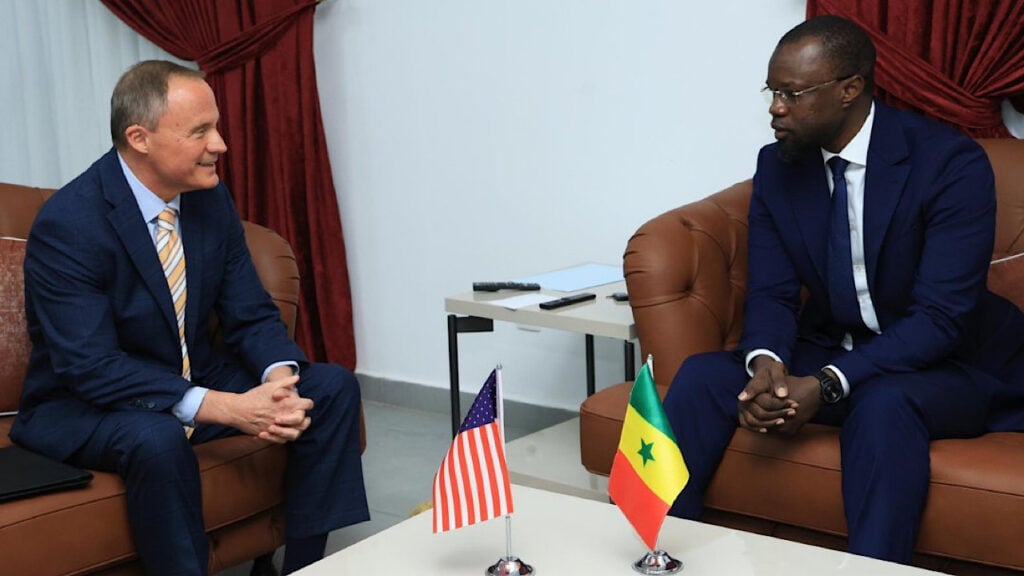
The diplomatic landscape between Bénin and Niger is shifting gears. The arrival of an official Nigerien delegation, led by the Prime Minister, at the inauguration ceremony of Bénin’s new president in Cotonou signals a clear intent to move past a prolonged crisis that has strained relations since the July 2023 ousting of President Mohamed Bazoum. This high-profile visit follows months of border closures, escalating rhetoric, and a paralyzing oil dispute that has sent shockwaves through the Sahelian economy.
Diplomatic ice begins to melt in Cotonou
Niamey’s decision to send its head of government was no small gesture. Since the military takeover that brought General Abdourahamane Tiani to power, Nigerien authorities have repeatedly accused Cotonou of hosting French military bases intended to undermine the transitional regime. Despite multiple mediation efforts by outgoing President Patrice Talon, trust between the two capitals had remained elusive. The transition of power in Bénin’s presidential palace has now created an unexpected opportunity that Niamey appears eager to seize without delay.
The Prime Minister’s presence, rather than a lower-ranking envoy, underscores the significance Niger’s leadership places on this political transition in Bénin. Across West African diplomatic circles, this move is interpreted as a strategic repositioning in the wake of Niger’s, Mali’s, and Burkina Faso’s exit from the Economic Community of West African States (ECOWAS) and the formation of the Alliance of Sahel States (AES). Niamey is now seeking to strengthen its ties along the Atlantic coast.
The oil dispute: the core of the crisis
Beyond symbolic gestures, an economic lifeline is driving this thaw. The pipeline connecting the Agadem oil fields—operated by the China National Petroleum Corporation (CNPC)—to the Sèmè-Kpodji terminal on Bénin’s coast is Niger’s first major hydrocarbon export infrastructure. Stretching nearly 2,000 kilometers, this pipeline was designed to transport up to 90,000 barrels per day, significantly boosting Niger’s fiscal revenues.
However, Bénin’s border closure in response to ECOWAS sanctions, followed by a bitter dispute over loading permissions, has severely disrupted operations. Several incidents, including the detention of Nigerien nationals accused of trespassing at the oil terminal in early 2024, have deepened tensions. For Niamey, whose budget now heavily depends on oil revenues, restoring normal relations with its southern neighbor is no longer just a preference—it’s an economic necessity.
The broader context: a regional realignment
This warming trend extends beyond bilateral ties. It reflects a wider recalibration of West African geopolitics, where coastal nations must balance loyalty to ECOWAS with the pragmatic need to maintain economic ties with Sahelian regimes. Togo has already adopted this middle path. Bénin, under new leadership, may follow suit by separating political disagreements from practical cooperation.
The security dimension will remain a critical factor. The shared border region, plagued by the presence of jihadist groups linked to the Islamic State in the Greater Sahara and Jama’at Nasr al-Islam wal-Muslimin, demands at least minimal military coordination. Without intelligence sharing, the W and Pendjari national parks continue to serve as havens for armed factions. The question now is whether Bénin’s new administration will be willing to reopen military dialogue, suspended for over two years.
Action speaks louder than words. The coming months will reveal whether this ceremonial opening leads to concrete steps: full border reopening, resumption of oil shipments, and restoration of full diplomatic representation. Businesses on both sides of the border are desperate for clarity after two years of uncertainty. The Nigerien delegation arrived in Cotonou with a mandate to initiate meaningful discussions.