DR Congo challenges UN over Rwanda’s military inaction at critical minerals summit
- Security
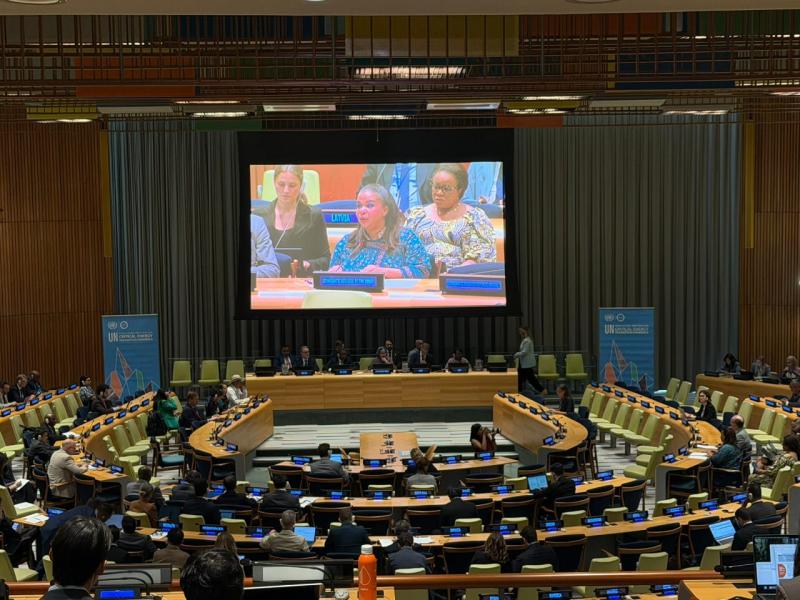
The Democratic Republic of Congo took the global stage this week at the United Nations in New York to address the urgent challenges surrounding critical minerals essential for the world’s energy transition. During a high-level meeting convened by the UN Secretary-General, the Congolese delegation, led by Foreign Minister Thérèse Kayikwamba Wagner, emphasized that the issue extends far beyond economic considerations.
Speaking to assembled diplomats, the minister highlighted the severe consequences of unregulated mineral exploitation in eastern Congo, particularly in Rubaya, a key coltan mining hub. “For countries like ours, this isn’t just about development—it’s about sovereignty and territorial integrity,” she stated, citing reports that over 1,400 tons of coltan, representing 15% of global demand, were smuggled into Rwanda in the first year following seizures by the M23 armed group, which Kinshasa and UN experts accuse of receiving Rwandan support.
UN’s failure to sanction Rwanda’s military
The Foreign Minister did not mince words in condemning the lack of UN sanctions against Rwanda’s military forces, despite overwhelming evidence presented by UN experts. “While the world debates transition minerals, our mineral wealth is being systematically looted to fund armed groups that threaten our national cohesion,” she declared. “The absence of sanctions against Rwanda’s military underscores a dangerous gap in international governance, where resource exploitation fuels conflict while accountability remains elusive.”
Call for integrated governance linking resources, peace, and development
During Congo‘s current presidency of the UN Security Council, Kinshasa is pushing for a fundamental shift in how the international community addresses critical minerals. The country is advocating for a governance framework that directly connects mineral resource management to conflict prevention, peacebuilding, and sustainable development.
“We cannot allow the energy transition to become another form of dependency. True progress requires that the countries and communities that provide these essential minerals benefit from their value in terms of security, prosperity, and sovereignty,” the minister emphasized. She called for balanced partnerships that extend beyond mere access to raw materials, urging investment in local processing, technology transfer, skills development, industrialization, and market access for producing nations.
Balancing traceability with artisanal miners’ livelihoods
Addressing concerns about mineral traceability, Kayikwamba Wagner stressed that any system must effectively combat fraud and armed group financing without penalizing legitimate artisanal miners. “Traceability must serve justice, not create new barriers. It should protect communities, not exclude them from economic opportunities,” she stated, linking the issue to multiple Sustainable Development Goals.
The minister concluded by warning that the success of the global energy transition cannot be measured solely by industrial output but must also account for the safety, sovereignty, and prosperity of the nations and communities that make this transition possible.
This diplomatic intervention comes as Congo and the United States finalize a strategic partnership on critical minerals, alongside the Washington Agreement between Kinshasa and Kigali. While the agreement includes commitments to de-escalation and the withdrawal of Rwandan forces from Congolese territory, the security situation in eastern Congo remains precarious. The Doha process, aimed at facilitating dialogue between Kinshasa and the M23 rebellion, has yet to yield tangible results, with rebel forces continuing to control strategic cities like Goma and Bukavu.
Clément Muamba