Kinshasa, October 2, 2026 — The national dialogue unveiled by President Félix Tshisekedi has reached a critical juncture, one that could reshape how the Democratic Republic of Congo handles its deepest political fractures. A Paris-based lawyer is now urging that this consultation be treated as a political mechanism for consensus-building and peacemaking — not as a parallel institution that could rival the country’s constitutional bodies.
A decisive shift toward structured consultation
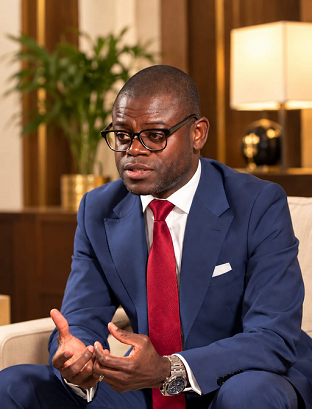
Me Ben Touere, a member of the Paris Bar and a doctor of public law who teaches at Sorbonne Paris Nord University, made the case during an interview that the initiative must remain a framework for dialogue rather than a competing center of power.
“The national dialogue announced by President Félix Tshisekedi must be designed as a political mechanism for consultation and pacification, not as a parallel institution,” he said. “It can help build compromises on peace, national cohesion, institutional reforms and the functioning of the state. But it must not become a second Parliament, a parallel Government, a political court, or a de facto constituent assembly.”
This moment, he argues, marks a turning point: the dialogue’s credibility will depend on whether it respects the legal architecture already in place.
Why legal translation matters
According to the legal expert, any political conclusions reached during the dialogue cannot carry lasting legal weight until they are formally translated by the institutions that hold constitutional authority.
“A legislative reform must go through Parliament; a public policy falls under the Government; a constitutional question belongs to the Constitutional Court; and any matter reserved for the direct decision of the people must be submitted to them in the forms prescribed by law,” he explained.
He outlined a clear sequence: dialogue first, then consensus, followed by intervention from the competent institutions, constitutional review, and — when legally required — a popular consultation. This step-by-step approach, he says, is what gives the process both legitimacy and durability.
The constitutional anchor: sovereignty belongs to the people
Me Elenga pointed to Article 5 of the Constitution, which enshrines the principle that national sovereignty belongs to the people. The people exercise it directly through elections or referendums, and indirectly through their representatives.
“Neither the majority, nor the opposition, nor the participants in a dialogue can claim national sovereignty for themselves,” he stressed.
For the lawyer, the ultimate goal must be to reform and strengthen the state through dialogue — not to create mechanisms that weaken it or split its prerogatives. The breakthrough, he suggests, lies in using this momentum to consolidate institutions rather than bypass them.