The Ebola epidemic in the Democratic Republic of Congo (DRC) continues to defy containment efforts, with no signs of slowing since its declaration on May 15. Recent assessments reveal the situation is worsening, as the outbreak has now become the second-deadliest in recorded history, surpassing previous outbreaks of the Bundibugyo strain in both scale and speed of spread.
Official data from health authorities indicates there are now over 4,000 confirmed cases, with more than 1,850 deaths—a case fatality rate exceeding 40%. This strain has proven far deadlier than in past outbreaks, where similar mortality figures took over ten months to accumulate. Public health experts warn that without intensified intervention, the crisis could escalate into the most devastating Ebola event on record.
Persistent violence hampers containment in conflict zones
The eastern DRC remains a battleground not only for armed groups but also for public health workers struggling to curb the virus. The Ituri province, the epicenter of the outbreak, has been ravaged by relentless attacks from the ADF, a Ugandan militant faction operating across the border. Meanwhile, the neighboring North Kivu province is partially controlled by the M23, a Rwanda-backed armed group that seized large territories from Congolese forces over a year ago.
Years of conflict have displaced millions, forcing families into overcrowded displacement camps where sanitation is nearly nonexistent and hygiene conditions are dire. These factors have severely limited epidemiological surveillance and early detection, allowing the virus to spread undetected for weeks in some areas.
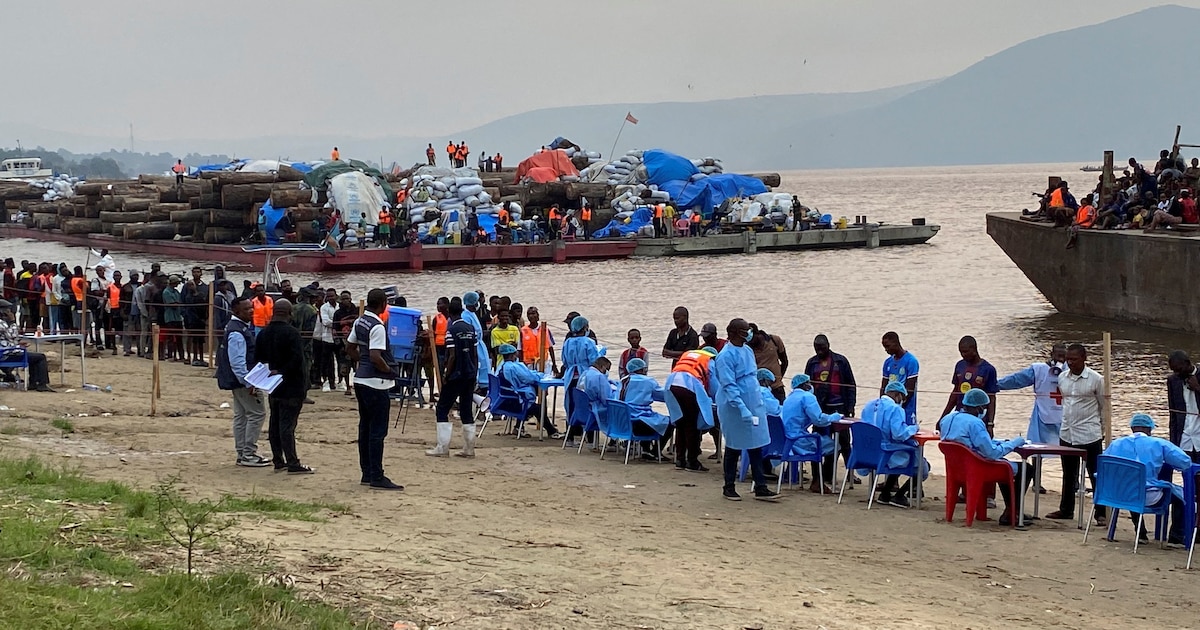
Contact tracing—a critical tool in outbreak control—has also fallen critically short. In Bunia, the outbreak’s main hotspot, 90% of admitted patients were not part of any tracked contact network. Across Ituri, only 59% of contacts were successfully traced, well below the Africa CDC’s target of 40 contacts per confirmed urban case. With an estimated 17,500 people currently under observation, the system is barely scratching the surface of what’s needed to halt transmission.
Experimental treatments offer hope amid limited resources
Despite the grim outlook, medical innovations are slowly emerging. Oxford University has launched a clinical trial for a new vaccine targeting the Bundibugyo strain, with the first doses administered to volunteers this month. The Coalition for Epidemic Preparedness Innovations (CEPI) is also funding a parallel vaccine development project led by Hilleman Laboratories in Singapore, aiming to fast-track production and testing in the DRC.
In the absence of a Bundibugyo-specific vaccine, health officials are turning to the licensed Ebola Zaïre vaccine as a stopgap measure. While not a perfect match, early data suggests it can reduce symptoms and mortality in exposed individuals. Additionally, trials are underway for combination therapies, with over 40 patients already participating in treatment evaluations.
The antiviral drug remdesivir, which showed promise in neighboring Uganda’s recent outbreak, is also being considered for wider use in the DRC. Authorities point to Uganda’s successful containment—achieved with a 10% fatality rate—as evidence of the drug’s potential effectiveness when deployed rapidly and comprehensively.
International aid arrives late as the crisis deepens
One of the most glaring obstacles to an effective response has been the delayed mobilization of international support. Early in 2025, critical health funding from USAID—long a cornerstone of Congo’s disease response—was abruptly halted by policy changes. The funding gap left health systems vulnerable, delaying the deployment of essential resources during the initial critical months of the outbreak.
On August 5, the U.S. State Department announced a $242 million aid package, bringing total American contributions to $512 million. This injection finally enables the World Health Organization and Africa CDC to implement a six-month response plan, initially budgeted at $518 million. However, critics argue the amount pales in comparison to past U.S. commitments in similar crises, even as Washington remains the largest single contributor to the Ebola response.