
Former ally exposes Ousmane Sonko’s alleged institutional disregard
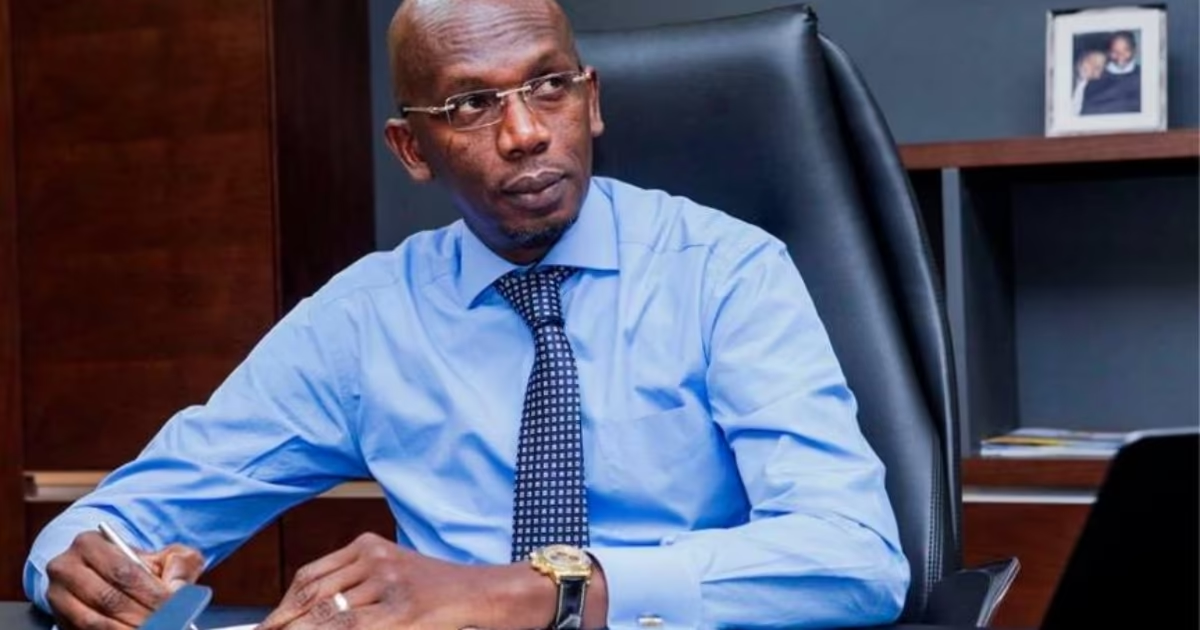
Lansana Gagny Sakho, a prominent figure in Senegal’s political landscape, has leveled sharp criticism against Ousmane Sonko, accusing the opposition leader of consistently undermining the country’s republican institutions. Speaking in a recent interview, the former ally-turned-advisor to President Bassirou Diomaye Faye emphasized his unwavering commitment to institutional stability, even at the cost of a high-ranking position.
From Alignment to Divergence: A Political Break
Once a close associate of Sonko, Sakho now serves as Chairman of the APIX board, a key state agency. He revealed that after Senegal’s political transition, he was offered the leadership of the water and sanitation sector—a role he declined to uphold his principles. “I prioritized convictions over positions,” he stated. “This decision allowed me to step away cleanly, proving my allegiance to the Republic from day one.”
Sonko’s Alleged Disregard for State Institutions
Sakho’s critique extends beyond personal choices. He accused Sonko of fostering divisions at the highest levels of government, particularly through public statements made during the President’s official visits abroad. “When the Head of State was abroad, Sonko publicly questioned the government’s authority—a move that not only embarrassed the administration but also weakened national cohesion,” Sakho asserted.
The former ally argued that true political leadership lies in strengthening institutions, not destabilizing them. While acknowledging past challenges on both sides, he highlighted significant progress, especially in judicial reforms, as evidence of the administration’s commitment to progress.
Judicial Independence Under Scrutiny
Sakho also addressed recent changes at the Ministry of Justice, where former Justice Minister Ousmane Diagne had declared his independence from external influence. Sakho alleged that the reshuffle aimed to install a more compliant minister to sway judicial decisions. “They underestimated the magistrates’ integrity,” he said. “Judges are not puppets—power operates differently than opposition narratives suggest.”