Auguste Miremont: reflections on Côte d’Ivoire’s political evolution through generations of leadership
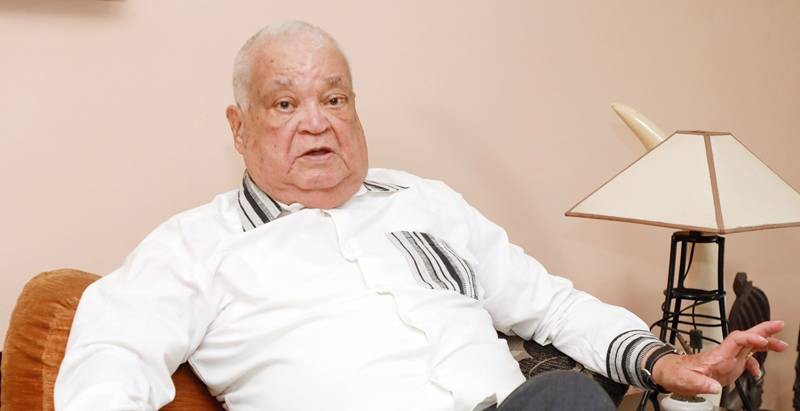
At 85, Auguste Miremont stands as a living archive of Côte d’Ivoire’s modern political history. Serving as the nation’s first Minister of Communication (then called Minister of Information) from 1989 to 1993, and later as Director-General of Fraternité Matin, he has witnessed decades of transformation. Now, a newly published biography offers unprecedented insight into his journey—one that spans the eras of Félix Houphouët-Boigny, Henri Konan Bédié, Robert Guéï, Laurent Gbagbo, and Alassane Ouattara. In this exclusive conversation, Miremont shares his reflections on leadership, legacy, and the nation’s most pivotal moments.
a reluctant memoirist: preserving history beyond personal praise
Miremont admits he initially resisted the idea of writing his memoirs. The book, « Auguste Miremont: From Houphouët to Ouattara, with Complete Candor », was only possible after years of persuasion by author Michel Koffi. Far from self-glorification, Miremont describes the project as a transmission of experience—a duty he now acknowledges after years of urging from colleagues, family, and even local officials in his hometown, who urged him to document his insights.
The collaboration was deep: over 30 hours of interviews conducted over 18 months. Though Koffi shouldered the bulk of the work, Miremont’s sharp journalistic instincts kept the narrative precise. « He soon realized I couldn’t be shown every draft, » Miremont recalls with a laugh. « Otherwise, we’d never have finished. »
the houphouët model: stability amid turbulence
Reflecting on Côte d’Ivoire’s post-independence trajectory, Miremont emphasizes the extraordinary political acumen of Houphouët-Boigny, who governed for 33 years. While his era saw crises, mutinies, and social tensions, Houphouët’s genius lay in his ability to listen, delay, and act decisively—a skill Miremont calls « the magic of his politics. »
Yet the transition to later leaders proved turbulent. The 1999 coup against Bédié shattered what Miremont describes as the « image of a stable, respected nation »—an image Côte d’Ivoire had cultivated under Houphouët. « We were once a beacon, » he says, « welcoming those fleeing crises elsewhere. Suddenly, we became a subject of concern, even mockery. » The post-coup violence, from Guéï’s era to Gbagbo’s presidency, left deep scars. Miremont wept at an airport upon hearing of Guéï’s assassination and the death of his former colleague, Finance Minister Émile Boga Doudou.
personal bonds: houphouët, bedié, and the weight of history
Though Miremont never claimed intimacy with Houphouët-Boigny, their professional relationship was defined by mutual respect. « He called me ‘De Miremont,’ » he shares. « Not out of nobility, but because he respected my honesty—my refusal to ‘eat from the trough,’ as he would say. »
With Bédié, Miremont had a closer bond, serving as president of his parliamentary group. Their friendship endured despite political shifts. « He was always there when I needed him, » Miremont reflects. Bédié’s passing struck him deeply. With Guéï, a distant relative, their interactions were frequent but politically neutral. Even Gbagbo, once a political rival, became an ally during negotiations for a unity government—until the 2010 crisis derailed progress.
ouattara’s legacy: patience, pragmatism, and progress
Miremont reserves his highest praise for Alassane Ouattara, whom he describes as the leader who most internalized Houphouët’s philosophy. « His finger on the pulse of the nation, his patience, his ability to listen—these are hallmarks of Houphouët’s legacy, » he notes. While Ouattara’s early tenure as Prime Minister under Bédié was marked by « zero tolerance for error, » Miremont acknowledges that time has softened the President’s approach. « Experience has made him more measured, more forgiving. »
Ouattara’s post-2011 presidency, Miremont argues, has prioritized unity and development. « Look at what’s being built: roads, hospitals, universities, even a boulevard designed like the Champs-Élysées in Daloa, » he says. « Between Bin-Houyé and Toulépleu, only 30 kilometers of pavement remain. These are not small achievements. »
Yet challenges persist. « Yes, life is expensive. Yes, poverty exists, » he concedes. « But the government has launched social safety nets, vocational training programs, and initiatives like ‘École de la Deuxième Chance’ to reintegrate dropouts. In my community alone, 25 apprenticeships have been funded. »
the road ahead: unity over succession
As Ouattara nears the end of his political career, Miremont dismisses speculation about his « exit. » « He’s still steering the ship, and there’s no sign of an opening for a successor, » he states. « His ambition remains clear: a united, prosperous Côte d’Ivoire. »
Miremont’s final message is one of cautious optimism. « Progress is real, but so are the struggles. The government is trying to balance economic rigor with social compassion. That’s leadership. »