Libreville, Thursday, August 27, 2026 – A significant shift has occurred in the ongoing Paramount Group saga, escalating the financial challenge facing Gabon. According to information released on August 27, 2026, by Africa Intelligence, the South African recovery fund, Bosch Capital, has reportedly acquired the rights to a substantial debt originally owed by the defense conglomerate Paramount Group to the Gabonese State.
The asserted amount of this Gabon debt claim stands at approximately $330 million, equivalent to nearly 185 billion CFA francs. Bosch Capital has reportedly issued a firm deadline of September 3, 2026, for the Gabonese government to settle this obligation. This remarkably short timeframe presents Libreville with a complex situation involving financial, legal, and strategic considerations.
This is not merely an overdue commercial invoice; it represents a claim stemming from contractual agreements between Gabon and Paramount Group, a South African entity renowned for its defense and security equipment. Paramount Group specializes in marketing armored vehicles designed for security forces and maintaining public order. Its Maverick vehicle, for instance, is promoted by Paramount as ideal for internal security operations, crowd control, and specialized missions.
The long-standing relationship between Paramount and Libreville adds a unique dimension to this case. The company previously supplied equipment to Gabon in preparation for the 2012 Africa Cup of Nations. However, the current issue transcends equipment provision; it is now fundamentally about the debt itself, its current holder, and the recovery methods available to this new claimant.
The transfer of the debt to Bosch Capital is precisely what alters the power dynamic. This fund is not Gabon’s traditional supplier. Instead, as reported by Africa Intelligence, it has become the beneficiary of the financial rights attached to the claim. Bosch Capital’s strategy is inherently that of a specialized debt recovery firm, likely adopting an approach distinct from an industrial partner keen on preserving a long-term commercial relationship.
Libreville confronts a rapidly expanding financial obligation
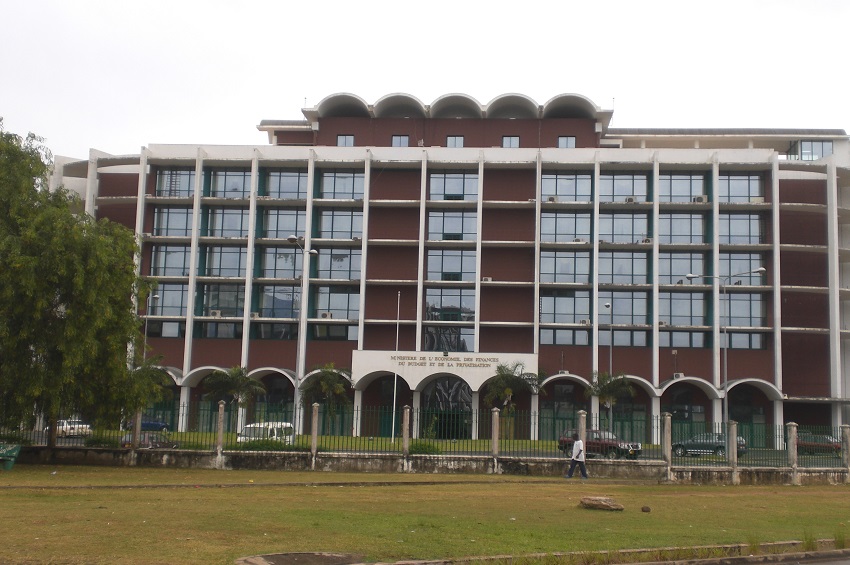
For Gabon’s public finances, $330 million represents a colossal sum. The immediate priority, however, lies in precisely identifying the debt. The government must ascertain the exact nature of the commitments involved, the precise amounts genuinely owed, any potential accrued interest, contractual guarantees, and all prior stages of settlement or dispute.
The upcoming week is poised to be decisive. The September 3 deadline set by Bosch Capital leaves minimal room for extensive negotiation. This could be interpreted as an ultimatum aimed at expediting an amicable resolution, or it might be a precursor to more aggressive recovery measures if no agreement is reached. Bosch Capital’s specific intentions beyond this deadline remain undisclosed.
This situation consequently raises broader questions regarding the state’s management of contractual commitments. Public debt extends beyond loans recorded in budgetary accounts; it can also manifest as commercial arrears, contractual disputes, or obligations arising from previously concluded agreements.
For a government currently striving to enhance financial governance and attract new investors, such a dispute sends a concerning signal that should not be underestimated. Investors meticulously assess a state’s capacity to fund its projects, as well as its ability to honor its commitments and resolve disputes effectively.
Intersections of finance and sovereignty in the Gabon debt claim
The context is particularly sensitive for Gabon because Paramount operates within the strategic defense and security sector. The historical ties between the two entities add an institutional layer to the financial matter.
Nevertheless, it would be premature to categorize this claim as definitively uncontestable. The currently available information primarily originates from Africa Intelligence, and Libreville’s official stance on the amount, validity, and terms of this claim has not yet been publicly disclosed. It is therefore incumbent upon Gabonese authorities to swiftly clarify this matter and formally document their position.
For the government, the imperative is twofold: legally verify the claim and prevent a financial disagreement from escalating into a more costly international dispute or creating a negative perception for the business climate. In an environment where Gabon seeks to mobilize greater private capital, contractual predictability is an economic asset as crucial as its natural resources.
The timeline now demands a response. September 3 is the date put forward by Bosch Capital. By then, Libreville must determine whether a basis exists for settlement, restructuring, contesting the claim, or initiating broader negotiation procedures.
The Paramount affair profoundly highlights a reality often underestimated in public administration: a past signature can, years later, become a significant financial and diplomatic burden. Gabon must not only focus on how to potentially settle this claim but also on understanding its origins, why it reached this magnitude, and what contractual protections were initially in place. The true urgency extends beyond the September 3 deadline; it is about reinstating a rigorous discipline where every state commitment is thoroughly documented, monitored, and resolved before it transforms, in the hands of a new creditor, into a multi-hundred-million-dollar issue.