Gabon rejects Trump’s migrant transfer proposal amid sovereignty stance
Libreville, June 4, 2026 – The Gabonese government’s refusal to accept migrants expelled from the United States marks more than just a stance on migration. It signals a bold assertion of national sovereignty that reshapes the country’s diplomatic posture.
In a clear and unambiguous message delivered during an international interview, President Brice Clotaire Oligui Nguema made it known that Gabon would not entertain Washington’s proposal to transfer migrants to its territory. This decision underscores the administration’s commitment to prioritizing national interests while maintaining balanced relations with global powers.
The President’s remarks left no room for doubt. Addressing a suggestion that Gabon could serve as a destination for expelled migrants, he stated, « Gabon will not become a host for such an agreement that does not align with our national priorities. This stance is final. »
The timing of this refusal is significant. It comes at a moment when Western nations, particularly the United States under Donald Trump’s administration, are intensifying efforts to outsource migration management to third countries. These initiatives have sparked debates across Africa, where many nations are wary of becoming dumping grounds for the West’s migration challenges.
Migration: a global challenge
The management of migratory flows has evolved into one of the most pressing geopolitical issues of our time. Countries in Europe and North America are increasingly seeking partnerships with African states to offload some of the burdens associated with migration policies. The United Kingdom, for instance, has explored agreements with Rwanda, while other African nations have been approached with similar proposals.
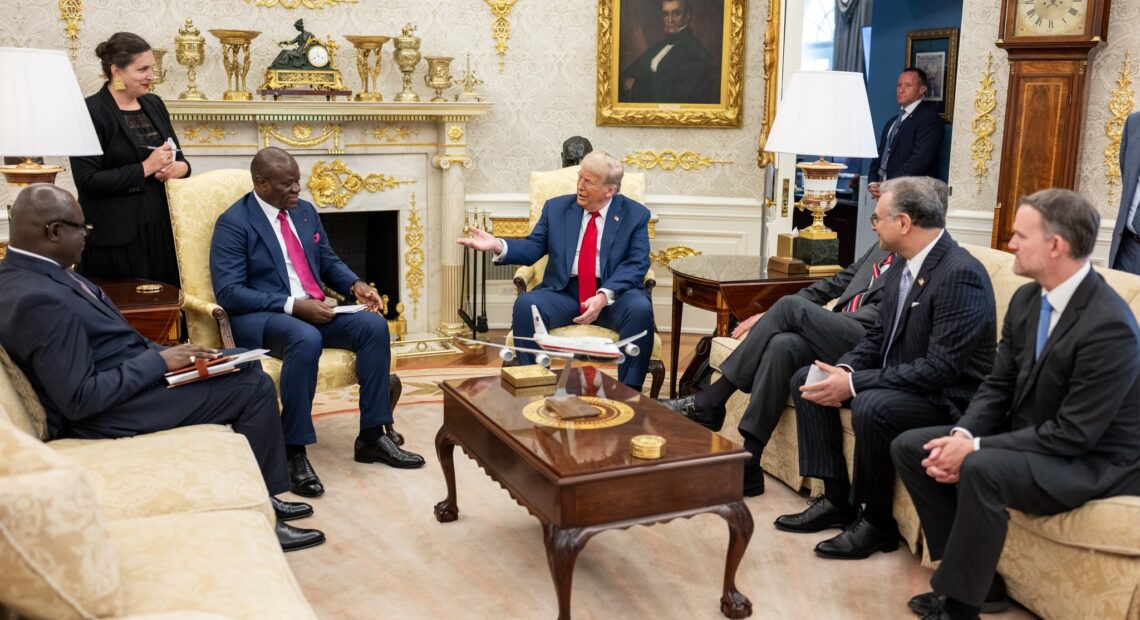
Gabon’s refusal to participate in such a scheme stands out, not because it signals a rift with the United States, but because it demonstrates a refusal to compromise on national sovereignty. Throughout the interview, President Oligui Nguema went to great lengths to emphasize the strong ties between Libreville and Washington, even playfully referring to Donald Trump as « my friend in the red tie. »
The message is clear: cooperation will continue, but Gabon’s interests will always come first. This decision is part of a broader pattern of policy choices aimed at reinforcing the country’s autonomy.
Sovereignty as a guiding principle
The refusal to accept deported migrants is the latest in a series of moves by Gabon to reclaim control over its economic and political destiny. Whether through local processing of manganese, renegotiating trade agreements, or reclaiming military installations from foreign forces, the government is crafting a narrative centered on self-determination.
Accepting migrants expelled from another continent would have posed significant administrative, social, and financial challenges for Gabon. With a nation undergoing rapid modernization, the government’s focus remains squarely on addressing domestic needs rather than external obligations.
This position also resonates deeply with public sentiment across Africa. There is a growing consensus that the continent should not be treated as a solution to the migration problems of wealthy nations. Gabon’s stance aligns with this sentiment, reinforcing its role as a defender of African dignity.
A balanced diplomacy
The true significance of this decision lies in its diplomatic finesse. Gabon has shown that it is possible to reject a major power’s proposal without escalating tensions. While some countries have faced diplomatic fallout over migration disputes, Gabon’s approach offers a model of assertive yet respectful diplomacy.
This episode reflects a broader shift in Africa’s engagement with global powers. Partnerships remain essential, and collaboration is still valued. However, African states are increasingly insisting on negotiating from a position of strength, ensuring that their voices are heard in decisions affecting their future.
Beyond migration, the message from Libreville is unmistakable: Gabon is open to the world but will not allow its future to be dictated by external forces. In an era of global fragmentation, this assertion of sovereignty could become a defining feature of Gabonese diplomacy in the years ahead.