Gabon’s president outlines bold economic and political vision
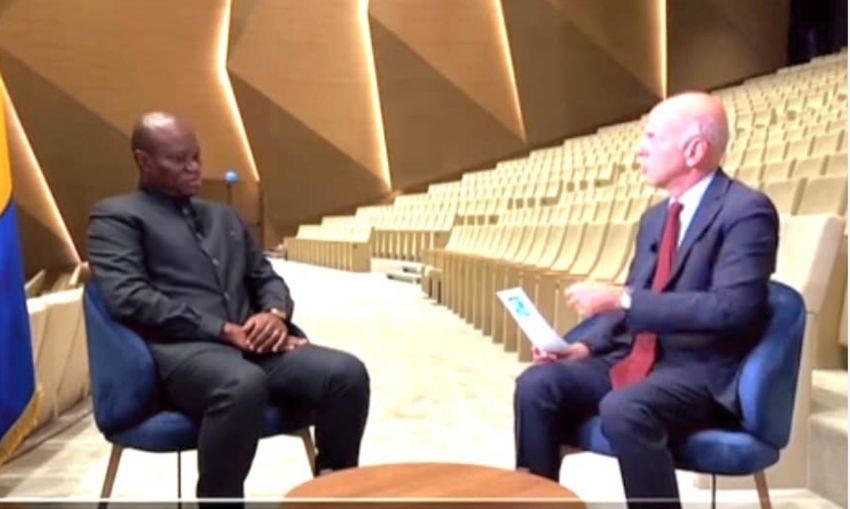
Libreville, June 3, 2026 – In a landmark interview broadcast from the Congress Hall of the Cité de la Démocratie in Libreville, President Brice Clotaire Oligui Nguema laid out Gabon’s strategic direction, emphasizing economic sovereignty, progressive reforms, and a commitment to democratic alternation.
Three years into his leadership and one year after securing over 94% of the vote in a landmark election, the Gabonese head of state used this platform to engage in a high-stakes dialogue with global media. He addressed pressing domestic challenges, defended his policy choices, and outlined a vision for a Gabon that reclaims control over its economic and political destiny.
The president framed his administration’s approach around long-term reform rather than quick fixes. While acknowledging public frustrations over infrastructure gaps—particularly in water and electricity—he highlighted investments totaling over 800 billion CFA francs in the energy sector. His message was clear: transformation demands patience, and Gabon’s progress must be measured in years, not months.
Economic sovereignty as a guiding principle
The most striking declarations came on the economic front. President Oligui Nguema confirmed Gabon’s intention to engage with the International Monetary Fund (IMF), but only after a thorough audit of the country’s financial health. This stance signals a deliberate effort to regain control over debt negotiations and fiscal commitments before entering new agreements.
A major policy shift was announced regarding manganese exports. Starting in 2029, Gabon will prohibit the shipment of raw manganese, a critical mineral in which the country is a global leader. The move aims to compel international mining giants—particularly French conglomerate Eramet—to establish local processing facilities. Failure to comply will result in a complete export ban. This decision underscores the government’s resolve to break free from a colonial-era economic model that prioritizes raw material extraction over value creation at home.
A balanced international posture
On the diplomatic stage, the president sought to reassure partners while asserting Gabon’s autonomy. He confirmed a state visit to France scheduled for July 20, stressing the enduring strength of Gabon-France relations. The recent handover of the Camp de Gaulle military base to Gabonese authorities was framed not as a confrontation, but as part of a collaborative partnership—contrasting sharply with the rhetoric seen in neighboring Sahel nations.
Similarly, Gabon declined a U.S. proposal to host migrants expelled from America, citing national interest as the deciding factor. The refusal demonstrated a pragmatic approach to foreign relations, rejecting dependency while maintaining open channels with global powers.
Rebuilding trust and institutional integrity
The interview also touched on the legacy of former President Ali Bongo Ondimba. Without assigning direct blame, President Oligui Nguema referred to the health challenges faced by his predecessor, suggesting that accountability for past governance failures rests elsewhere. Yet it was his unequivocal stance on presidential term limits that drew particular attention.
In a region where political dynasties and extended mandates remain common, the Gabonese leader pledged that no political dynasty bearing his name would ever take root. He reaffirmed the irreversibility of the seven-year term limit, with the possibility of a single renewal—a cornerstone of his vision for institutional stability and democratic renewal.
The road ahead: ambition versus execution
This high-profile interview revealed the pillars of Gabon’s new political doctrine: economic sovereignty through local value addition, balanced international partnerships, progressive infrastructure development, and an unwavering commitment to democratic norms. Yet the ultimate test remains implementation.
With significant political capital at his disposal, President Oligui Nguema has staked his presidency on a simple but profound promise: that Gabon will no longer be a passive participant in its own future. Whether this vision translates into tangible progress for citizens will determine his legacy. One year into his mandate, the clock is ticking—and the Gabonese people are watching closely.