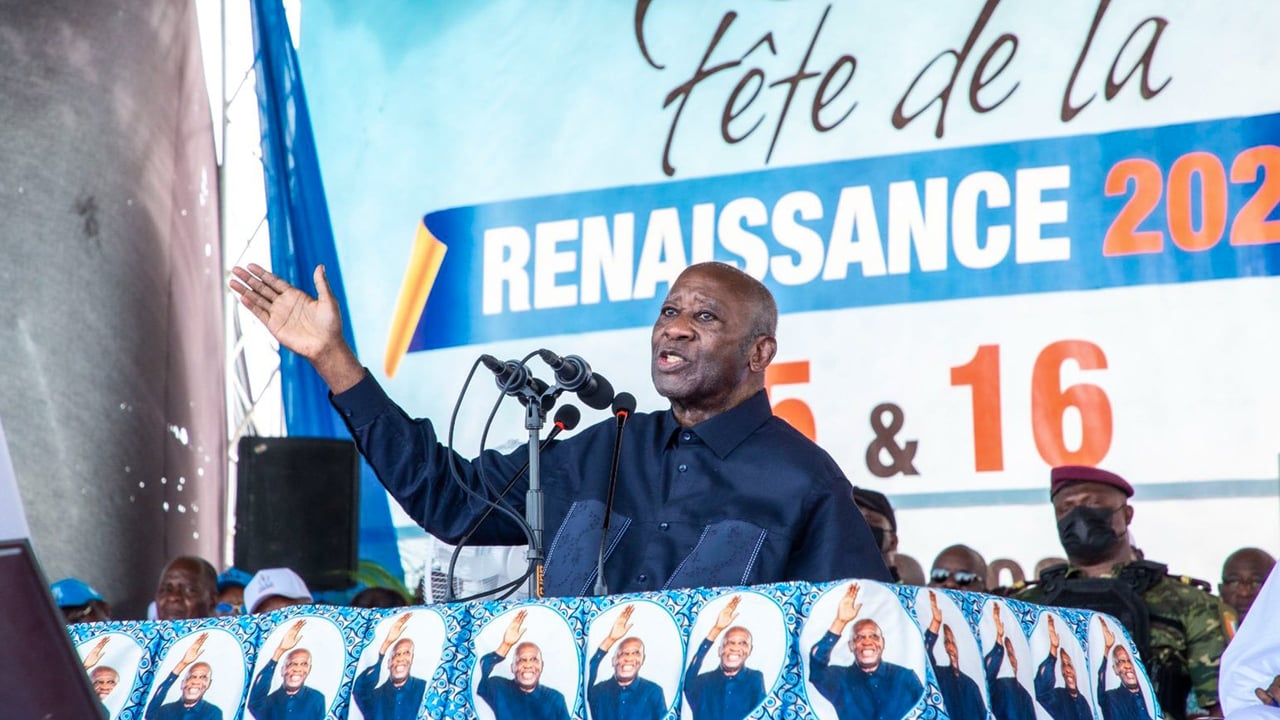
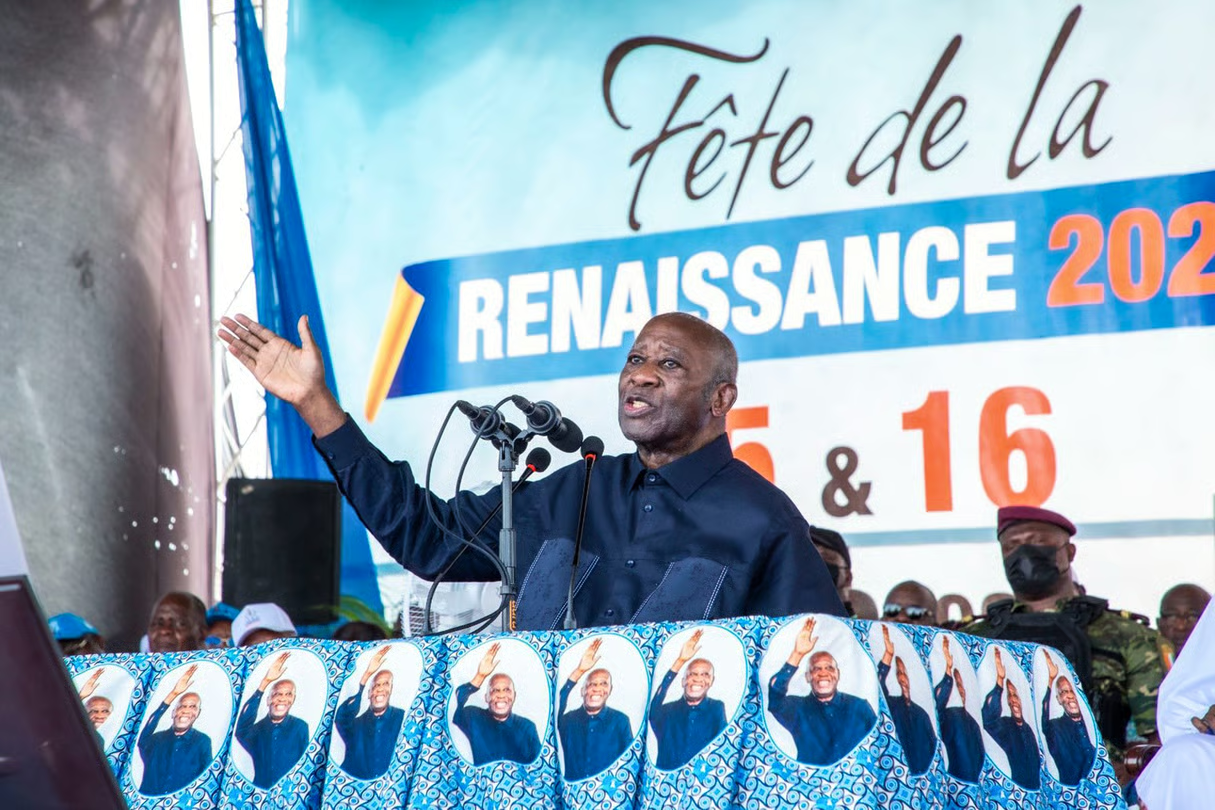
In a move that reshapes the political landscape, Laurent Gbagbo has formally stepped back from his leadership role within Ivory Coast’s PPA-CI party while maintaining decisive influence over its future direction. The announcement, delivered during the recent Renaissance celebration in Songon, signals a calculated transition rather than an abandonment of power.
The former President’s decision to withdraw from the forefront comes as the party prepares for critical internal changes. Observers note that Gbagbo’s strategic repositioning allows him to orchestrate the next phase of the party’s evolution from behind the scenes, ensuring his vision remains central to its operations.
What this means for Ivory Coast’s political scene
The PPA-CI party, founded by Gbagbo, has long been a dominant force in Ivorian politics. His departure from an active role marks a significant moment in the country’s democratic process. While the party continues to strengthen its foundations, questions arise about the mechanisms of succession and the party’s ability to adapt to new leadership challenges.
Party insiders describe this transition as a generational handover, though one carefully managed to preserve the core values that have defined the PPA-CI since its inception. The process reflects a broader trend in African politics, where veteran leaders navigate the delicate balance between legacy preservation and institutional renewal.
Key implications for the PPA-CI’s future
- Strategic succession: Gbagbo’s influence ensures a smooth leadership transition while maintaining party unity.
- Policy continuity: The party’s core principles remain intact, providing stability amid political shifts.
- Youth engagement: The transition opens opportunities for younger members to take on more prominent roles.
As Ivory Coast continues to evolve politically, the PPA-CI’s ability to navigate this transition will be closely watched. The party’s next steps could redefine its role in shaping the nation’s future, particularly in the lead-up to upcoming electoral cycles.
The situation underscores the complexities of political leadership in Africa, where experience and innovation must coexist. For the PPA-CI, this moment represents both a challenge and an opportunity to reassert its relevance in a rapidly changing political environment.