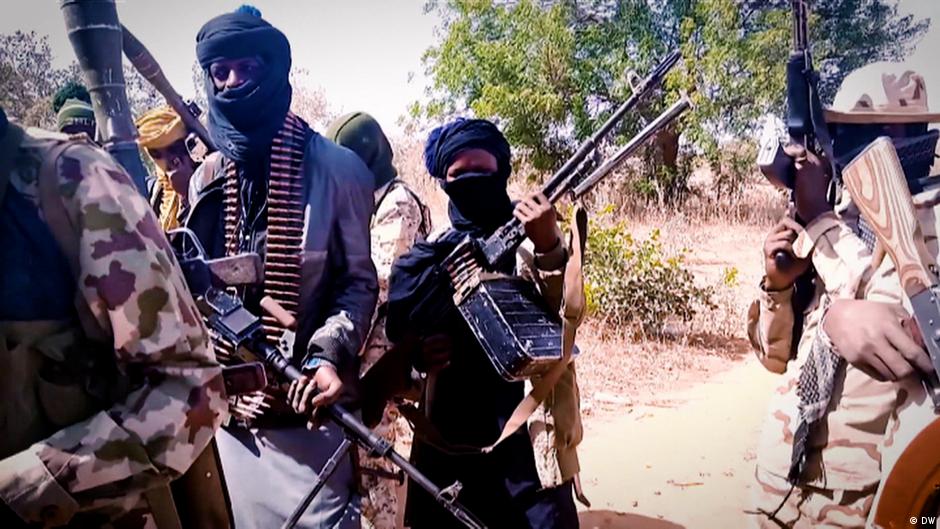
Kidnapping has evolved into a lucrative industry for Boko Haram, fueling its operations across multiple nations in West Africa. This trend has intensified in recent years, particularly in Nigeria, Chad, Niger, and Cameroon, where the group has exploited local vulnerabilities to sustain its militant activities.
the scale of kidnappings in the region
Nigeria remains the hardest-hit country, with security analysts describing the situation as a structured and highly profitable criminal enterprise. Between July 2024 and June 2025 alone, nearly 5,000 individuals were abducted during roughly 1,000 incidents—many targeting schools. These attacks have resulted in hundreds of fatalities, predominantly in northern Nigeria, but also spreading to central regions. Key perpetrators include Boko Haram, recognized as a terrorist organization by the United Nations in 2014, and the Islamic State’s West Africa Province (ISWAP).
Kidnappings are not confined to Nigeria. In Cameroon’s Far North, Boko Haram seized a bus full of passengers in Zigué, while in Niger, the group abducted seven Chadian nationals near the Chad-Niger border in late March. Tragically, one hostage was killed, while the remaining six remain in captivity. The captors demanded a ransom of 50 million CFA francs ($83,000) for five of the hostages, with the sixth—a physician—targeted for a staggering 500 million CFA francs ($830,000).
motives behind mass abductions
Security researcher Remadji Hoinathy, affiliated with the Institute for Security Studies (ISS), highlights two primary objectives behind these kidnappings:
- Forced recruitment: Abductions serve as a means to forcibly enlist fighters, including women and entire communities, who are then exploited as laborers, combatants, or subjected to sexual slavery.
- Economic exploitation: Ransom payments—often amounting to millions of naira or CFA francs—provide critical funding for Boko Haram’s operations. Families, local communities, and occasionally governments have paid these sums to secure releases.
government denials and covert payments
While Nigeria’s federal government publicly condemns ransom payments—even enacting a 2022 law criminalizing them with up to 15 years in prison—evidence suggests these policies are inconsistently enforced. In November 2025, authorities were accused of paying a substantial ransom to secure the release of approximately 230 students and staff from a Catholic school in Niger State. Reports indicate payments ranging from €1.3 million to €6 million, allegedly transported by helicopter to a Boko Haram commander in Borno State. The Nigerian government has dismissed these claims as baseless, attributing the releases to intelligence-led military operations instead.
Experts argue that acknowledging ransom payments could inadvertently bolster Boko Haram’s propaganda, encouraging further kidnappings.
Boko Haram’s stronghold in the Lake Chad Basin
Founded in 2002 in Maiduguri, Borno State, Nigeria, Boko Haram—whose name translates to “Western education is sinful” in Hausa—initially sought to establish an ultra-conservative Islamic state. Over time, the group expanded its reach beyond Nigeria, embedding itself across the Lake Chad Basin, including Niger, Chad, and Cameroon. This region serves as a strategic hub for several reasons:
- Transnational networks: The Lake Chad Basin borders the Sahel, where Islamic State-affiliated groups like EIGS operate, and Libya, a major conduit for arms and fighters.
- Weak state presence: Marginalized areas with historically limited government control offer fertile ground for militant operations, including agricultural and pastoral economies that facilitate cross-border trade.
- Geographical isolation: Dense forests, swamps, and remote islands provide natural cover, enabling militants to evade military pressure.
the rise of ISWAP and internal conflict
In 2016, ISWAP emerged as a splinter faction of Boko Haram, led by members dissatisfied with the group’s indiscriminate violence against civilians. Unlike its predecessor, ISWAP aligned with the Islamic State and adopted a more tactical approach, prioritizing community engagement over sheer brutality. This shift has sparked a violent rivalry between Boko Haram and ISWAP, both vying for dominance in the Lake Chad Basin and control over resources.
regional military responses and ongoing challenges
The Lake Chad Basin Commission’s Multinational Joint Task Force coordinates military efforts among member states, including Nigeria, Chad, Cameroon, and Niger. However, the prolonged insurgency—now spanning over a decade—has exposed critical gaps in these strategies. Remadji Hoinathy notes that while military responses initially targeted militants within national borders, regional stabilization efforts now emphasize development initiatives and state presence in affected communities. Despite these measures, Boko Haram and ISWAP continue to adapt, regroup, and launch attacks, underscoring the resilience of these groups.
Since 2009, the conflict has claimed over 40,000 lives and displaced two million people in northeastern Nigeria alone. To bolster Abuja’s counterterrorism capabilities, the United States deployed approximately 200 troops to Nigeria last year to provide training and support.