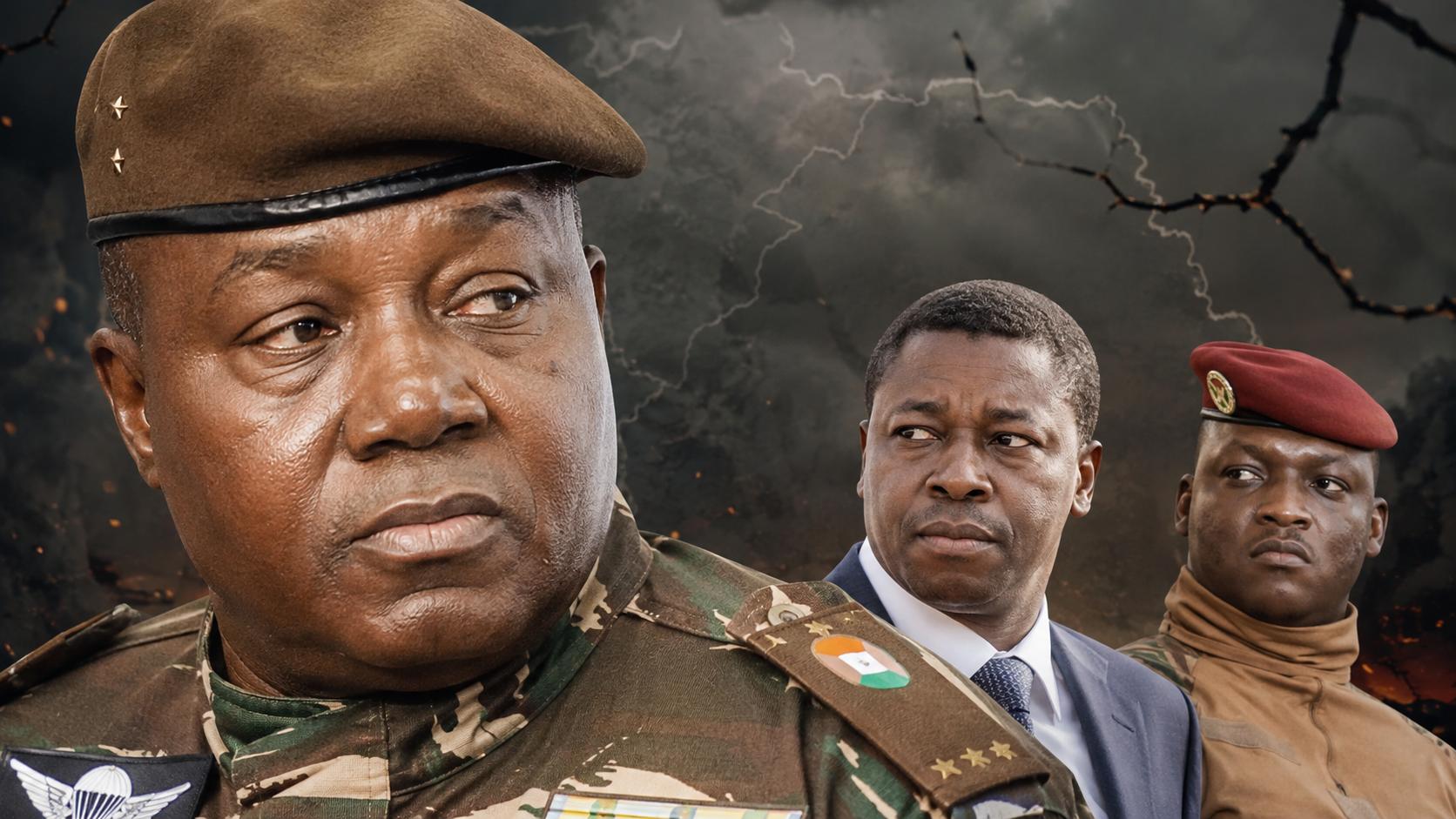
Currently held in Pretoria following an alleged breach of immigration laws, the prominent figure of pan-Africanism, Kémi Séba, has vehemently denounced his detention as political persecution. However, beneath his public discourse of sovereignty, a comprehensive investigation has brought to light a network of clandestine alliances, both startling and disquieting, extending from Russian influence operations to factions within white supremacist movements.
The apprehension sparking widespread debate
From his South African cell, Kémi Séba remains indignant. The Franco-Beninese activist characterizes his arrest not merely as an incident, but as another calculated “cabal,” allegedly orchestrated by his adversaries—specifically implicating France and the Beninese government—to impede his freedom of movement. His proponents echo these sentiments, framing his custody as a deliberate attempt to stifle the momentum of a man who positions himself as the voice for disillusioned African youth.
Yet, beyond the immediate legal contestation over his visa status or his plea for political asylum, the true nature of his international engagements raises profound questions, inquiries the activist appears keen to sidestep.
The kremlin’s reach and the wagner instrument
Our inquiry definitively establishes that Kémi Séba’s connections with Russian networks transcend mere ideological alignment, now demonstrating a structural foundation. Retrieved documents reveal consistent communication with entities linked to the late Yevgeny Prigozhin’s sphere of influence and the “Lakhta Project.”
The underlying objective? To harness anti-Western rhetoric as a strategic tool to advance Moscow’s geopolitical agenda across the African continent. In exchange for logistical and financial backing, Séba reportedly functions as a conduit of influence, channeling post-colonial grievances into a mechanism for regional destabilization, ultimately benefiting Russian interests.
A paradox of partnerships: when pan-africanism intersects with supremacism
Even more perturbing, our investigation has unearthed discreet contacts between Séba and leading figures within white supremacist circles and radical far-right movements in both Europe and America. While their core ideologies appear diametrically opposed, they share a singular, unsettling commonality: the advocacy for racial separatism.
The adage, “the enemy of my enemy is my friend,” seemingly underpins Séba’s interactions with proponents of the “Great Replacement” theory or advocates for strict ethno-racial segregation. These connections expose a “convergence of extremes” strategy, where the overarching goal is to undermine liberal democracies and multiculturalism, even if it entails forming pacts with groups that view Africa as an inferior continent.
A high-stakes strategic retreat
By seeking political asylum in South Africa, Kémi Séba endeavors to transform a precarious legal predicament into a potent symbol of defiance. However, South African authorities, acutely aware of their international standing and the imperative to uphold the integrity of their migration system, find themselves grappling with a significant quandary.
April 29th is poised to be a pivotal date. Nevertheless, irrespective of the Pretoria court’s judgment, what hangs in the balance is the very credibility of a man. The chasm between the self-proclaimed defender of black dignity and the alleged collaborator with foreign influence networks has never appeared more expansive.