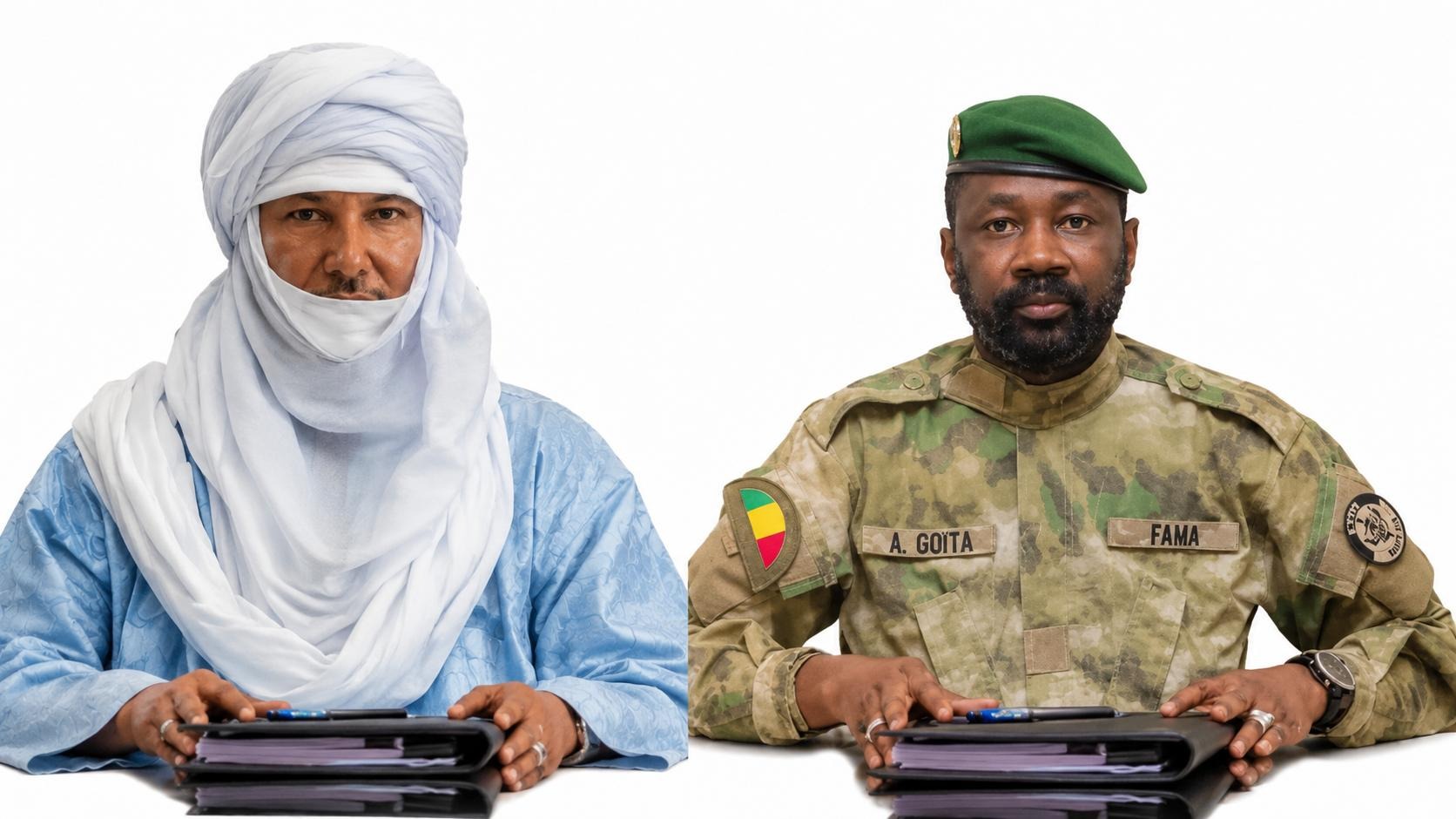
BAMAKO / ANEFIF — Beneath the carefully crafted narrative of strength and sovereignty peddled by Mali’s ruling junta, the ground realities tell a far grimmer story. A surge in large-scale clashes in the North, the growing military prowess of the Azawad rebels, and the devastating humanitarian fallout from Mali’s alliance with Russian mercenaries are pushing the country deeper into an unprecedented political and military deadlock. This stark assessment comes from Issouf Ag MAHA, a prominent Nigerien writer now living in exile.
Power addiction trumps peace as junta abandons dialogue
Since seizing power in August 2020, the military leadership in Bamako pledged to restore national unity and end insecurity. Six years later, the results speak for themselves — and they are bleak. By unilaterally terminating the Algiers Peace Accords in January 2024, the transitional authorities closed the last meaningful channel for political negotiation with northern movements, effectively resurrecting armed confrontation as the primary means of engagement.
In a blunt commentary, Issouf Ag MAHA condemns what he calls the junta’s « insatiable thirst for power. » He argues that rather than pursuing a sustainable resolution to the conflict, the regime has become consumed by short-term political survival. Public discourse is tightly controlled: independent media is silenced, civic freedoms are severely curtailed, and dissenting voices are systematically silenced. Yet as the government digs in within the capital, its influence continues to erode across the countryside.
Military reverses expose cracks in Bamako’s narrative
Military propaganda from Bamako is increasingly at odds with battlefield realities. On July 4, 2026, intense fighting erupted around Anefif, a key strategic hub in the northeast. Malian Armed Forces (FAMa) troops, backed by Russian paramilitary units, were heavily entrenched in the area when a reinforcement convoy dispatched from Gao was ambushed. The attack resulted in heavy casualties and forced government forces to retreat under fire.
This loss is part of a broader pattern. The recent defeat at Tinzawatène and the recapture of Kidal by the Azawad Liberation Front (FLA) have reshaped the military balance. Despite official claims that the situation is under control, the fragility of the government’s position is increasingly evident.
Ag MAHA highlights a significant gesture by the FLA: following its military advances, the rebel movement allowed the withdrawal of some Malian and Russian troops from certain areas. He interprets this move as a deliberate political signal — a bid to differentiate the FLA from the junta’s brutal tactics and demonstrate adherence to international humanitarian law.
Africa Corps and the cycle of violence against civilians
The junta’s pivot toward Russia culminated in the deployment of Africa Corps operatives — formerly known as Wagner Group fighters. While this partnership has insulated the regime from Western democratic pressures, it has brought unbearable suffering to local communities in northern Mali.
Ag MAHA’s assessment of the humanitarian crisis is damning. He describes civilians enduring « unrelenting torment that borders on systemic erasure. » Reports of abuses have surged:
- Arbitrary arrests and enforced disappearances.
- Extrajudicial killings of civilians.
- A deliberate strategy of terror aimed at local populations.
Yet Bamako continues to deny these accusations, retreating into outright denial. The analyst warns that this refusal to acknowledge reality only deepens the risk of national fracture.
A nation slipping toward irreversible collapse
The Malian crisis now unfolds under a global gaze that has grown increasingly indifferent. Ag MAHA decries the « deafening silence » from international actors, regional bodies, and the global press. He questions whether the world will only act once a military outcome becomes inevitable — or if Mali has simply lost its once urgent place on the international agenda.
For the analyst, Mali stands on the brink of a point of no return. By prioritizing the illusion of total military victory over the core republican values of justice, equity, and diversity, the junta risks not rebuilding the nation — but presiding over its definitive collapse.