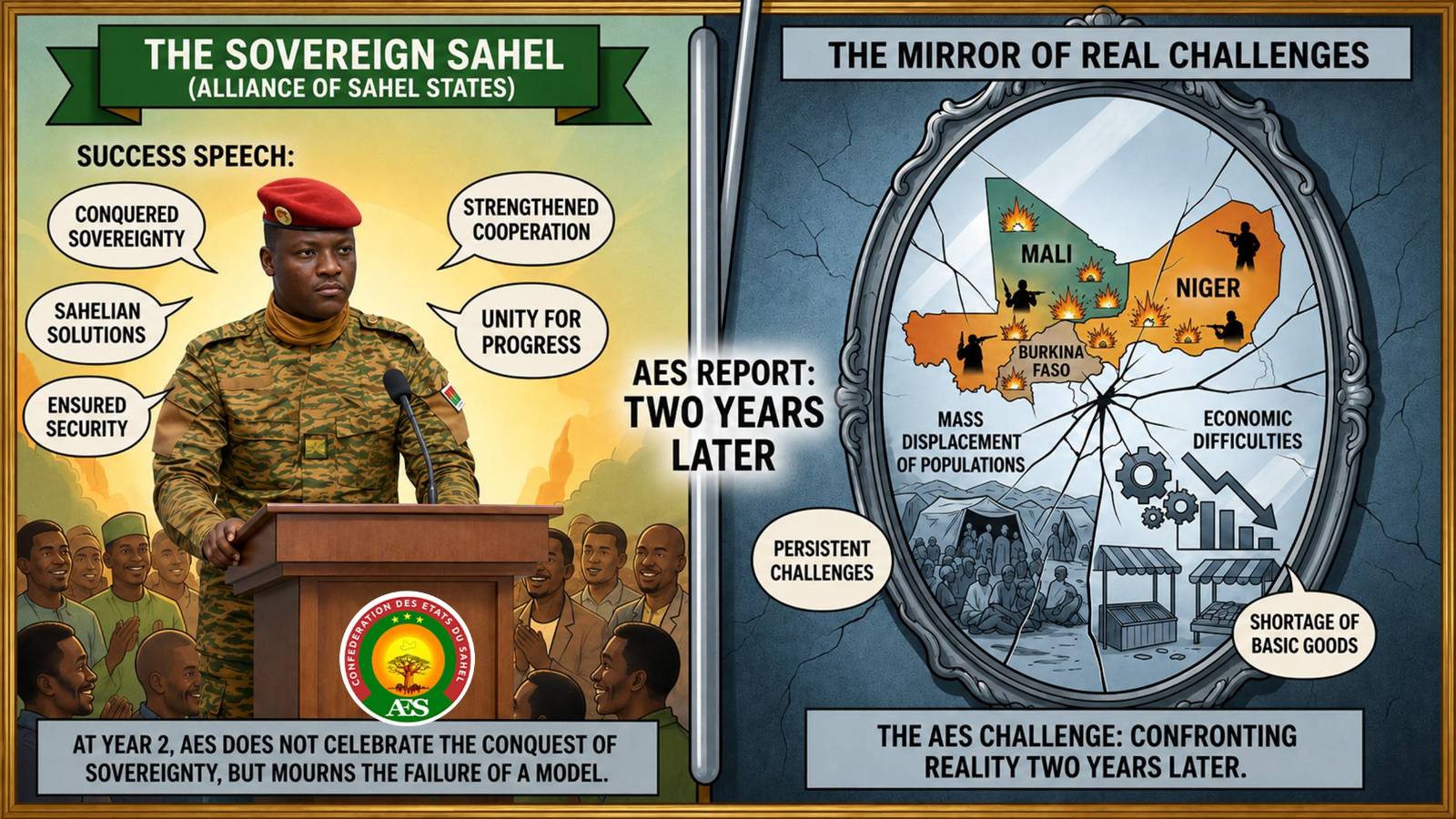
The Confédération des États du Sahel (AES), established two years ago by Burkina Faso, Mali, and Niger, continues to position itself as a landmark achievement in regional cooperation. Its leaders, notably Captain Ibrahim Traoré, emphasize sovereignty, mutual solidarity, and strengthened institutional ties as the pillars of this alliance. While these principles resonate with a segment of the public, tangible progress remains elusive for many who question the organization’s actual impact.
Diplomatic and institutional strides overshadowed by persistent challenges
The AES has been presented as a diplomatic and institutional success, with its advocates highlighting milestones in governance and regional coordination. However, critics argue that such claims lack substance when juxtaposed with the ongoing crises affecting the three nations.
The sovereignty narrative: a double-edged sword
The discourse on sovereignty has become the cornerstone of the AES’s political identity. Yet, true sovereignty extends beyond symbolic gestures or the severing of long-standing international partnerships. It demands tangible outcomes: the protection of citizens, the functionality of state institutions, economic resilience, and opportunities for youth. On these fronts, the alliance’s record remains mixed at best.
Security: a fragile equilibrium
Despite frequent declarations of military victories, armed groups continue to operate across vast areas of the three countries. Civilians face persistent threats, with forced displacements and humanitarian crises showing no signs of abating. The promise of enhanced security, a key justification for the AES’s formation, has yet to materialize in many communities.
Economic integration: stalled progress
Regional economic integration, another pillar of the alliance, has seen limited advancement. Trade flows remain constrained, fiscal challenges persist, and declining purchasing power affects households nationwide. While proponents tout the long-term benefits of the AES, the immediate economic realities offer little evidence of transformation.
Governance and accountability: the missing link
The focus on sovereignty has, at times, overshadowed critical discussions on governance, transparency, and accountability. A regional union’s credibility hinges not solely on political declarations but on its ability to deliver functional institutions, effective public policies, and responsible resource management. Without these, public trust will remain fragile.
A reckoning based on results, not rhetoric
Two years into its existence, the AES undeniably reshapes the geopolitical landscape of West Africa. Yet, its legacy will be determined by outcomes, not intentions. The citizens of Burkina Faso, Mali, and Niger are not waiting for declarations—they demand measurable improvements in security, economic stability, and social welfare. The true test of the alliance’s success lies in its capacity to address these enduring challenges, not in the rhetoric of sovereignty alone.