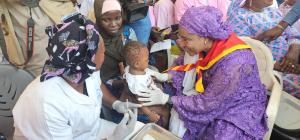
The Republic of Mali has made history by becoming the first nation globally to implement a hybrid malaria vaccination approach, marking a significant milestone in the fight against one of Africa’s deadliest diseases. This innovative strategy combines routine immunization with seasonal booster doses to maximize protection for children most at risk.
why Mali leads the way in malaria vaccination
On World Malaria Day, officials in Mali announced the launch of this groundbreaking hybrid approach, which targets children aged 5 to 36 months. The initiative builds on the country’s existing routine immunization programs while introducing a seasonal component to align vaccine protection with peak transmission periods.
Key features of Mali’s hybrid strategy include:
- Three initial doses administered year-round based on age
- Two seasonal booster doses given annually before the high-transmission season (typically May-June)
- Strategic distribution across 19 priority districts in Kayes, Koulikoro, Mopti, Ségou and Sikasso
This approach leverages the seasonal nature of malaria transmission in Mali, where over 70% of cases occur between July and December. By timing the booster doses to coincide with the rainy season, health authorities aim to provide maximum protection when children are most vulnerable.
addressing africa’s malaria burden
Mali’s implementation comes as the country faces a significant malaria challenge. According to the latest WHO data:
- Mali accounted for 3.1% of global malaria cases in 2023 (8.15 million cases)
- The country represented 2.4% of global malaria deaths (14,328 deaths) in the same year
- Mali ranks among the 11 countries worldwide with the highest malaria burden
- The nation saw a 1.4 million case increase between 2019 and 2023
These statistics underscore the urgent need for new prevention tools. The hybrid vaccination approach represents Mali’s commitment to protecting its youngest citizens, with children under five accounting for over 75% of global malaria deaths.
collaboration and implementation
The successful rollout of Mali’s hybrid vaccination program results from coordinated efforts between:
- Mali’s Ministry of Health and Social Development
- Gavi, the Vaccine Alliance (providing funding and technical support)
- UNICEF (handling vaccine distribution and community mobilization)
- World Health Organization (WHO) (guiding policy and evaluation)
The program initially deploys 927,800 doses of the R21/Matrix-M vaccine, with plans to scale up as more resources become available. This vaccine, alongside the RTS,S/AS01 alternative, has demonstrated effectiveness in clinical trials, reducing malaria cases by over 50% in the first year of vaccination.
vaccine effectiveness and safety
The R21/Matrix-M and RTS,S/AS01 vaccines have both received WHO prequalification and recommendation. Key findings include:
- Both vaccines reduced malaria cases by more than 50% in the first year of vaccination
- Seasonal administration in high-transmission areas showed up to 75% reduction in malaria cases
- The vaccines target Plasmodium falciparum, the deadliest malaria parasite in Africa
- Four-dose schedules provided extended protection into the second year of life
These results confirm the vaccines’ safety and efficacy, which have been validated through extensive clinical trials and real-world implementation in countries like Ghana, Kenya and Malawi.
global context and future outlook
Mali’s initiative follows the introduction of malaria vaccines in 20 African nations since 2023. With over 24 million doses already distributed across the continent, the hybrid approach represents the next evolution in malaria prevention strategies.
Looking ahead, Gavi aims to support the vaccination of an additional 50 million children between 2026 and 2030, pending sufficient funding. This ambitious goal builds on current efforts where:
- 13 million additional African children will be protected by the end of 2025
- Countries like Nigeria and Chad are expanding their vaccination programs
- Integrated approaches are being developed for fragile health systems
The hybrid vaccination strategy demonstrates how targeted public health interventions can address seasonal disease patterns while building on existing healthcare infrastructure. As Mali leads this innovative approach, the international community watches closely to assess its potential for replication in other malaria-endemic regions.