Mali’s reality check: can Assimi Goïta’s promises withstand the crisis?
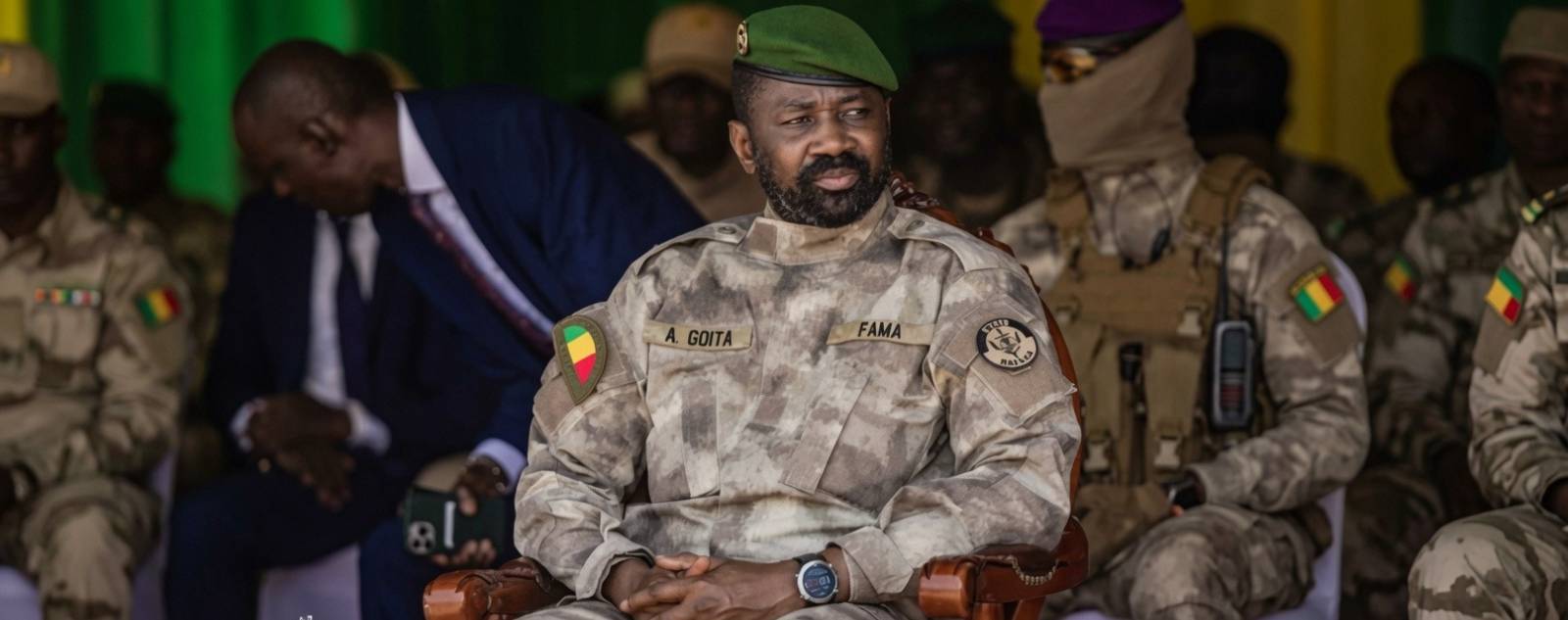
On the occasion of independence day, the address to the nation by the president of the Transition, General Assimi Goïta, was intended to be triumphant. Between promises of economic growth, boasting of a rise in military power, and sovereignist incantations, the executive rolled out its usual narrative. However, a methodical confrontation of official statements with realities on the ground reveals profound discrepancies, even blatant contradictions with the daily lives of Malians.
Security and “rise in power”: the myth of territorial control
In his address, the Presidency depicted the Malian Armed Forces (FAMa) as “reorganized, equipped, and victorious,” operating in synergy with their partners from the Alliance of Sahel States (AES).
- The reality on the ground: The speech glosses over the extreme security deterioration observed in the center and north of the country. Large-scale attacks by JNIM or separatists (such as the strategic disaster at Tinzawatène or assaults on key garrisons like Dioura and Sévaré) prove that the army struggles to secure vital routes and rural populations.
- The illusion of military sovereignty: While the speech praises a “regained autonomy,” operational dependence on the Russian paramilitary contingent Africa Corps (formerly Wagner) has strengthened at the cost of heavy financial and mining concessions, to the detriment of a truly republican army.
Economic mirages and opacity of mining windfalls
The speech highlights a supposed growth rate above 5% or 6%, driven by the mobilization of internal resources and the effects of mining code reforms.
- Stifling inflation in daily life: For the majority of citizens in Bamako and the provinces, macroeconomic theory no longer masks the surge in prices of basic necessities (rice, oil, sugar) and fuel.
- Energy management and power cuts: While the address mentions an “improvement in electricity supply,” the reality for households and SMEs remains marked by recurrent outages from the national company EDM-SA, paralyzing the informal economy and local production.
- Questionable mining benefits: The redistribution of mining funds touted by authorities contrasts with the massive allocation of public revenues and exploitation licenses to pay the bills of the foreign paramilitary partner.
Dialogue and reconciliation: rhetoric versus purges and political vacuum
The president of the Transition reiterated his call for “reconciliation” and “national cohesion” within the framework of the Charter for Peace.
- Closing of civic space: This call for unity comes in a context of unprecedented muzzling of critical voices. Political actors, journalists, human rights defenders, and civil society figures face prosecution, detention, or systematic intimidation as soon as they question the management of the Transition.
- Break with northern actors: The unilateral denunciation of previous peace agreements and the all-military option have buried inclusive mediation mechanisms, replacing dialogue with a bellicose stalemate.
A self-congratulatory speech disconnected from urgent needs
By prioritizing political communication over factual evidence, the official speech struggles to mask the cracks of a governance model under tension. Between the self-satisfaction displayed in the halls of Koulouba and the growing insecurity weighing on the provinces, the gap continues to widen between the promises of “Malikura” and the daily experience of the Malian people.