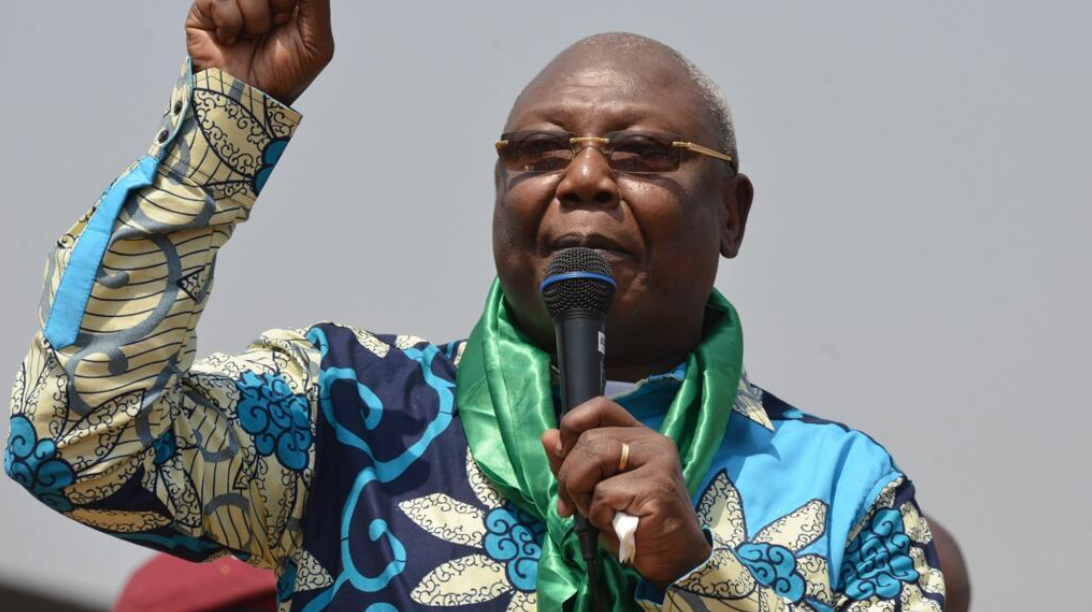
More than two weeks after the inauguration of Faustin Archange Touadéra, an event that marked the commencement of the seventh republic in the Central African Republic (CAR), Martin Ziguélé, a former head of government and the prominent leader of the MLPC party, has once again publicly shared his perspective. His commentary emerges amidst an already charged political environment, where persistent friction between the ruling administration and opposition factions remains notably intense.
Speaking from Bangui, Ziguélé presented an alarming and critical evaluation of the nation’s current state. He asserted that despite a decade of governance by the present regime, the everyday circumstances for Centrafricans have not shown any tangible signs of improvement. He underscored the critical importance of fostering a sincere and comprehensive dialogue between political leaders and civil society stakeholders to effectively reverse these concerning trends.
To substantiate his arguments, the opposition figure highlighted stark statistics concerning poverty in the Central African Republic. Citing a 2016 benchmark, he noted that over half of the population lived below the poverty line, subsisting on less than 1,000 CFA francs per day. Projections for 2026 suggest this proportion could escalate to approximately two-thirds of the country’s inhabitants. Beyond poverty, the nation grapples with profound structural challenges, including inadequate access to essential services like clean water and electricity, severely degraded transportation infrastructure, and the widespread issue of illegal checkpoints on public roads. Ziguélé further pointed to the significant downturn in agricultural sectors as a clear indicator of the country’s economic regression. Key agricultural productions have suffered a dramatic collapse; for instance, cotton cultivation, which once approached a respectable 100,000 tons, now hovers around a mere 2,000 tons, while reliable statistics for historic crops like coffee are no longer available. In light of these formidable conditions, Ziguélé firmly believes that genuine national recovery necessitates a vast and integrated political and economic reform agenda.
Dialogue: A Crucial Imperative for Progress
For Ziguélé, constructive engagement and open discussion between competing political camps are absolutely non-negotiable. He firmly believes that in any functioning democracy, dialogue serves as an indispensable mechanism for resolving deadlocks and ensuring stability. He also drew attention to the fact that the majority of the Central African Republic’s population resides in rural areas, directly experiencing the harsh consequences of geographical isolation and the disintegration of vital production and supply chains. While President Faustin Archange Touadéra, following his investiture on March 30, 2026, offered a positive overview of his two mandates and acknowledged significant challenges that remain, Martin Ziguélé holds a different conviction. He contends that without broad and sincere consultation, actively involving all dynamic forces within the nation, it will be exceedingly difficult to implement the necessary reforms for sustainable national rehabilitation.