The predawn hours of a quiet Monday in July 2026 cast an eerie silence over Aourir, a coastal village just north of Agadir. While residents slept undisturbed, an armored convoy of elite counterterrorism units rolled through the narrow streets, their movements swift and silent. Their mission: intercept a high-risk individual with confirmed ties to the Islamic State (ISIS), based on intelligence painstakingly gathered by Morocco’s Directorate General for Territorial Surveillance (DGST).
The suspect was neutralized within seconds. Officers executed the warrant with surgical precision. As the dust settled, a parallel operation unfolded just miles away in Inezgane’s industrial district. What they uncovered there would confirm the gravity of the threat—and the urgency of the intervention.
The hidden workshop of destruction
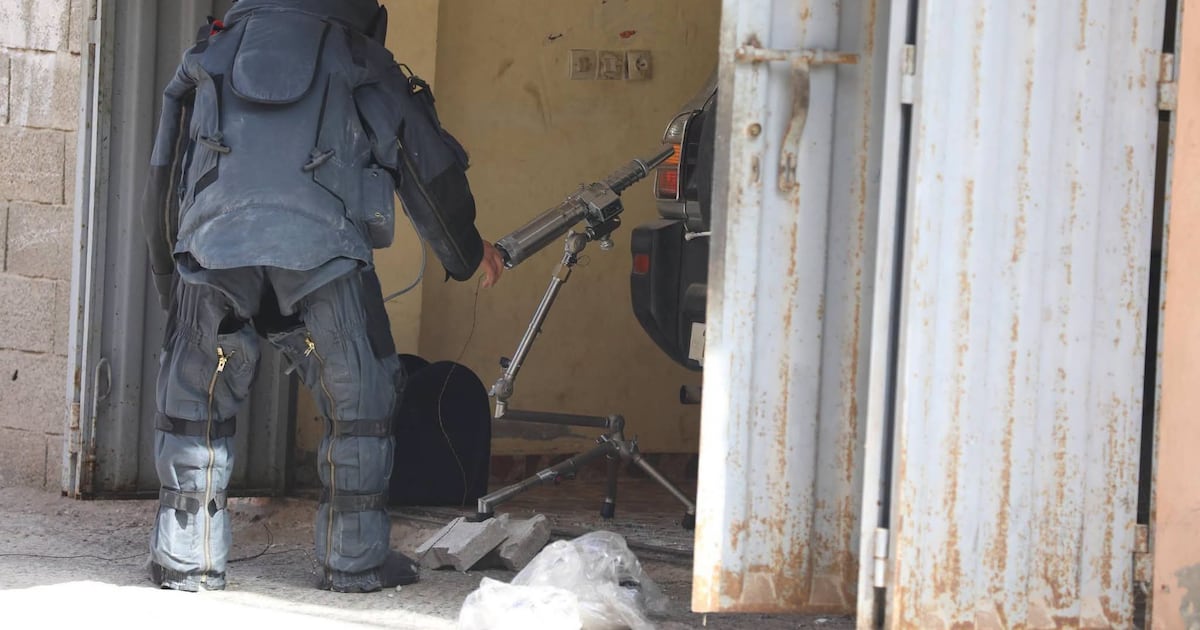
In a nondescript warehouse in the Traast El Jorf neighborhood, investigators found more than just storage—they discovered a clandestine bomb-making facility. At its center sat a 4×4 vehicle, its fuel tank surgically altered to run on butane gas. The modification wasn’t accidental. It was designed to amplify thermal impact and blast radius in a suicide attack or vehicle-ramming strike against critical national infrastructure.
With the risk of detonation imminent, the Central Bureau of Judicial Investigations (BCIJ)—a specialized anti-terror unit under the DGST—immediately triggered an emergency protocol. Authorities evacuated nearby residents, deployed bomb disposal teams from the National Security Directorate (DGSN), and deployed robotic scanning devices to safely inspect the vehicle’s interior, eliminating human exposure to potential explosives.
Once secured, the inventory of the facility sent shockwaves through investigative teams. Dozens of gas canisters, pressure cookers rigged with shrapnel (hundreds of nails), electrical wiring, detonators, welding equipment, and significant quantities of both solid and liquid chemicals were recovered. The materials were not just assembled—they were calibrated for maximum destruction.
A synchronized national crackdown
The operational heart of the cell was rooted in the Souss region, but its tentacles extended across the kingdom. To prevent premature alerts, the DGST’s Special Forces executed simultaneous raids in seven cities: Agadir, Taroudant, Casablanca, El Hajeb, Tétouan, Fquih Ben Salah, and Safi. The arrest in Aourir was only the opening salvo.
Among the ten individuals detained, profiles revealed a disturbing pattern of radicalization. A 17-year-old minor was among those apprehended, highlighting the cynical recruitment of minors into extremist networks. Another suspect was a former inmate previously convicted under Morocco’s strict anti-terrorism laws, raising concerns about radicalization within prisons and the risk of recidivism.
Searches across multiple residences, supported by canine units trained in explosive detection, uncovered a dual arsenal: physical and digital. Military-grade uniforms, handwritten manuals detailing improvised explosive device assembly, encrypted hard drives, and two chilling videos were seized. One showed the suspects pledging allegiance to the ISIS caliphate; the other contained explicit threats of large-scale sabotage against national targets.
Sahel connections and compartmentalized operations
Preliminary investigations linked the cell to ISIS operatives in the Sahel. Rather than ordering recruits to join distant insurgencies, the leadership instructed them to remain in Morocco and carry out attacks from within. The structure was military-grade, highly compartmentalized, and meticulously planned.
The network operated in three tiers: a reconnaissance team surveilled and selected potential targets; a logistics team procured chemicals, welding tools, and vehicles undercover; and a technical team based in Inezgane modified vehicles and assembled explosives. This division minimized risk of exposure and maximized operational efficiency.
Thanks to the DGST and BCIJ’s swift, coordinated action, a potential catastrophe was averted. Nine adults were placed in custody, while the minor was transferred to a specialized juvenile monitoring program under the supervision of the anti-terrorism prosecutor’s office. Forensic experts are now analyzing seized devices to map encrypted communication lines with the Sahel, ensuring no dormant threats remain undetected.
As calm returns to Aourir and Inezgane, the investigation continues. The digital footprint left behind by this cell is being painstakingly decoded—each byte a clue, each message a warning. The message from Morocco’s security apparatus is clear: no corner of the kingdom is beyond protection, and no threat will go unchallenged.