Controversial closure of a major sunni mosque in Ouagadougou raises political tensions
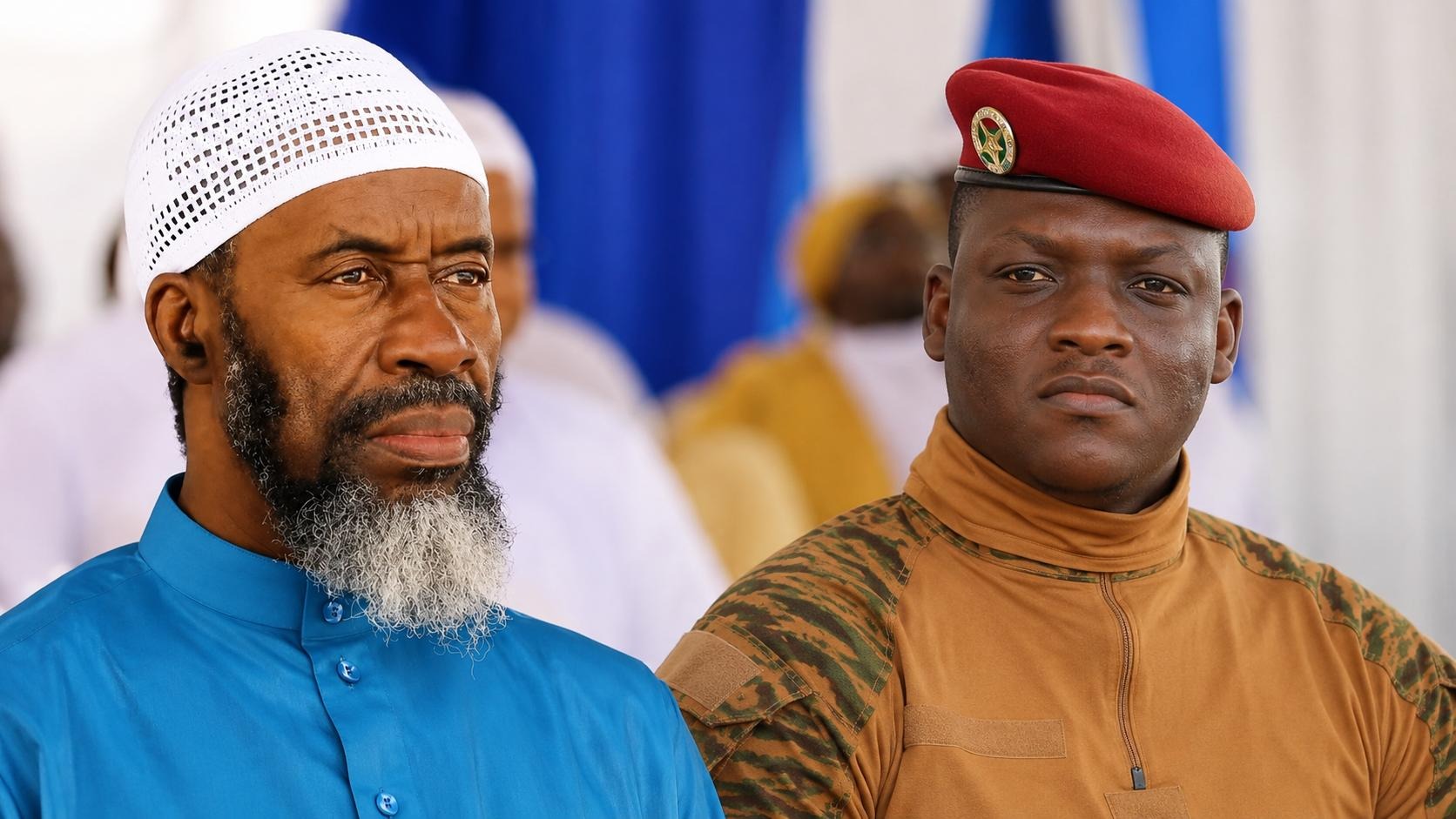
The recent decision by the regional governor of Kadiogo to shut down the largest sunni mosque in Ouagadougou has sent shockwaves through the community, sparking widespread confusion and discontent. The abrupt move, formalized through an administrative order on May 28, 2026, cites « threats to public order » as justification. Yet, the timing and reasoning behind this directive have left many questioning the government’s true intentions in a nation already grappling with deep social fractures.
A sharp contrast between past alliances and present actions
The mosque, a central hub for the sunni community, has played a pivotal role in Burkina Faso’s political narrative over the past years. During periods of transition and institutional fragility, the ruling authorities leaned heavily on religious and associative networks to bolster their legitimacy. The sunni movement, known for its organizational strength and ability to mobilize the masses, became a cornerstone of public support.
What once served as a unifying space for faith and national pride now stands sealed, leaving worshippers bewildered. The irony is stark: a place that once amplified voices of loyalty has been silenced by the very leaders it helped elevate. This abrupt reversal risks eroding the trust between the state and its religious constituents, a relationship already strained by years of political turbulence.
Social fragility amplifies the stakes
Burkina Faso’s current climate is one of heightened vulnerability, where social cohesion is the thin line separating stability from chaos. In such delicate circumstances, targeting a religious institution of this magnitude risks fueling resentment rather than quelling unrest. Rather than easing tensions, this decision could push disillusioned communities toward more clandestine forms of resistance, making grievances harder to address.
The haste with which this measure was enforced suggests a lack of strategic foresight. If the goal was to prevent disorder, the outcome may well be the opposite: a deepened sense of injustice and betrayal among the faithful, who feel abandoned by those they once championed.
Repression or dialogue: what path forward?
While maintaining law and order is a non-negotiable duty of the state, resorting to unilateral measures against a community that once stood firmly behind the government undermines the very principles of inclusive governance. Burkina Faso’s leaders must recognize that true stability is built not on exclusion, but on open, honest dialogue with religious and opinion leaders.
Continuing down this path of coercion risks alienating a critical segment of the population and reinforcing perceptions of political opportunism. The government’s immediate priority should be to suspend this order and seek constructive engagement. Without such steps, the rift between the state and its religious base may soon become irreparable.