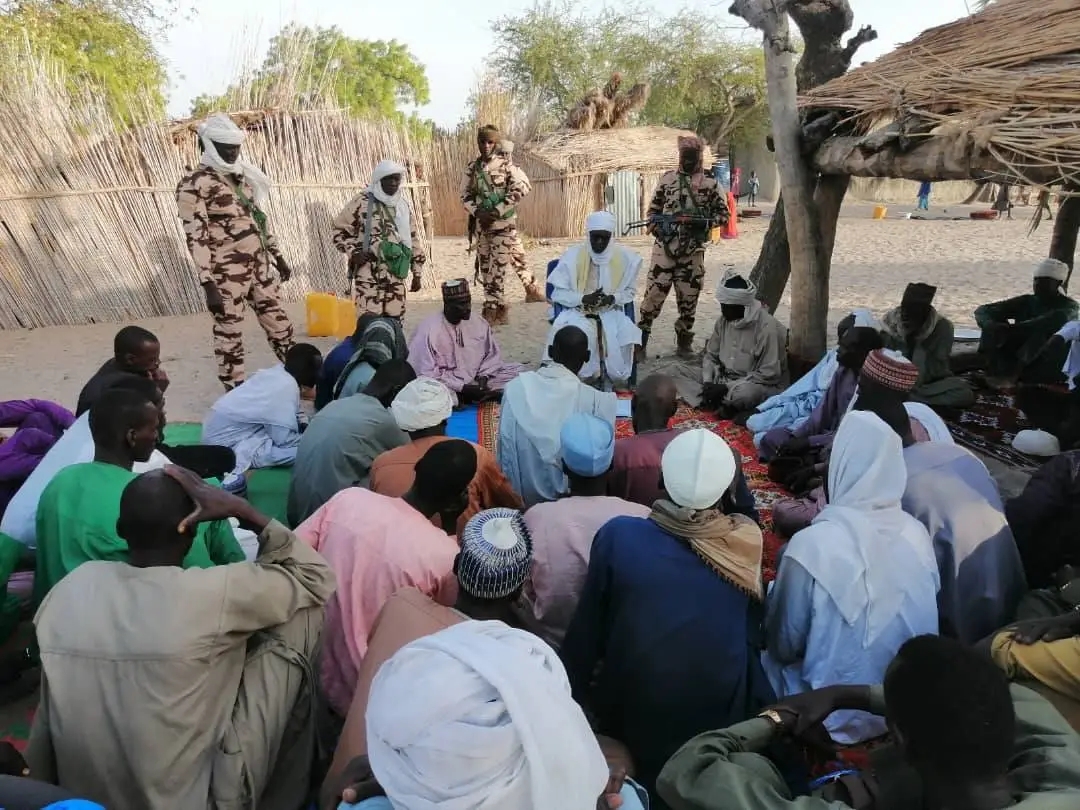
In a region where the shadow of Boko Haram’s threats still looms large, His Majesty Brahim Koromi Mahamat, the traditional leader of Boudouma Gouria I in the Lac Province, embarked this week on a critical awareness-raising tour across the communities under his jurisdiction. The goal? To engage directly with residents and foster a united front against extremism.
From remote islands to mainland villages, the delegation—comprising local leaders, respected elders, and peace advocates—delivered a powerful message: stand together, stay vigilant, and reject violence as a means to resolve conflict. Each stop on the tour became a rallying point for collective defiance against the terror group’s divisive tactics.
Throughout the journey, the emphasis was unwavering: strengthening social cohesion, nurturing peaceful coexistence among diverse groups, and deepening the partnership between civilians and security forces actively combating insurgency in Lac Province. The message resonated clearly—resilience begins with unity.
The province, frequently targeted by Boko Haram’s incursions, has faced years of instability. Yet this tour symbolized more than just a response; it reflected a refusal to surrender to fear or division. By listening to local concerns, addressing grievances, and championing solidarity, His Majesty Brahim Koromi Mahamat underscored that hope and collective action remain the strongest weapons against extremism.
Building resilience through grassroots engagement
Local leaders and residents alike played an active role in the conversations, sharing insights on how to fortify their communities. The discussions highlighted practical steps—improving early warning systems, reinforcing trust between civilians and security personnel, and promoting economic opportunities to deter recruitment by armed groups. The tour didn’t just inspire; it sparked action.
Why this mobilization matters now
With Boko Haram continuing to exploit local tensions, traditional leadership plays a pivotal role in countering radicalization. This tour wasn’t merely symbolic; it was a strategic move to reclaim public spaces, restore confidence, and demonstrate that traditional authority remains a stabilizing force in the region. The message was unmistakable: terror will not prevail as long as communities stand firm together.