Niger makes strategic move in Benghazi as Algeria deploys troops
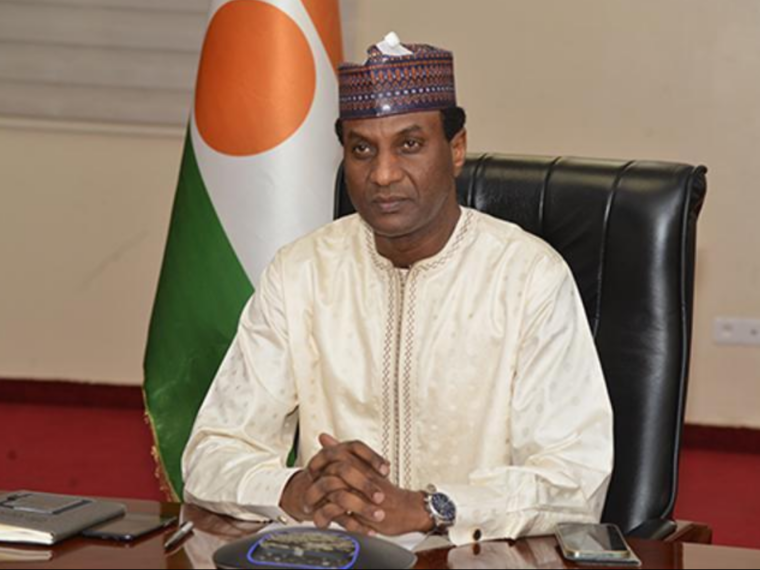
Niger’s Prime Minister Ali Mahaman Lamine Zeine concluded a high-stakes visit to Benghazi on November 1st by signing a strategic cooperation protocol with Libya’s eastern authorities. The unexpected rapprochement has sent ripples through the Sahel, where geopolitical tensions are escalating.
The protocol, sealed in the presence of Saddam Haftar, deputy commander of the Libyan National Army, and Osama Hammad, head of Libya’s eastern government, signals a deliberate shift in alliance dynamics. Observers suggest this move could reshape power structures in a region already unsettled by Algeria’s recent military maneuvers.
Algeria’s military push into Niger: a game-changer?
On October 25th, Algeria’s Parliament approved the deployment of the Algerian National Popular Army (ANP) to Niger—a historic decision that breaks with Algeria’s long-standing policy of non-interference in foreign conflicts. Algiers frames the move as a protective measure, citing the safeguarding of its energy investments, including oil ventures and the Trans-Saharan Gas Pipeline.
The Madama base, located in northeastern Niger, is widely seen as a potential hub for Algeria’s forces. Its proximity to the Libyan border gives it strategic value, allowing Algeria to monitor armed group movements across the desert and counter cross-border threats.
Yet the deployment raises critical questions: How will Algeria’s presence influence security in the triple-border region? And will it trigger counterbalancing moves by other regional players?
Triple-border tensions: where Algeria and Haftar’s Libya collide
The tri-border area where Niger, Libya, and Algeria converge is a hotspot of competing interests. This sparsely populated yet strategically vital zone serves as a transit route for migrants, illicit goods, and armed factions. Recent advances by forces loyal to Khalifa Haftar in southern Libya have heightened concerns in Algiers, where officials fear losing control over key Saharan-Sahelian corridors.
In parallel, allegations that Haftar-aligned groups have provided support to Nigerien opposition factions have deepened mistrust between Algiers and Benghazi. Though specifics remain unverified, the accusations underscore the volatility of the region.
For Niamey, the cooperation with Libya’s east offers a counterbalance to Algeria’s growing presence. By diversifying alliances, Niger seeks to insulate itself in an environment marked by internal fragility and external pressures.
From rivalry to confrontation: Algeria vs. Haftar’s Libya
Relations between Algiers and the Haftar clan have long been strained. While Algeria backs Libya’s internationally recognized Government of National Accord (GNA) in Tripoli, Benghazi has forged its own regional partnerships, including with Niamey.
The strengthening of Saddam Haftar’s position in southern Libya—and his engagement with Niger—may be interpreted in Algiers as a deliberate attempt to undermine Algerian influence. The Benghazi protocol, though lacking public details, could lay the groundwork for deeper military, security, and economic ties. Yet it remains unclear whether the agreement constitutes a formal anti-Algerian alliance or a pragmatic alliance of convenience.
Niger’s balancing act in a fractured Sahel
For Niger, the foremost priority is securing its sovereignty amid terrorism, regional rivalries, and shifting power blocs. By engaging with both Algiers and Benghazi, Niamey aims to mitigate risks and avoid total dependence on a single partner.
However, this strategy carries significant risks. The country risks becoming a battleground for proxy influence, caught between Algeria’s expanding footprint and Haftar’s consolidating forces.
The Benghazi visit is more than a diplomatic gesture—it reflects the new geopolitical realities of the Sahel, where porous borders and fluid alliances have turned cooperation into a double-edged sword. As Algeria and Haftar’s Libya vie for dominance, Niger finds itself at the heart of an unfolding struggle.
What’s next? Mapping the path forward
The coming months will reveal the true intent behind the Benghazi protocol. Will it deepen military cooperation between Niger and Libya’s east? Or will it serve as a limited agreement designed to address immediate security concerns?
One thing is certain: the strategic calculus in the Sahel has changed. Algeria’s military expansion has triggered a regional domino effect, and Niger’s pivot toward Benghazi signals that the battle for influence is no longer confined to Libya’s borders. It has spilled over into the Sahara, where new alliances are being forged—and old rivalries are resurfacing.