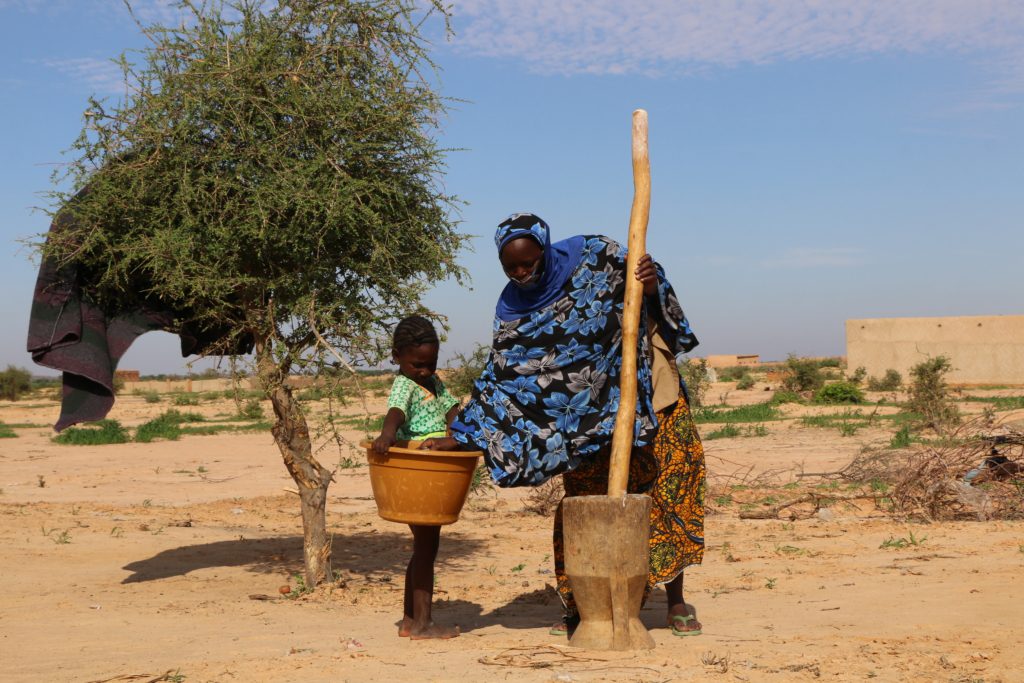
Armed groups active in Niger’s Sahel border regions with Mali and Burkina Faso are increasingly targeting children, either through deadly violence or forced recruitment, according to a recent report.
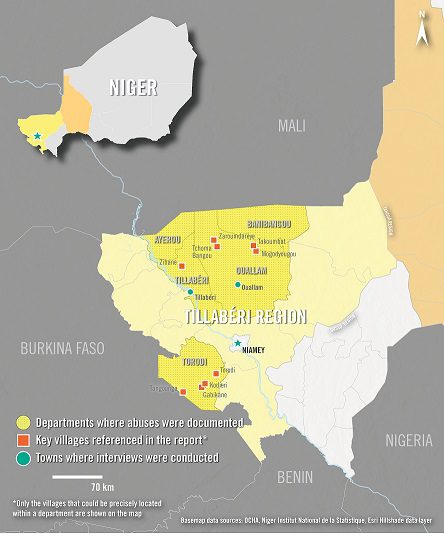
The 64-page document, titled “I Have Nothing Left but Myself”: Escalating Conflict Impacts on Children in Tillabéri, highlights the devastating toll the ongoing conflict is taking on young lives in this southwestern part of Niger. The violence is primarily driven by two extremist factions: the Islamic State in the Greater Sahara (ISGS) and the Group for the Support of Islam and Muslims (GSIM), an Al-Qaeda affiliate.
These groups have systematically violated international humanitarian law, committing war crimes such as targeted killings of civilians and deliberate attacks on schools. Children who witness such brutality suffer severe psychological trauma, while women and girls face heightened risks of abduction and forced marriages to fighters. In some areas, girls are restricted from leaving their homes, further isolating them from safety and opportunity.
In Tillabéri, Niger, an entire generation is growing up amid death and destruction.
Matt Wells, Deputy Director of Crisis Response at Amnesty International
According to Matt Wells, Deputy Director of Crisis Response – Thematic Issues at Amnesty International, armed groups have repeatedly targeted schools and food reserves while actively recruiting underage individuals. The report underscores the urgent need for action to protect children’s fundamental rights in a conflict that continues to escalate.
The report stresses that Nigerien security forces have been slow to respond to attacks, often arriving after massacres and looting have already concluded. Despite emergency calls from civilians, authorities frequently fail to intervene in time, leaving communities vulnerable. Amnesty International classifies the conflict as a non-international armed conflict due to the intensity of violence and the organized nature of ISGS and GSIM operations.
Targeted killings of civilians
The conflict in Tillabéri has intensified significantly in 2021. According to the Armed Conflict Location & Event Data Project (ACLED), civilian fatalities in Niger rose to 544 between January and July 2021, compared to 397 in 2020. In the same period, armed groups killed over 60 children in the tri-border area of Niger. ISGS, which operates primarily near the Mali border, has been linked to most large-scale massacres.
A delegation from Amnesty International interviewed 16 boys who narrowly escaped ISGS attacks in their villages. The boys described masked gunmen on motorcycles opening fire, particularly targeting men and teenage boys. One 13- or 14-year-old survivor shared: “We’re used to hearing gunshots and seeing bodies piled up.”
I sometimes have nightmares where I’m chased by men on motorcycles, or I see Wahab pleading with the attackers.
A boy who witnessed the killing of his 12-year-old friend
Another boy, who witnessed the murder of his 12-year-old friend in March 2021, recounted: “I think about Wahab and how he was killed. I sometimes have nightmares where I’m chased by men on motorcycles, or I see Wahab pleading with the attackers.”
Fighters have also fired into homes, killing or injuring civilians who attempted to hide. In one incident, a woman and her young daughter were shot while taking shelter in their home during a suspected ISGS attack.
Nigerien defense forces (FDS) withdrew from several border areas after suffering losses to ISGS and GSIM in late 2019, leaving these regions effectively ungoverned. Witnesses reported that security forces often failed to respond even when attacks lasted for hours.
A 50-year-old man, echoing the sentiments of many, stated: “We’ve been abandoned.”
Child recruitment surges
Child recruitment by GSIM has surged in 2021, particularly in the Torodi department near the Burkina Faso border. Witnesses report that the group targets boys as young as 15, though some recruits appear to be even younger. Fighters lure recruits with promises of food, money, or clothing.
Recruits undergo weapons training lasting one week to three months. The GSIM also employs children as scouts, messengers, and lookouts—roles that, under international law, constitute direct participation in hostilities.
Attacks on education and healthcare
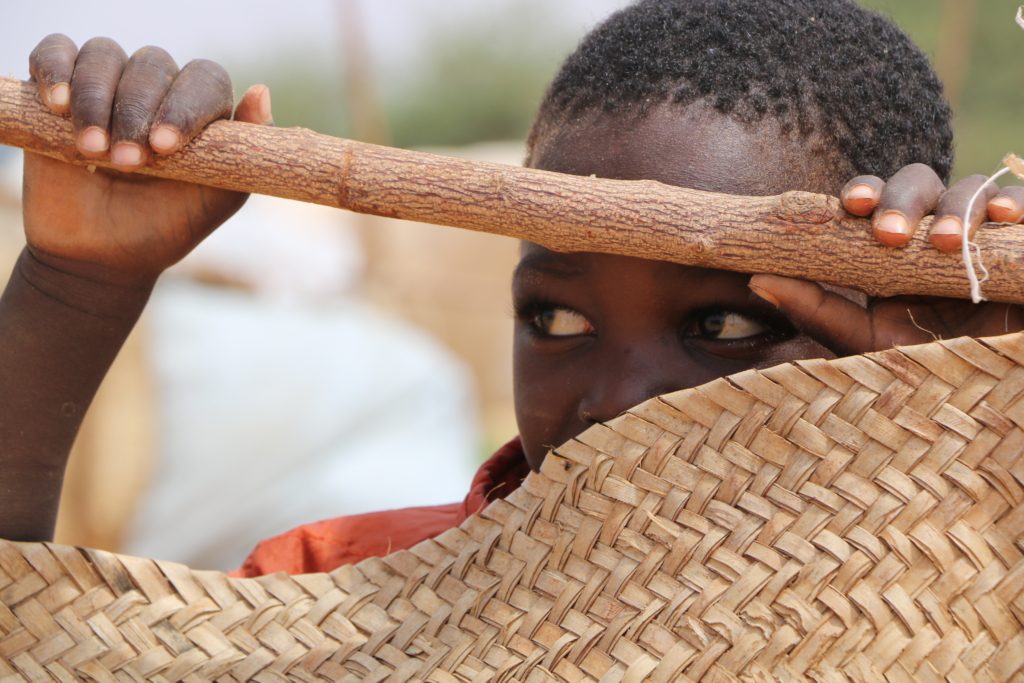
Both ISGS and GSIM oppose what they deem “Western education,” burning schools and threatening teachers, forcing many to close. By June 2021, at least 377 schools in Tillabéri had shut down, leaving over 31,000 children without access to education. In rural areas, most school buildings are made of thatch, making them highly susceptible to arson.
Teachers have also been targeted. A 15-year-old boy from Mogodyougou explained: “The teachers… they left. They would have been killed otherwise.”
The closure of schools has left many children without education for extended periods. A 14-year-old shared: “We were unhappy that school closed… After it closed, we stayed home. We had nothing to do.”
Under international humanitarian law, schools are protected unless used for military purposes. The attacks documented by Amnesty International therefore qualify as war crimes.
The conflict has also severely restricted children’s access to healthcare. Armed groups have looted health centers, and government restrictions on movement have further hindered humanitarian aid. Immunization rates have plummeted, and diseases like measles are spreading.
Threats to food security
ISGS has systematically destroyed grain reserves, looted shops, and stolen livestock during attacks, leaving families destitute. Children are particularly vulnerable to malnutrition and related illnesses as a result.
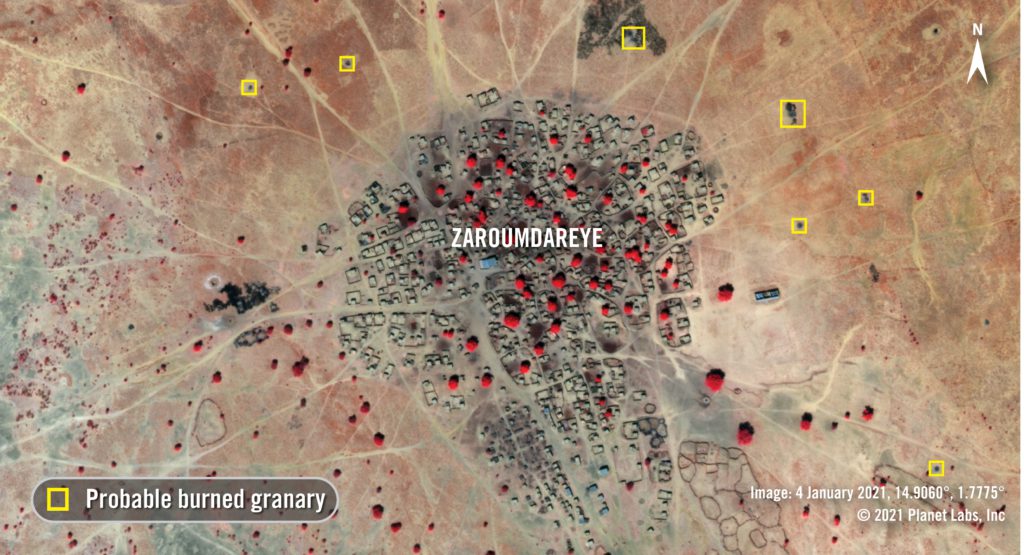
A mother of seven told Amnesty International that ISGS fighters burned her family’s granaries during an attack on Zibane village. She said: “Everything was burned… I have nothing left but myself.”
Satellite imagery analyzed by Amnesty International corroborated reports of targeted grain stock destruction. These attacks have forced tens of thousands of people to flee, often emptying entire villages due to food shortages.
Additionally, ISGS and GSIM frequently impose “taxes” on local populations, often through violence. Humanitarian organizations warn that 2.3 million people in the region could face food insecurity due to the combined effects of conflict, drought, and flooding.
Psychosocial toll on children
The relentless violence has left deep scars on children’s mental health. Few of those interviewed had access to psychosocial support. Symptoms such as nightmares, insomnia, fear, anxiety, and loss of appetite were widely reported. Many noted that the sound of motorcycles triggers traumatic memories of attacks.
Nigerien authorities and international partners must urgently equip children with the tools to build a future.
Matt Wells, Amnesty International
A 15-year-old displaced from his village told Amnesty International: “All I want is for peace to return, truly. And for the government to care about our lives, even here [in the displacement camp]—about food, water, and school. We need school.”
Wells emphasized: “Nigerien authorities must act quickly to ensure conflict-affected children in Tillabéri have access to education and psychosocial care. The country stands on the brink. Authorities and partners must take urgent steps to give children the tools to rebuild their futures.”