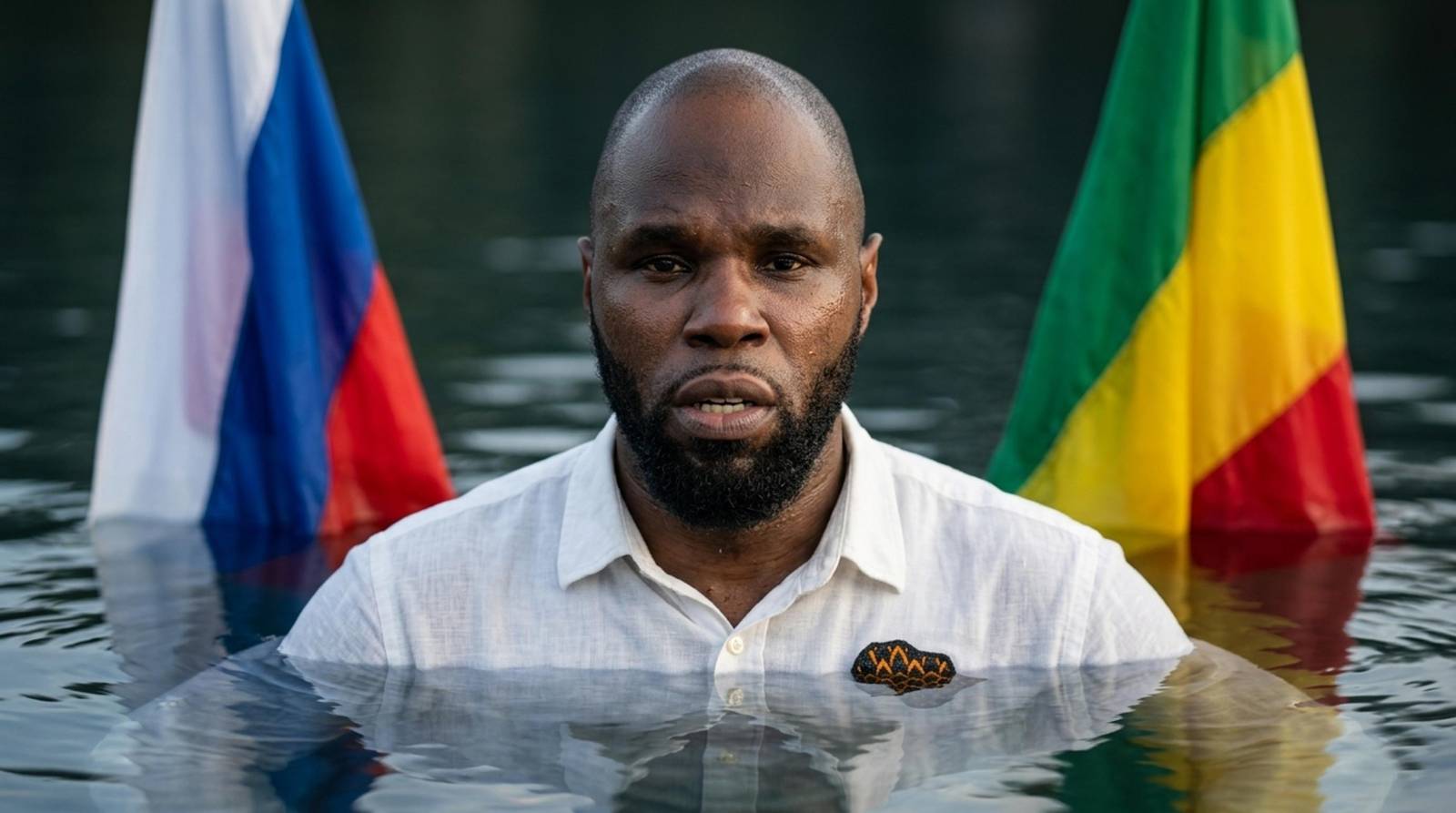
The Sahel is at a crossroads as violence escalates and once-unassailable narratives crumble under harsh reality. The coordinated assault on strategic military sites in Kati and Kidal last weekend exposed critical gaps in the Africa Corps’ defensive posture, proving that Moscow’s promised shield was far from impervious. Despite extensive troop deployments, the audacity of armed factions has shattered the illusion of an infallible security partnership, underscoring the urgent need for re-evaluating regional strategies.
From advocate to critic: the evolving stance of Kemi Seba
Once a vocal champion of Russian influence in the Sahel, activist Kemi Seba now voices increasingly sharp criticism, dismissing Moscow’s involvement as a purely transactional endeavor. Yet this shift in tone is neither impulsive nor recent. His journey from fervent supporter to disillusioned observer began long before his recent upheavals, particularly after his forced relocation to South Africa and subsequent political asylum plea.
This prolonged absence from the Sahelian stage has reshaped his perspective, revealing a growing disillusionment with the Kremlin’s priorities. By condemning Russia’s focus on extractive industries over regional stability, Seba merely confirms a rift that has widened since his exile. The ‘liberator’ of yesteryears now appears to grasp that his former ally’s interests no longer align with the continent’s urgent needs.
the AES alliance grapples with fractured trust
The unease extends beyond individual activists. For the Alliance of Sahel States—comprising Burkina Faso and Niger—recent events in Mali serve as a stark warning. The once-appealing promise of an Eastern alternative now collides with a brutal truth: insecurity deepens while the cost of external support surges, eroding national sovereignty at every turn.
The Sahel’s populations, caught in the crossfire, deserve more than shifting ideologies or foreign agendas. They require tangible, sustainable solutions that prioritize their safety and long-term stability over geopolitical maneuvering.