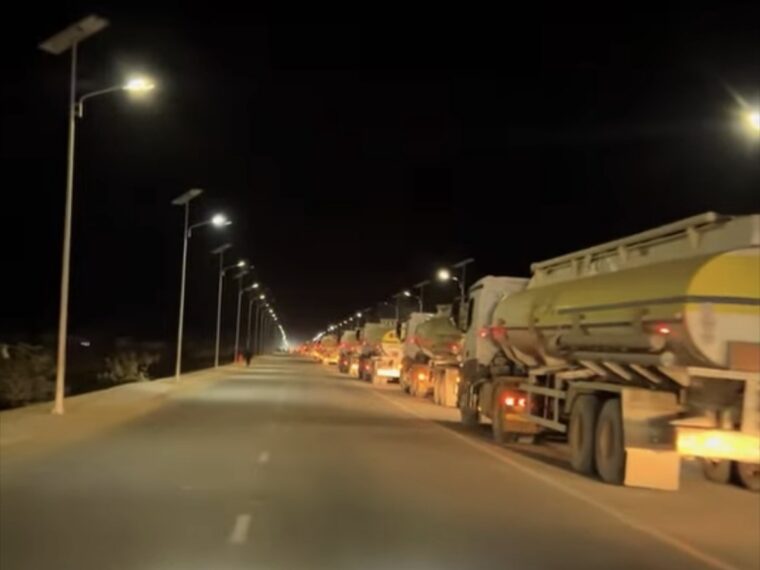
Niger struggles to meet domestic fuel demand despite crude oil exports
Niger faces persistent fuel shortages despite producing over 110,000 barrels of crude oil daily, exporting 90,000 barrels while refining only 20,000 barrels domestically. The discrepancy between production capacity and domestic supply has exposed critical weaknesses in the nation’s energy infrastructure, leaving citizens and businesses grappling with disrupted services and economic losses.
Official data reveals alarming fuel deficits
Government figures from 2025 and early 2026 underscore the severity of the crisis. Super gasoline deficits surged from 47.25 million liters in 2024 to 196.62 million liters in the first eight months of 2026, while diesel shortages reached 52.60 million liters. These statistics reveal structural imbalances between available supply and national demand, contradicting claims of energy self-sufficiency.
Algeria steps in as Niger relies on imports
In March 2026, Niger and Algeria signed a hydrocarbons cooperation agreement, followed by three accords between Niger’s state-owned SONIDEP and Algeria’s Sonatrach in June. While intended to stabilize supply, the deals raise questions about transparency, financial commitments, and long-term strategic implications for Niger’s energy sovereignty.
Financial mismanagement deepens the energy crisis
A newly formed technical committee, announced in October 2026, aims to address the sector’s financial woes, including cross-debts among SONIDEP, SORAZ, NIGELEC, and China’s CNPC. The move highlights systemic failures in revenue allocation, debt management, and fiscal accountability within a sector that should be a key driver of national income.
Human and economic toll of fuel shortages
The ripple effects of fuel scarcity extend across Niger’s economy. Transport delays, business losses, and reduced mobility for workers and entrepreneurs threaten livelihoods daily. While authorities emphasize oil exports as a symbol of regained sovereignty, the reality for citizens is prolonged uncertainty and financial strain.
Tiani’s government under scrutiny for energy governance
Since assuming power in July 2023, General Abdourahamane Tiani has prioritized national sovereignty. However, the current fuel crisis tests the credibility of this agenda. The November 2026 arrival of 53 Algerian fuel tankers carrying 1.65 million liters underscores Niger’s reliance on imports, forcing the government to address underlying inefficiencies in production, refining, and distribution.
Transparency and structural reforms are critical
The Nigerien energy sector requires more than political declarations and international cooperation it demands transparent audits, accountable governance, and a coherent strategy to align production with domestic needs. Without these, the gap between policy promises and practical results will continue to widen.
By Agnès Mvogo — Journalist