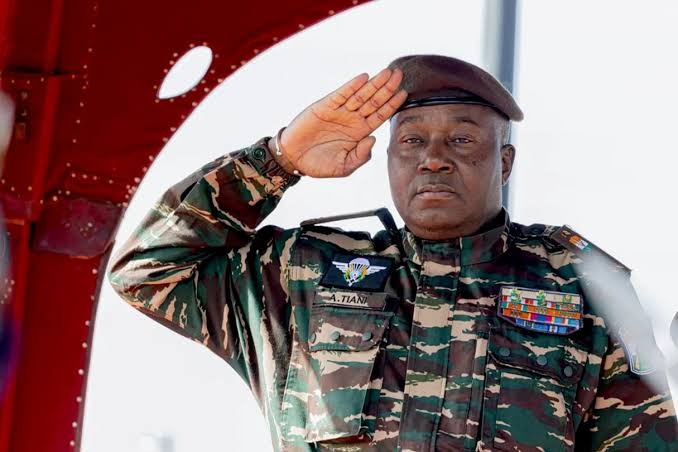
From promised change to deepening crises under General Tiani
Three years after seizing power, Niger’s military regime has not only failed to deliver on its security and sovereignty pledges but has intensified the nation’s instability.
The National Council for the Safeguarding of the Homeland (CNSP) justified its July 2023 coup by citing worsening insecurity, poor governance, and the loss of sovereignty under President Mohamed Bazoum. Yet today, the reality reveals a starkly different story: rather than reversing these issues, the junta has deepened them.
Security promises unmet as militant violence spreads
Despite claims of restoring stability, attacks by armed groups like EIGS and JNIM continue to devastate regions such as Diffa, Maradi, Tahoua, and Tillabéri. Schools and healthcare centers remain shuttered, reflecting the regime’s inability to secure key territories. While airstrikes have increased and military reports boast of gains, civilian suffering persists unabated.
The illusion of foreign policy gains
The departure of French and American forces was touted as a triumph for sovereignty. Yet, Niamey’s new alliances—particularly with Russian partners and Algeria—raise serious concerns. Troops from Algeria have been deployed deep into Niger’s interior, near the Madama border crossing, without parliamentary oversight or public consultation. These opaque agreements undermine the very sovereignty the junta claims to uphold.
Economic stagnation exposes leadership failures
The regime’s economic vision has also faltered. Major projects, including the Kafra oil permit and the trans-Saharan gas pipeline, face crippling delays. Instead of achieving energy independence, Niger’s economy remains trapped in uncertainty, leaving citizens grappling with rising costs and underdevelopment.
The cost of a silent opposition
Initially, civil society and opposition voices rallied against Bazoum’s government for its governance flaws. Today, however, these same groups remain largely muted in the face of the junta’s policies. The public space has been severely restricted, with critics sidelined and dissent suppressed. What was once a rallying cry against civil rule—sovereignty and accountability—has been conveniently overlooked, revealing a troubling double standard.
No end in sight for Niger’s transition
By clinging to power under the pretext of nationalism, the Tiani-led junta has only deepened Niger’s crises. The cycle of broken promises, economic stagnation, and unmet security needs continues, leaving the nation’s future hanging in the balance. With no clear path forward, the civilian population bears the heaviest burden of this prolonged and uncertain transition.