Congo politics: tshisekedi delays referendum amid opposition pressure
14 August 2026In the Democratic Republic of the Congo, President Félix Tshisekedi has returned the constitutional referendum bill to Parliament for a second review. This move comes just before the expiry of the ultimatum set by the Article 64 coalition. The Court had previously validated the bill, subject to certain conditions.
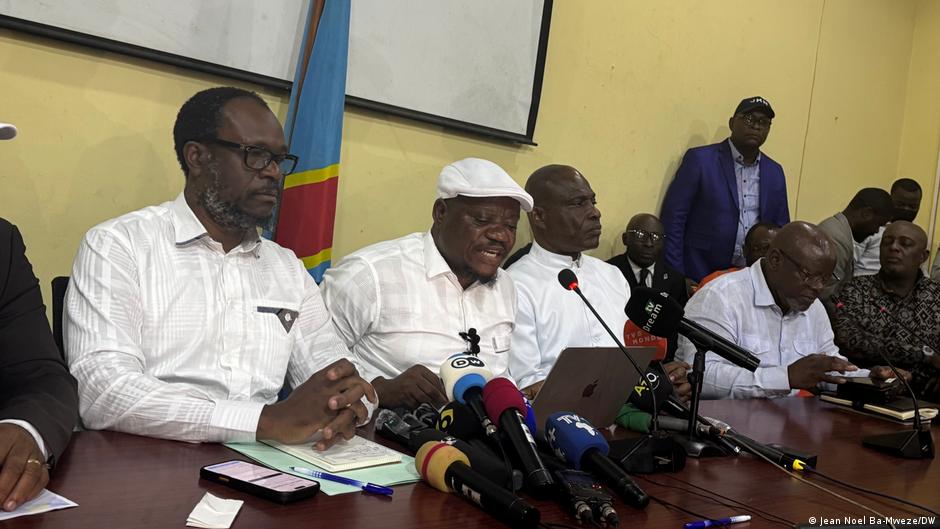
The C64 coalition, along with over sixty civil society organizations, is demanding that President Tshisekedi abandon his constitutional reform plans by 15 August. They also insist on the immediate convening of a broad national dialogue. However, with the deadline looming, no date has been set for such discussions.
Tshisekedi’s tactical retreat under pressure
Many had anticipated the referendum law would take effect by now. According to Article 140 of the Congolese Constitution, a bill becomes law if not enacted within fifteen days of submission. Instead, President Tshisekedi chose to send the bill back to Parliament for reconsideration based on the Constitutional Court’s observations.
Professor Bob Kabamba, a political scientist at the University of Liège in Belgium, views this as a tactical retreat by Tshisekedi. However, he cautions that it does not signal an end to the President’s ambitions to extend his time in office beyond 2028, the end of his second term.
“One must not overlook the intense pressure from both domestic opposition and regional actors. These combined forces, alongside behind-the-scenes consultations, have forced Tshisekedi to backtrack, notably by requesting a second review of the law. This is a clear concession, yet it does not rule out further attempts to push his agenda beyond 2028“,”
C64 prepares decisive action after 15 August
While the coalition acknowledges the bill’s return to Parliament, it remains unyielding in its demands. As the ultimatum deadline approaches, C64 has hinted at launching unspecified ‘surgical operations’ to pressure the government into reversing course.
Franklin Tshiamala, Secretary-General of Leadership for Governance and Development (LGD) under former Prime Minister Augustin Matata Ponyo, declared:
“At midnight on 15 August, we will confirm that nothing has been done. We will unveil major coordinated actions through our C64 operations center to force this regime—one that has already stripped us of our freedoms and is now attempting to seize our national sovereignty—to come to its senses“.”
The standoff escalates
From the government’s perspective, the referendum process remains a legitimate political and institutional initiative. The ultimatum issued by C64 is dismissed as an illegitimate attempt to dictate the President’s agenda.
Adolphe Amisi Makutano, a senior member of the Union for Democracy and Social Progress (UDPS), Tshisekedi’s party, dismissed the coalition’s demands:
“The ultimatum from C64 is theirs alone—perhaps designed to satisfy their backers. But the Republic operates by its own rules.”
As the deadline passes, the political landscape in the Democratic Republic of the Congo stands at a critical juncture. The coming days may well set the tone for the next phase of this high-stakes confrontation.