In the Democratic Republic of Congo, President Félix Tshisekedi has decided to send the referendum law back to Parliament for a second reading, just one day before the ultimatum imposed by the Article 64 coalition expires. The move comes after the Constitutional Court declared the law constitutional, albeit with reservations, sparking fresh tensions in the political landscape.
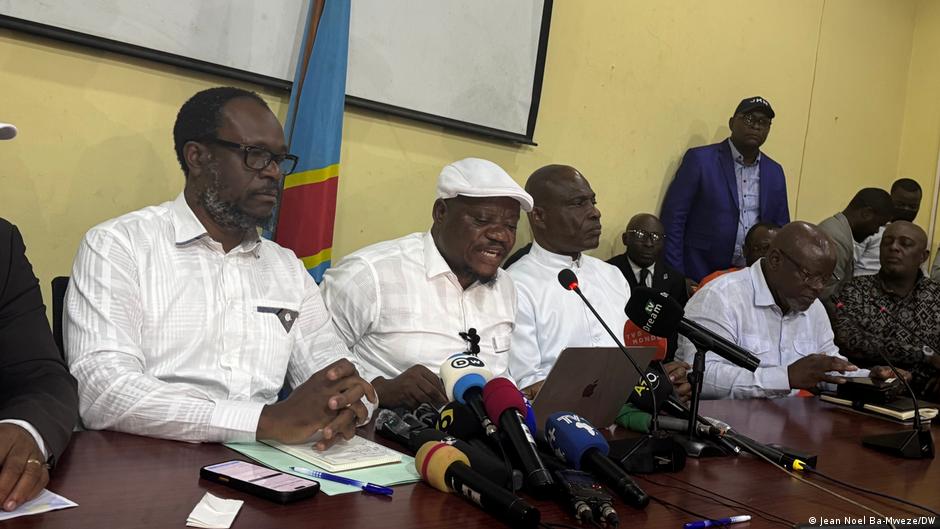
The C64 coalition, alongside over 60 civil society organizations, has been demanding that the president abandon his constitutional reform project by August 15. They also insist on the immediate launch of an inclusive national dialogue. However, with the deadline looming, no date has been set for such discussions.
Tshisekedi’s tactical retreat amid mounting pressure
While many assumed the referendum law was already in effect due to the president’s failure to sign it within 15 days as required by Article 140 of the Congolese Constitution, Tshisekedi chose to withdraw the text for further deliberation. This decision follows the Constitutional Court’s observations, signaling a tactical retreat rather than a surrender.
Professor Bob Kabamba, a political analyst at the University of Liège in Belgium, views this move as a setback for Tshisekedi. However, he cautions that it does not necessarily mean the president has abandoned his ambitions to extend his time in power beyond 2028, when his second term ends.
“It’s important to remember that the president faced immense pressure—not only from the opposition but also from regional actors. These combined forces, along with ongoing consultations, forced Tshisekedi to backtrack by seeking a second reading of the law. It’s a retreat, but it won’t stop him from exploring other avenues to stay in power beyond 2028,” Kabamba explains.
C64’s resolve remains unshaken after August 15
The Article 64 coalition has welcomed Tshisekedi’s decision to send the law back to Parliament but insists the pressure will continue. As the August 15 deadline approaches, the coalition is preparing a series of unspecified actions to escalate its demands.
“By midnight on August 15, we will confirm that nothing has been done. We will announce major surgical operations led by our C64 laboratory to make this regime understand that it has stripped us of our freedom and is now attempting to take away our national sovereignty,” warns Franklin Tshiamala, Secretary-General of the Leadership for Governance and Development (LGD), an affiliate of former Prime Minister Augustin Matata Ponyo’s movement.
The power struggle intensifies
From the government’s perspective, the referendum process remains a legitimate political and institutional initiative. The ultimatum issued by the C64 coalition is dismissed as an attempt to dictate the president’s agenda.
Adolphe Amisi Makutano, a member of the Union for Democracy and Social Progress (UDPS), the party of President Félix Tshisekedi, dismisses the coalition’s demands. “The ultimatum from the C64 is theirs to follow. It may appeal to their backers, but the Republic continues to function as normal,” he states.
The political standoff remains unresolved, and the August 15 deadline could mark the beginning of a new chapter in Congo’s turbulent political scene.