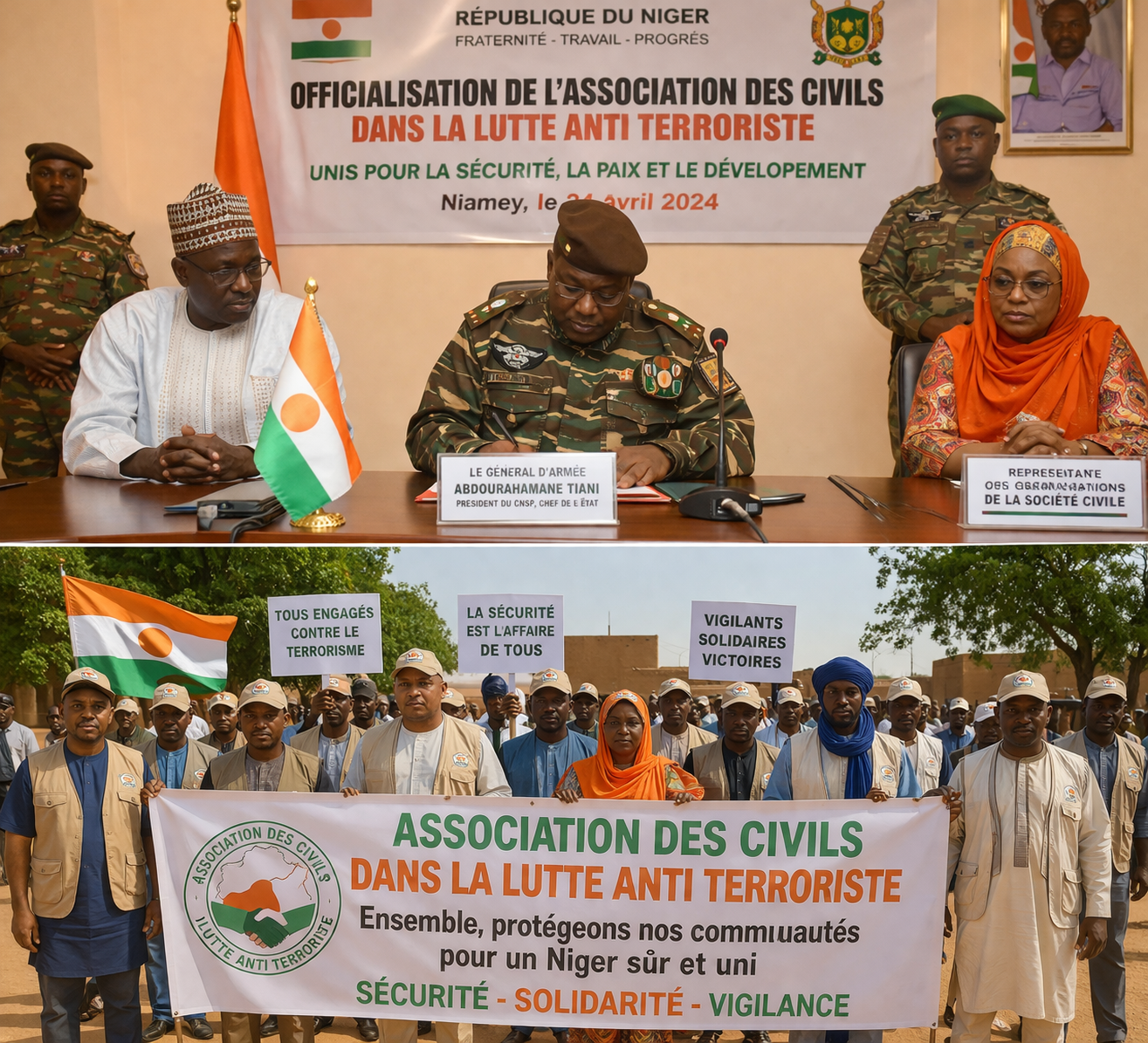
The official integration of civilians into Niger’s anti-terrorism operations represents a stark acknowledgment: the nation’s conventional military is struggling to manage asymmetric combat alone. This strategic shift, while aiming to bolster defenses, introduces a complex array of challenges that could have profound implications for security and state stability in the Sahel region.
The pitfalls of inadequate preparation and training
Deploying civilians to the front lines, even in support roles, without extensive tactical and ethical training, is a recipe for disaster. Effective counter-terrorism demands a deep understanding of international humanitarian law and intricate rules of engagement. Without such comprehensive preparation, these auxiliary forces risk becoming easy targets for well-equipped terrorist groups (GATs). Worse, they may commit grave errors driven by panic or poor judgment, which can inadvertently fuel local resentment and become a potent recruitment tool for jihadist organizations.
Arming civilians: an illusory advantage
The decision to arm civilians presents a dual logistical and strategic dilemma. On one hand, if the state provides only light weaponry, these civilian units remain outmatched by terrorist groups that frequently possess superior heavy armaments and extensive combat experience. On the other hand, introducing thousands of untraceable weapons into circulation creates a long-term security hazard. As seen with the VDP in Burkina Faso, the proliferation of arms beyond the strict oversight of military command can severely erode the state’s authority and control over time, potentially exacerbating regional instability.
The volatile nature of allegiances
Perhaps the most insidious risk lies in the instability of loyalties. In ungoverned territories where state presence is minimal, allegiance often hinges on survival or economic pragmatism. Should armed civilian groups feel abandoned by the central government—due to delayed payments or insufficient support during attacks—or if terrorist factions offer more compelling “protection” or financial incentives, a shift in allegiance becomes almost inevitable. The very weapons supplied by the state could then be turned against it, or diverted to fuel widespread banditry and criminal activities.
Undermining the state’s monopoly on legitimate force
By formalizing civilian participation in armed conflict, the Nigerien state inadvertently weakens a foundational principle: its exclusive monopoly on legitimate violence. When any citizen can assume the role of an armed actor, the crucial distinction between public order and private justice blur. This erosion can precipitate inter-communal score-settling under the guise of counter-terrorism, making national reconciliation an exceedingly difficult, if not impossible, task once the immediate conflict subsides. The long-term impact on governance and social cohesion could be severe.