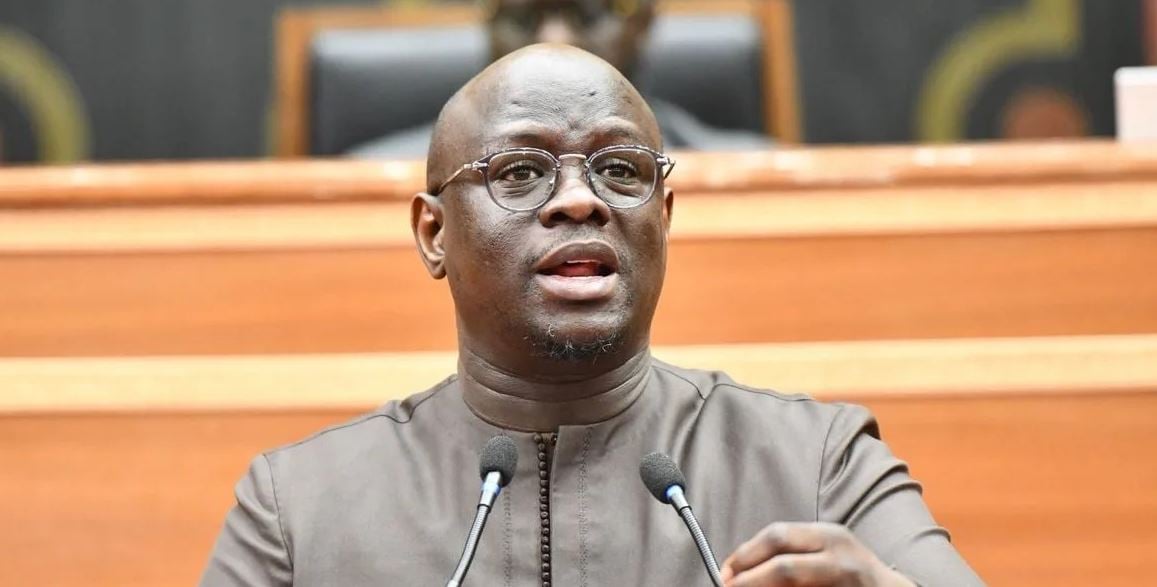
For years, he embodied the promise of radical transformation, presenting himself as the providential figure, the political “Messiah” Senegal awaited to sweep away entrenched practices.
Yet, after two years at the helm of the state and government, the verdict is clear:
the fiery rhetoric of yesterday’s opposition leader has shattered against the unforgiving wall of governance realities.
Two years of governance: a void in achievements
Governing demands more than impassioned speeches. After twenty-four months in power, the pledges of systemic change have largely failed to materialize. Marked by economic uncertainties, a notable absence of significant structural reforms, and stagnant social indicators, the Sonko government’s record appears strikingly bare.
Where citizens anticipated concrete solutions for purchasing power, youth employment, and economic revitalization, they have encountered only short-term management.
This apparent managerial deficit underscores a crucial point: eloquence in speech does not equate to competence in state affairs.
The mantle of Prime Minister has proven far too grand for one who seemingly believed leading a nation was merely a matter of campaign slogans.
Double standards and ethical compromises
Beyond economic ineffectiveness, the most profound disappointment stems from the ethical front.
Ousmane Sonko, whose popularity was built on promises of moralizing public life and enacting a complete break from past practices, appears to have swiftly adopted the very behaviors he once condemned.
Nepotism, preferential treatment, and a lack of transparency have reportedly become hallmarks of his administration. By elevating dogmatism into a governing principle, he is seen as having sacrificed republican values for partisan interests, deeply disappointing a youth who had placed their faith in his integrity.
The National Assembly power play: a disregard for the Constitution
The culmination of this perceived deviation is arguably his installation and stance concerning the National Assembly. By imposing a contested institutional framework,
Ousmane Sonko embarked on a path that numerous legal experts and observers unequivocally describe as unconstitutional.
Attempting to bend the Republic’s fundamental texts to consolidate authority or circumvent parliamentary oversight is characteristic of authoritarian regimes, not true democrats.
This overt disregard for the Republic’s laws further strips the leader of his revered status.
Senegal requires neither messianic figures nor self-proclaimed prophets.
Power has acted as a stark revealer, exposing Ousmane Sonko’s technical limitations and moral contradictions.
Today, confronted with a record devoid of tangible results and highly questionable institutional practices, the myth has crumbled.
It is time for citizens to confront reality and judge the individual not on what he pledged to be, but on what he has failed to accomplish.
Senegal’s political history will likely record Ousmane Sonko not as the solution, but as a dead end. The populace now has evidence that no Messiah is on the horizon, only a politician adept at manipulating the masses yet utterly overwhelmed by the realities of power. The era of complacency is over. In the face of undeniable incompetence, ethical backtracking, and constitutional overreach, the moment calls for republican resistance and clear-eyed political discernment.
Listen to this article4 min listen
Section feedCopy the feed link into your favourite RSS reader