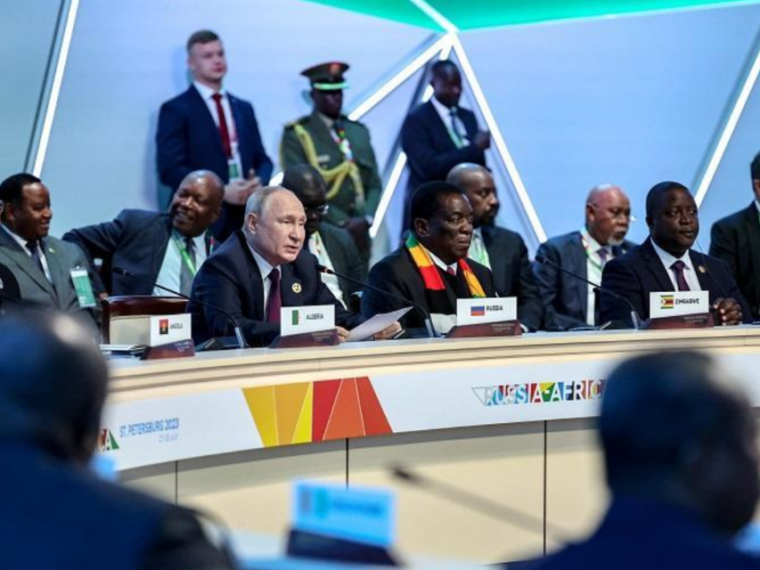
The third Russia-Africa Summit, held in Moscow on October 28-29, 2026, has highlighted a striking contrast in representation within the Alliance of Sahel States (AES). While Malian leader Assimi Goïta stands out with his personal attendance, counterparts Ibrahim Traoré of Burkina Faso and Abdourahamane Tiani of Niger face scrutiny over their absence or unconfirmed participation.
Assimi Goïta leads Malian delegation to Moscow
General Assimi Goïta, Mali’s transitional president, arrived in Moscow on October 26, accompanied by an official delegation. His presence has been widely documented, from airport arrivals to scheduled meetings with Russian President Vladimir Putin. This direct representation underlines Mali’s commitment to the summit’s proceedings and reinforces its diplomatic visibility on the African stage.
Burkina Faso represented by Prime Minister
Despite initial Russian announcements suggesting a high-level Burkina Faso delegation, Ibrahim Traoré did not travel to Moscow. Instead, his country is represented by Prime Minister Rimtalba Jean Emmanuel Ouédraogo, who arrived in the Russian capital ahead of the summit. While this ensures Burkina Faso’s participation in political and economic discussions, it lacks the symbolic weight of a presidential presence.
Niger’s participation hangs in the balance
The case of Abdourahamane Tiani remains unresolved. Russian authorities previously confirmed his attendance, but as of October 28, no verifiable information confirms his arrival. Without an official statement clarifying his absence, speculation persists about whether Niger will ultimately participate in the summit.
Contrasting African presence at the summit
The summit has drawn leaders from across the continent, reflecting Russia’s diverse diplomatic engagements. Confirmed attendees include Évariste Ndayishimiye of Burundi, Emmerson Mnangagwa of Zimbabwe, John Dramani Mahama of Ghana, Daniel Chapo of Mozambique, Salva Kiir of South Sudan, Isaias Afwerki of Eritrea, and Teodoro Obiang Nguema Mbasogo of Equatorial Guinea. Denis Sassou-Nguesso of Congo is also in attendance, underscoring Moscow’s outreach beyond traditional allies.
Russian officials report that 48 of 54 African nations confirmed participation, with 22 represented by their heads of state. This broad attendance demonstrates the summit’s diplomatic significance, though participation levels vary widely across regions.
Other African nations opt for high-level representation
Several countries sent Prime Ministers or Vice Presidents in lieu of their presidents, including Algeria’s Prime Minister Sifi Ghrieb, Benin’s Vice President Mariam Chabi Talata, Uganda’s Vice President Jessica Alupo, and Rwanda’s Prime Minister Justin Nsengiyumva. South Africa’s delegation is led by a senior administration official rather than President Cyril Ramaphosa.
These choices reflect strategic decisions about visibility and diplomatic priorities. While they ensure official participation, they may not carry the same geopolitical weight as a presidential presence.
Six African nations remain outside confirmed participation
According to the Kremlin, six African countries did not confirm their attendance. However, the lack of public information makes it difficult to assess whether their absence stems from political disagreement, logistical challenges, or other unpublicized factors.
Diplomatic symbolism vs. practical outcomes
For the AES, the disparity between Goïta’s strong presence, Burkina Faso’s second-tier representation, and Niger’s uncertain status raises questions about unity and strategy. However, the summit’s agenda—ranging from trade and energy to security and investment—remains the primary focus.
With Russia planning a new cooperation framework for 2027-2029, the tangible benefits of engagement will outweigh symbolic gestures in the long term. For Sahel leaders, Moscow’s partnerships in security and economic development will ultimately define the summit’s legacy.